Data centers can’t win on Earth. How about in space?
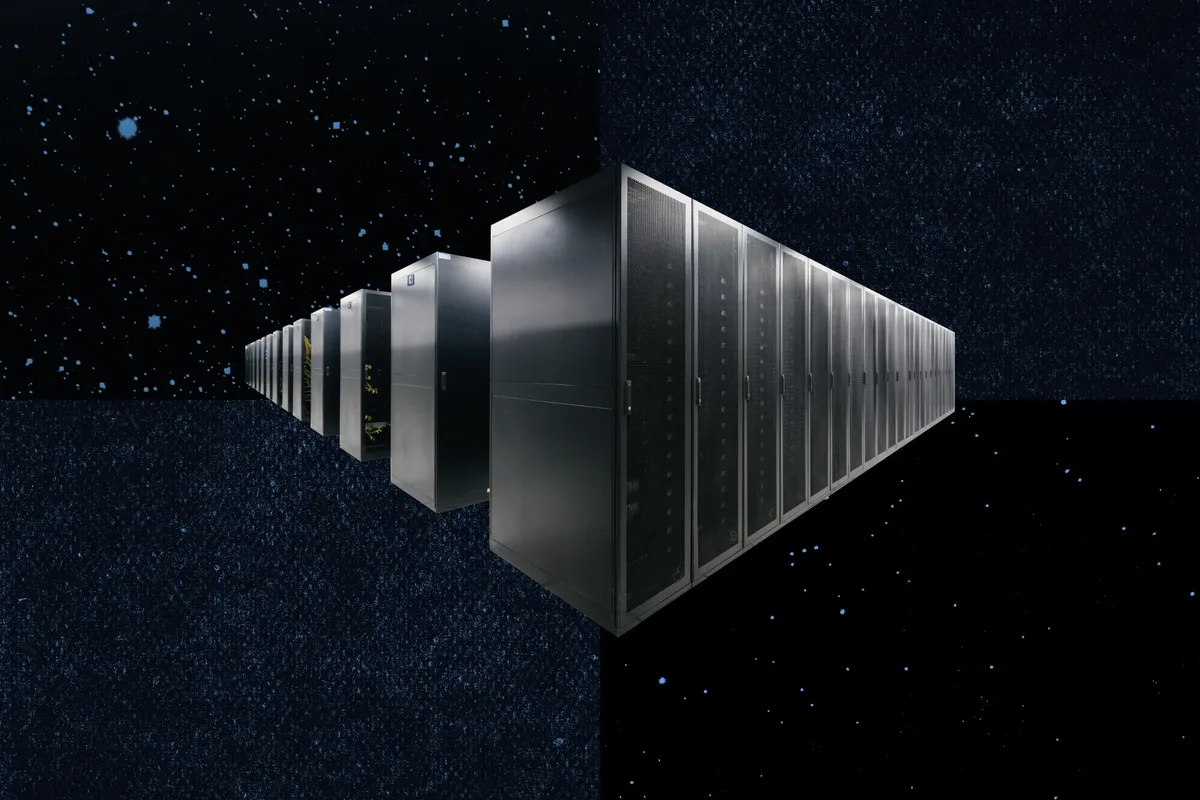
Even if this astronomically kooky plan does take off, it may not change much for those of us left on terra firma. | Paige Vickers/Vox; Getty Images During a tense vote on a data center being built in her drought-stricken Arizona district last summer, Tucson City Councilmember Nikki Lee made an unlikely pitch: “We’re going to get a little out-of-this-world for a second, so just bear with me.” Like many of her constituents, Lee did not want Project Blue, a sprawling 290-acre data center, gobbling up an ounce of her local drinking water.
“We need to put data centers where they belong,” she said, and “we don’t think data centers belong in the desert.” President Donald Trump’s recent bluster aside, it’s possible that the only thing as bipartisan as loving Dolly Parton is hating data centers, whose construction has become so controversial , so costly , and so backlogged here on Earth that companies like Google , Meta , and of course, SpaceX , are actively flirting with the idea of flinging them into orbit instead.
Soon after the Tucson City Council rejected Project Blue’s attempt to connect to city utilities, Amazon Web Services, the secretive intended beneficiary , pulled out of the project, and another Jeff Bezos company, Blue Origin, filed a plan with regulators for tens of thousands of possible new data centers, this time, destined for orbit .
Sure, launching a hyperscale AI data center into space is still unprecedented engineering-wise, carries an unfathomably large price tag, could engender its own severe environmental risks, and may or may not draw unwelcome attention from the hunters among the stars .
But for AI companies, such trade-offs might still be preferable to the terrestrial roadblocks , among them an explosive populist backlash and a 12-year wait to connect to the power grid.
SpaceX’s gargantuan initial public offering earlier this summer was predicated on the idea that it would launch a thus-far-unrealized fleet of orbital data centers to fuel much of the AI economy.
The company claims that by the end of this decade, possibly as early as 2028, it will have successfully assembled an AI data center in orbit, with plans to eventually harvest a staggering 100 gigawatts of new solar energy for AI annually, equivalent to one-fifth of all US electricity consumption last year. (As always, that’s a very iffy promise .) And Google, which has its own plan to deploy dozens of space-based data centers, released a study last December positing that as launch costs go down, they could become cost-competitive with terrestrial data centers within the next decade.
5News aggregated this summary from the outlet’s public feed. The full article, with all the context, is on www.vox.com — the content belongs to Vox.