This Fascinating Film Was Left Unfinished for 54 Years
Courtesy of TIFF Revolutionary cultural movements are rarely organized.
Instead, they emerge organically from a stew of disparate, often opposing forces united by shared goals.
Such was the case with the Harlem Renaissance, and its birth, evolution, and impact are the captivating subjects of Once Upon a Time in Harlem , a documentary by William Greaves (screening at this year’s Toronto International Film Festival ahead of its Oct.
16 theatrical debut) that was left unfinished for 54 years until his son David completed it.
A time capsule, history lesson, and heady hangout movie all rolled into one, it’s an invigorated portrait of radical change as the byproduct of art, politics, and roiling intellectual debate.
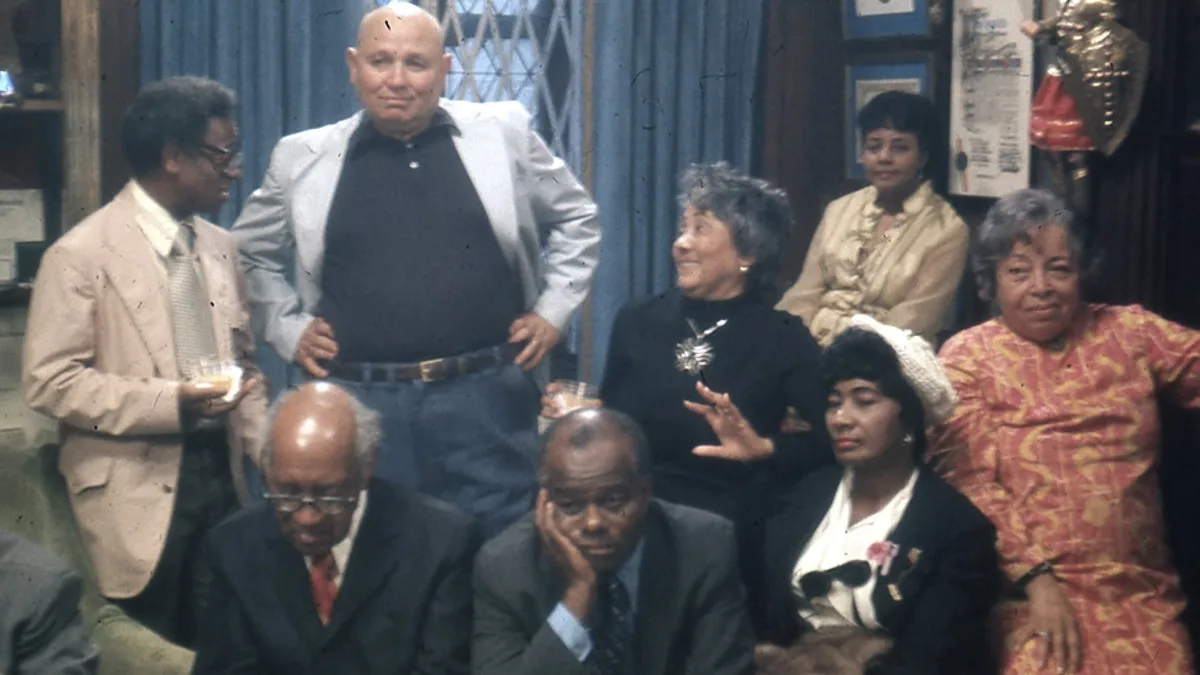
In August 1972, actor-turned-documentarian Greaves invited every living Harlem Renaissance luminary to an afternoon gathering at Duke Ellington’s home.
The reunion brought together a wide range of distinguished guests, from composer Eubie Blake, poet Arna Bontemps, and painter Aaron Douglas to writer Richard Bruce Nugent, librarian Regina Andrews, and journalist Gerri Major, many of whom had not seen each other in decades and were eager to revisit the era.
Composed primarily of footage shot that day, Once Upon a Time in Harlem situates itself amid the countless conversations that followed, beginning with separate cocktail-party chats and ending with a giant living-room discussion in which voices fight to be heard amid the passionate din.
Greaves juggles his numerous points of interest by identifying each with on-screen text and utilizing split screens and archival media—film footage, photographs, printed writing, and narrated poems—to capture the multifaceted spirit of both the contemporary and bygone moment.
James Van Der Zee’s photographs are the jumping-off point for Once Upon a Time in Harlem , providing visual context for the 1920s in which these men and women flourished.
And at subsequent intervals, the jazz that helped redefine the period cascades across the soundtrack.
Greaves’ chief focus, however, is the indelible faces and the things they have to say about the past and what it means for the (1972) present.
Fortunately, his participants are a charismatic group, all the more engaging because they don’t always agree with one another.
Whether it’s Ida Mae Cullen castigating attendees for not properly mentioning her esteemed poet husband Countee Cullen, or painter Romare Bearden criticizing Harvard professor and author Nathan Huggins for giving the arts short shrift in his book Harlem Renaissance , Once Upon a Time in Harlem isn’t afraid of contentiousness.
5News aggregated this summary from the outlet’s public feed. The full article, with all the context, is on www.thedailybeast.com — the content belongs to The Daily Beast.