VisionQuest Puts a Frustratingly Conventional End to Marvel’s WandaVision Trilogy
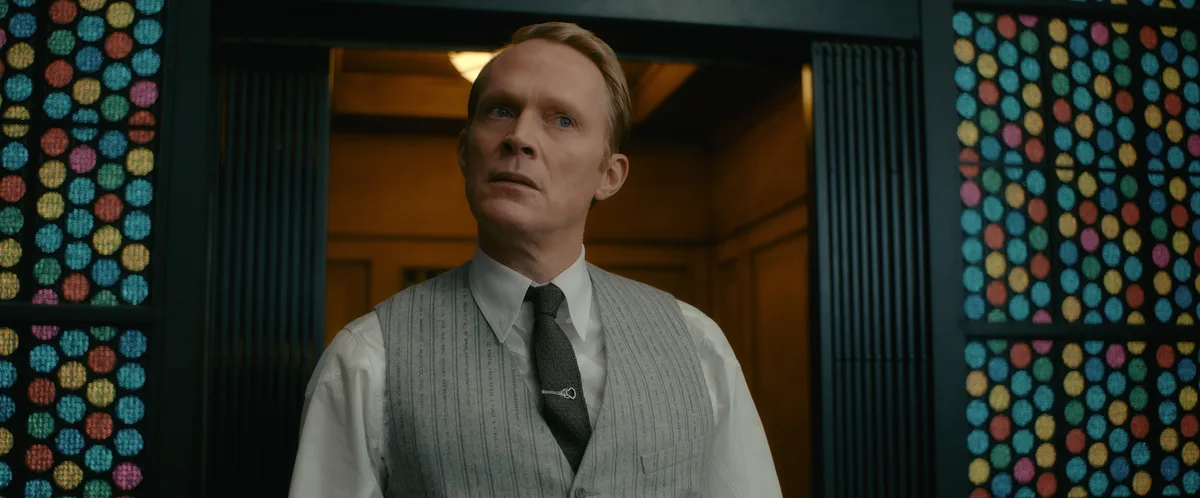
Paul Bettany in VisionQuest —Marvel The marriage of Disney+ and the Marvel Cinematic Universe seemed, at first, to be a perfect match.
WandaVision , the high-concept miniseries that placed Wanda Maximoff (Elizabeth Olsen) and her beloved synthezoid the Vision (Paul Bettany) in a succession of retro sitcoms and challenged viewers to figure out what was actually happening beyond the suburban veneer, kicked off the venture in 2021 with huge audiences and near-unanimous critical praise.
But it ended in the same predictable, digitally enhanced battle as every other MCU mediocrity.
With a few fun exceptions, like this year’s renewed-then-canceled Wonder Man and the witchy 2024 WandaVision sequel Agatha All Along , the returns have been diminishing ever since.
So it’s not particularly surprising that Disney seems to be paring back its small-screen Marvel offerings.
To understand what went wrong, you need only watch the first episode of VisionQuest , the final installment of the WandaVision trilogy.
It begins with Bettany narrating a summary of Vision’s MCU storyline, from his origin as the creation of sociopathic supervillain Ultron and education in humanity at the hands of Avengers Bruce Banner and Tony Stark to his annihilation by Thanos and resurrection as a projection of Wanda’s mourning, that will only make sense to viewers who’ve followed that saga for more than a decade.
Soon, it’s introducing a bunch of anthropomorphized AIs (Orla Brady’s F.R.I.D.A.Y., Emily Hampshire’s E.D.I.T.H., James D’Arcy’s J.A.R.V.I.S.) that have their own franchise backstories.
Less than 15 minutes in, Vision is sitting in a cinema, within his own robotic mind, brooding over memories of Wanda.
The story is so unwieldy, at this point, it’s impossible to follow without constant reminders of what came before.
Yet the VisionQuest narrative is too emotionally simplistic and stylistically conventional, particularly compared to the two previous parts of the trilogy, to merit all that remembering.
From left: Orla Brady, James D'Arcy, Johnathan Sayer, and Henry Lewis in VisionQuest —Marvel Annihilated for the second time with the collapse of Wanda’s grief fantasia, the Vision has been rebuilt—“same body, different mind,” he tells us, meaning that he no longer has the capacity for love that once bound him to her and the sons, Tommy and Billy, she conjured.
In the physical world, he’s in hiding as a human barback at a Scottish pub with relevance to Wanda-Vision romance lore.
But his more vivid existence is a life of the (artificial) mind, where he retreats to a sort of Beaux-Arts-meets-midcentury-modern country estate populated by autonomous AIs.
5News aggregated this summary from the outlet’s public feed. The full article, with all the context, is on time.com — the content belongs to TIME.