Some People Think Elon Musk Snapped. The Controversial Four-Hour Documentary About Him Suggests Something Else.
Sign up for the Slatest to get the most insightful analysis, criticism, and advice out there, delivered to your inbox daily.
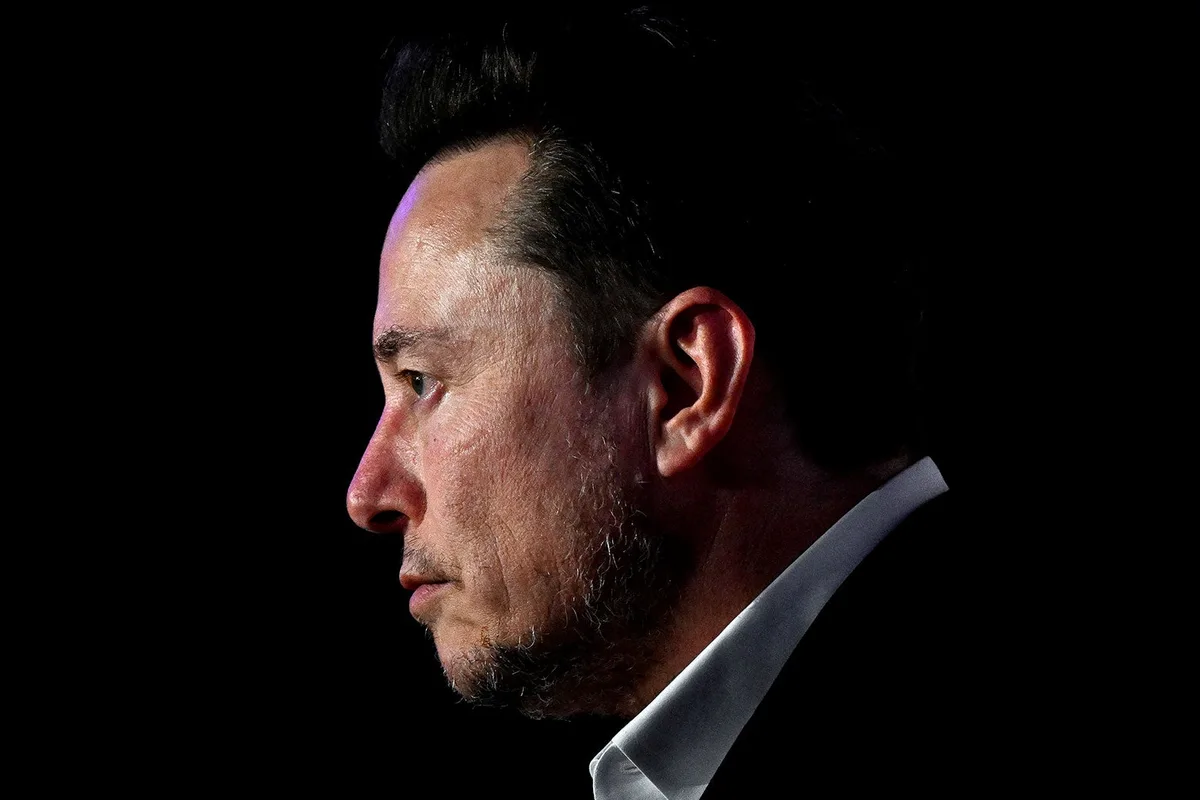
Is there anything more to know about the world’s richest man? And more importantly, do you want to know it? Elon Musk is such a titanic figure—in both the size and the shipwreck sense—that Alex Gibney’s four-hour documentary Musk , which premiered at the Venice Film Festival on Tuesday and heads next to Toronto before opening in U.S. theaters on Oct. 16, doesn’t have enough space to be comprehensive. (Where, for example, is the fact that Musk, according to the book Character Limit: How Elon Musk Destroyed Twitter , bears such an intense antipathy for the number nine that he wouldn’t allow it to appear on Tesla’s website?) And it’s far too long for the casually interested, if there is anyone left who has not yet formed an opinion of this messianic monster. But perhaps it is for those who know that Musk is bad, but not how bad, or who don’t quite grasp how he, and we, got to the point where he became one of history’s most powerful figures, and one of its most unhinged.
Although Musk’s career stretches back three decades, Gibney’s telling is evenly split into pre- and post-Trump—or, more precisely, pre- and post-COVID, when it became clear that Musk’s alliance with the MAGA-fied Republican Party was far more intense than garden-variety advocacy for lower taxes and less regulation. As much as the documentary’s second half sounds a series of increasingly urgent alarms, its first half might be the most useful, at least for those who find it difficult to imagine, or recall, a time when Musk was near-universally lauded and didn’t spend a good chunk of his days trolling the internet for mass adulation. Gibney takes us through Musk’s earliest success in Silicon Valley as a 23-year-old co-founder of the company Zip2—roughly an online equivalent of the Yellow Pages—whose sale netted him a $20 million–plus payout despite the fact that Musk’s code was so gnarly and inelegant that the company’s programmers referred to his contributions as “hair balls.” His subsequent tenure as PayPal’s CEO was brief—a matter of months, ended when the board had him removed from his position in the middle of his honeymoon—but he walked away with enough cash to start SpaceX, which is where Musk’s legend really began to take hold. By 2010, when the company, after several fiery failures, completed its first launch and return of an uncrewed capsule, he’d already achieved, or persuaded others to grant him, the status of a one-man nation-state. As a news report at the time put it, only four “entities” had successfully carried out a similar feat: the U.S., Russia, China, and Elon Musk.
The penchant for treating founders as god-kings whose companies are mere extensions of their visionary genius is a large part of the story underlying Musk’s (and others’) precipitous rise, but it’s not only a credulous media and easily swayed investors who are to blame.
5News aggregated this summary from the outlet’s public feed. The full article, with all the context, is on slate.com — the content belongs to Slate.