NAACP's call for Black athletes' boycott of southern schools hits an NIL wall
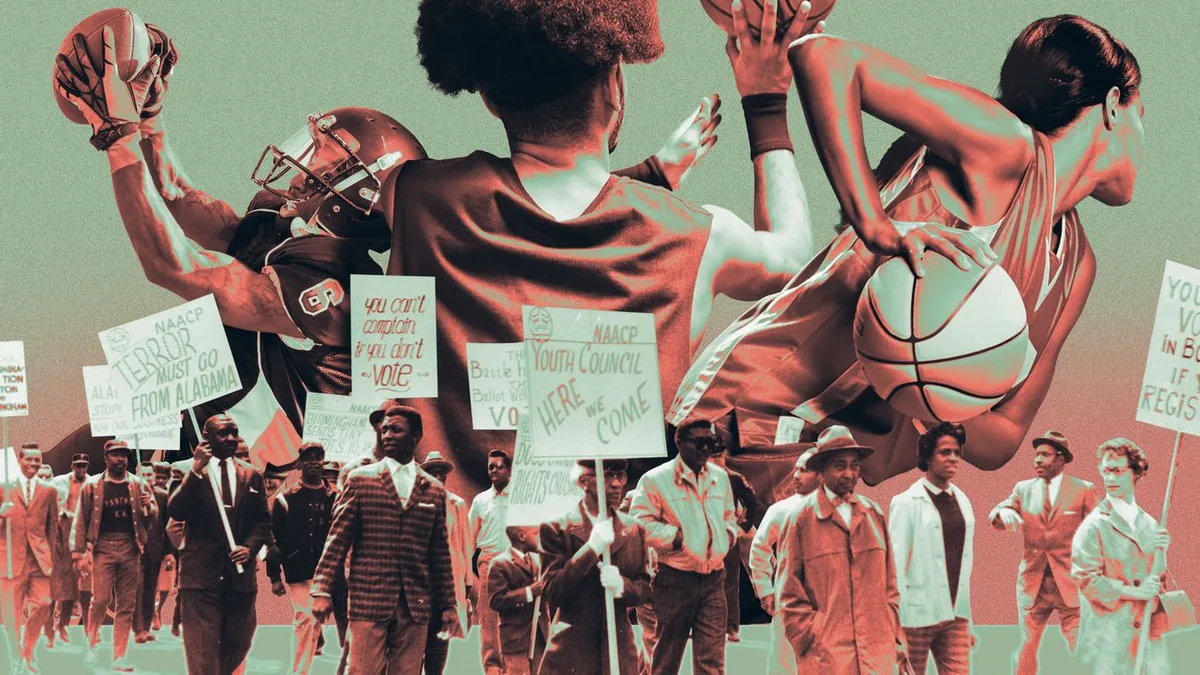
Civil rights groups have called on Black college athletes to boycott schools in states that are rolling back voting rights.
But highly paid NIL-era athletes are proving to be unwilling protesters.
Why it matters: It's exposing a disconnect between advocates who rely on 1960s-style protest tactics, and prominent athletes in today's $3 billion NIL economy who have different views of activism — and who are unwilling to sacrifice unprecedented financial opportunities .
The big picture: NIL (name, image, likeness) was championed as a tool to end the systemic exploitation of Black college athletes in big-revenue sports.
Irony has taken hold: Those NIL funds can now shield southern institutions from some political pressure, even as state legislatures in those states reduce Black voting power through voting restrictions, political gerrymandering and other actions.
Catch up quick: The NAACP in May launched its "Out of Bounds" campaign — a national call for Black athletes, families, fans and alumni to withhold support from public universities in states that the groups say have weakened Black voting rights.
The move came after the Supreme Court's 6-3 ruling in Louisiana v.
Callais , which essentially gutted the remaining protections in the Voting Rights Act.
The NAACP identified eight priority states: Tennessee, Louisiana, Alabama, Florida, Mississippi, South Carolina, Texas and Georgia — home to many of the nation's largest and best-funded college athletic programs.
The civil rights group said that together, those states' popular collegiate athletic programs generate billions in annual revenue using thousands of Black athletes while their state governments dismantle the political power of Black communities.
Yes, but: The first weeks of the NAACP's campaign have produced little visible disruption in recruiting, alumni support or financial repercussions.
The boycott asks athletes — high school recruits and college players who may transfer — to turn down schools that can offer scholarships, national exposure, lucrative NIL opportunities and top coaching.
The most prominent athletes — particularly in football and men's basketball — now can be paid into seven figures a year.
For some, what they're paid in college could be more than they'd ever make as professional athletes.
5News aggregated this summary from the outlet’s public feed. The full article, with all the context, is on www.axios.com — the content belongs to Axios.