Scientists knew Mercury was shrinking. They didnt know the true extent.
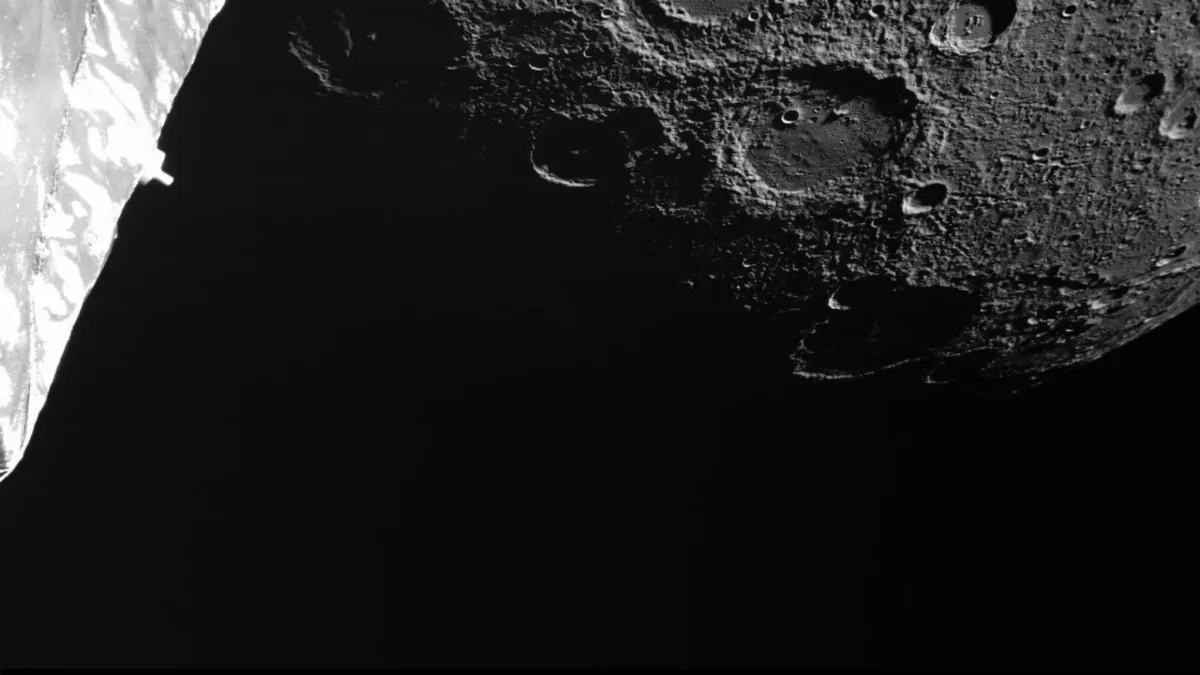
The solar system's smallest planet has suffered significant shrinkage, drawing up 30 percent more than scientists even previously estimated.
Mercury , which orbits closest to the sun , is a tiny rocky world that has continuously leaked heat into space since its sizzly formation 4.5 billion years ago.
As its heavy iron core cools, the entire planet shrinks, like a grape transforming into a raisin in the sun.
Its outer crust buckles and cracks around it, but on a planet scale, those surface wrinkles translate into huge cliffs and mountainous ridges.
A new study reveals Mercury has lost up to 14.5 miles of its diameter since birth.
That might not seem like much until you realize that the planet is only 3,000 miles wide overall.
For decades, researchers may have underestimated the planet's contraction because the rough terrain was obscuring the true extent of the damage.
"Thirty percent is a little bit surprising, but the corrected amount of contraction actually makes sense to me," said Gaku Nishiyama, a planetary scientist at the German Aerospace Center Institute of Space Research and lead author on the study, in a statement .
SEE ALSO: Astronomer proposes jaw-dropping reason why we don't have a super-Earth A barrage of meteors pock Mercury's surface, cratering the land and hurling giant shattered rock across the planet.
The rubble seems to create a fresh gravel spread, concealing the planet's wrinkles.
While testing Nishiyama's hypothesis , a team of researchers discovered a clear pattern: The rugged regions contained the fewest visible wrinkles.
Around major impacts, like the massive Rachmaninoff crater, tectonic cracks disappeared almost entirely under thick layers of debris.
"We compared a global map of Mercury's surface roughness with maps of shortening structures and contraction," Nishiyama said.
"Mercury appears to have shrunk considerably more than what the visible tectonic record alone suggested." After accounting for these hidden features, the researchers recalculated Mercury's total contraction.
5News aggregated this summary from the outlet’s public feed. The full article, with all the context, is on mashable.com — the content belongs to Mashable.