I’m a High School Teacher. A Phone Ban Has Come to My School. The First Day Went Nothing Like What I Expected.
Sign up for the Slatest to get the most insightful analysis, criticism, and advice out there, delivered to your inbox daily.
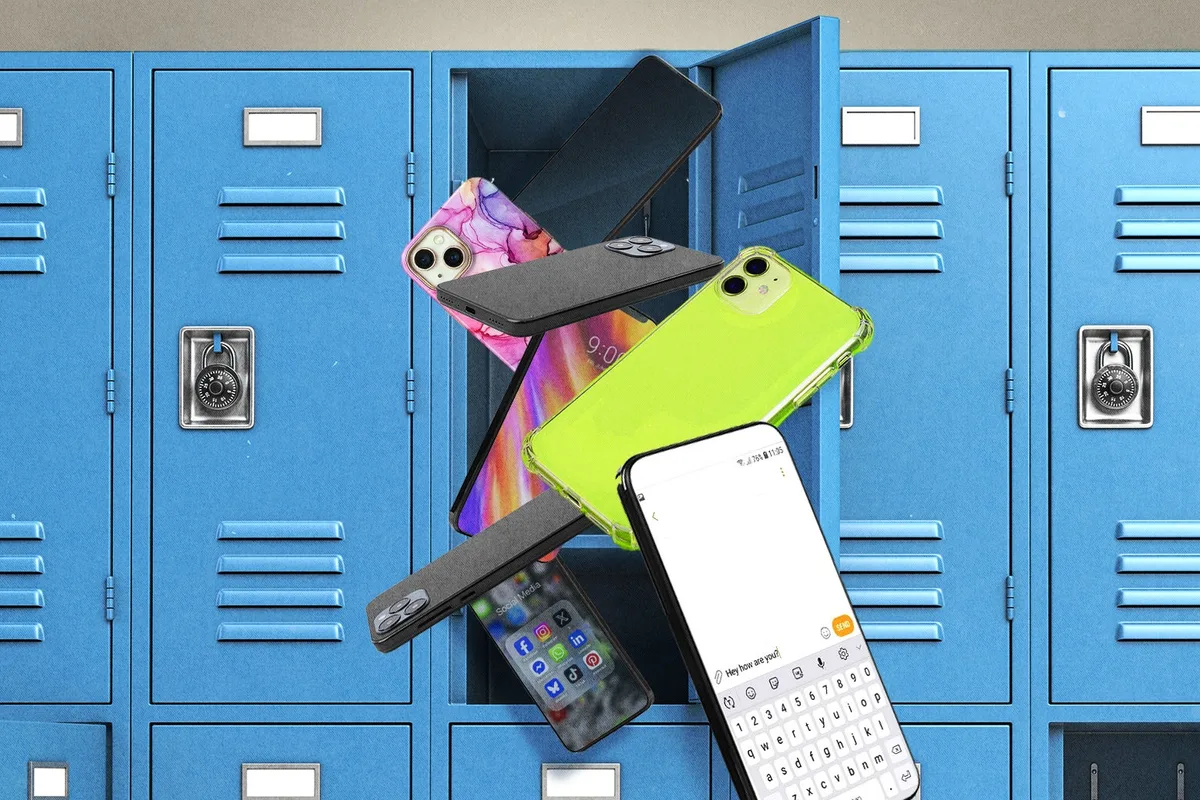
The first bell of the new school year rang at 7:15 a.m.: a reminder for kids to leave the commons, or the media center, or a hallway nook, and make their way to the first class of the day. On that morning of Aug. 27, the PA announcement that followed, though, was a bit different than in previous years. After the cursory welcome back from summer, students were reminded to put their cellphones in their lockers—and to leave them there until the school day ended or else risk a confiscation, then a phone call home, then detention, and, finally, in-school suspension. The new statewide policy had been whispered about for months, and here we finally were, device-free.
I stood in the hallway. Newly arrived freshmen, as usual, weren’t sure where to go, their Chromebooks opened to a mysterious schedule of classes. I guided a few, hoping that my directions were both understandable and correct, and then closed my classroom door at the second bell: 7:20 a.m., AP Language.
The first day of school is always quiet; the kids are a bit apprehensive. I’ve had some of their siblings; I’ve had others in study hall as underclassmen, dashing off passes to Ceramics or the cafeteria. Now, though, they were with me, in a challenging junior-year course with a notoriously difficult exam.
My second-floor classroom has no windows and sparse decor. It’s both a point of minimalist pride and a joke; I’ll only hang student awards for our literary magazine, or their class-created posters of kindergarten photos, bemoaning that I could subject those poor young souls to my esoteric assignments. Otherwise, the room is plain, and rather quiet. Early in my career as a teacher, I learned that students will meet your good-natured silence.
That morning, without phones—I hoped—we read from Don DeLillo’s White Noise : “There is an expressway beyond the backyard now, well below us, and at night as we settle into our brass bed the sparse traffic washes past, a remote and steady murmur around our sleep, as of dead souls babbling at the edge of a dream.” It started to rain. We are right under the roof, and the patter became heavy, followed by thunder. The projector shook. It all felt vaguely apocalyptic.
In the final weeks of his second term, New Jersey Gov. Phil Murphy signed bill P.L. 2025, c. 195 , which set as minimum guidelines that all districts in the state “prohibit non-academic use of an internet-enabled device on school grounds during the school day.” The state Department of Education offered districts clear reasoning : “unregulated” use of “cell phones and other internet-related devices” can “result in lower academic performance, harm to emotional well-being, and deterioration of a positive school climate.”
State education decisions move at a glacial pace, and then all at once; districts, and their teachers, often have to scramble to implement new procedures. Although the cellphone ban was signed in January, districts throughout the state debated (and queried their boards and lawyers) for months.
5News aggregated this summary from the outlet’s public feed. The full article, with all the context, is on slate.com — the content belongs to Slate.