Rugged robotic mules could make dangerous supply missions safer for US soldiers, but there are some things still to work out
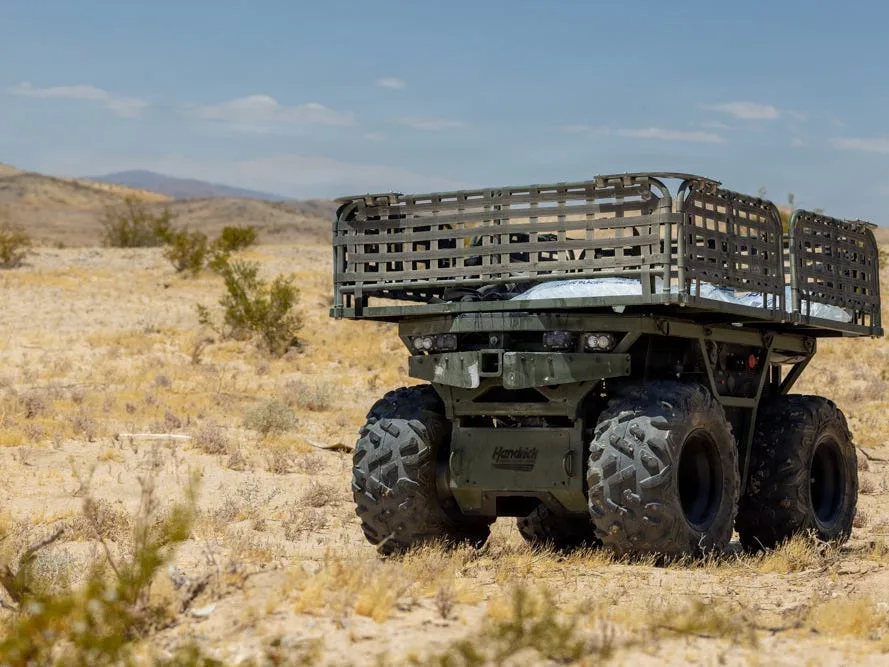
Like Ukraine, the US Army is looking at UGVs as a way to keep soldiers out of dangerous logistics runs.
US Army photo by Pfc.
Craig Kong US Army soldiers are experimenting with ground robots for logistics and supply runs.
These drones take personnel out of immediate danger and are extremely useful, troops said.
But they're also limited by weather and terrain.
Out in the rocky ridges of the Mojave Desert, US soldiers recently let a ground robot take a run at logistics missions traditionally done by humans.
The uncrewed ground vehicle (UGV) used is called NOMAD and is manufactured by Hendrick Technical Solutions.
Soldiers told Business Insider that robots like this help keep troops out of harm's way, but such systems are not without their limitations.
During the Project Convergence Capstone exercise at Fort Irwin in California last month, almost 10,000 soldiers gathered to experiment with new technologies while fighting through simulated combat.
While a majority of the drones involved were uncrewed aerial vehicles, there were some ground drones being tested and used in and around the fight.
Soldiers used the NOMAD robot primarily for resupply missions, though they have the potential for involvement in medical operations, such as transporting injured personnel.
"We've used it probably 12 to 13 times," Sgt.
1st Class Alex Alcantar told Business Insider, "and it's extremely, extremely useful." Alcantar said that the NOMAD reduced the risk to soldiers who might otherwise have had to run these missions by pushing supplies forward "with minimal force being exposed." The NOMAD system can be operated by one person via a tablet, which displays the camera view and includes controls.
During the exercise, soldiers said the NOMAD was easy to load supplies onto, taking five minutes or less to set up and deploy.
5News aggregated this summary from the outlet’s public feed. The full article, with all the context, is on www.businessinsider.com — the content belongs to Business Insider.