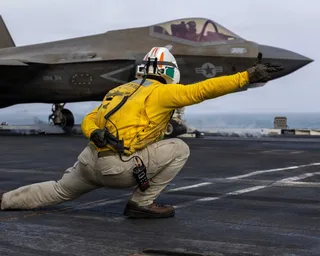
Trump Orders Navy to Return to Steam Catapults on Aircraft Carriers

Jonathan Ernst/Reuters Donald Trump is ordering the Navy to stop using an electromagnetic catapult system to launch fighter jets from its aircraft carriers and return to the age of steam.
The White House announced Thursday that the president had signed a national security memorandum to install steam catapults on the Gerald R.
Ford class of carriers, with the first change occurring on the Doris Miller, the fourth ship in the planned Ford fleet.
Experts have warned that the move will cost taxpayers billions of dollars.
The Navy and industry leaders have long opposed returning to steam catapults because of the eye-watering cost involved.
Installing electromagnetic catapults and elevators to move weaponry to the flight deck was also an integral aspect of the Ford-class design and a major reason for the slow delivery and commissioning of the $13 billion class.
The octogenarian president has had a decade-long obsession with bringing back steam catapults on Navy aircraft carriers despite the huge costs involved.
A steam catapult uses high-pressure steam to drive a piston that propels a jet along a track beneath the flight deck, helping the aircraft take off.
An electromagnetic catapult is digitally controlled and uses energy from electric and linear motors to generate an electromagnetic field that propels the jet off the carrier.
In an interview with Time magazine in May 2017 , during his first term as president, Trump described an apparent conversation he had with a sailor who was as unhappy with the digital catapult system as he was.
“They have digital.
What is digital? And it’s very complicated, you have to be Albert Einstein to figure it out,” Trump said.
“‘Sir, we’re staying with digital.’ I said, ‘No you’re not.
You going to goddamned steam, the digital costs hundreds of millions of dollars more money and it’s no good.’” Years later, in October 2025, Trump announced during a rambling speech to the U.S.
5News aggregated this summary from the outlet’s public feed. The full article, with all the context, is on www.thedailybeast.com — the content belongs to The Daily Beast.