Fashion startup Atoire raises $9.5M to bring consumers luxury goods without the markup
Fashion startup Atoire announced Thursday a $9.5 million seed round with investors including a16z Speedrun, Night Capital, and Lightspeed Ventures’ Jeremy Liew.
Shoppers can visit the Atoire website and buy handbags or even clothes made from the same material — and coming from the same factory — that manufacturers high-end goods. The items are reasonably priced, too, with an Italian leather handbag costing just a few hundred, compared to the thousands a brand like Prada or Louis Vuitton would sell it for.
The startup arrives at a time when dupe culture has become increasingly popular, while the luxury sector has faced backlash from consumers in the post-pandemic era due to swift price hikes.
As a result, young consumers especially have sought cheaper, near-identical replications of these high-end goods; doing so has become almost a status symbol itself.
On Atoire, the items sold are mostly not dupes, says co-founder and serial entrepreneur Redouane Ramdani.
“It’s the same material, same craftsmanship,” he said. “It’s coming from the same factories.” He doesn’t consider Atoire fast fashion either. “It’s slow,” he clarified.
Before Atoire, Ramdani built the creator platform Snipfeed, which was acquired in 2024. Having grown up in France with a family that worked in luxury manufacturing, the founder always had an idea in the back of his mind that he would one day do something in the industry he grew up loving as a kid.
By the time he sold Snipfeed, however, the luxury manufacturing industry was quite different.
The biggest shift he noticed was that luxury factories were no longer just manufacturing goods. Traditionally, a brand like Ralph Lauren would bring its own designs and materials to a factory, which would then produce them. The problem was that brands had to commit to large minimum orders, which often pushed them to overproduce inventory. At the same time, a lot of these factories depend on working with a small number of large brand customers. If a brand pulled out at the last minute or not enough of that overproduced inventory sold, the factories faced financial and inventory risk.
“What’s changing is that the best factories increasingly have their own design and product-development capabilities,” Ramdani told TechCrunch. “Instead of simply manufacturing someone else’s designs, they can develop products themselves, adapt them quickly, and produce in smaller batches.”
AI also helps these factories by pulling data that helps them identify which products are likely to sell out before committing to large production runs.
“That reduces overproduction and allows factories to diversify beyond a handful of large customers,” he said.
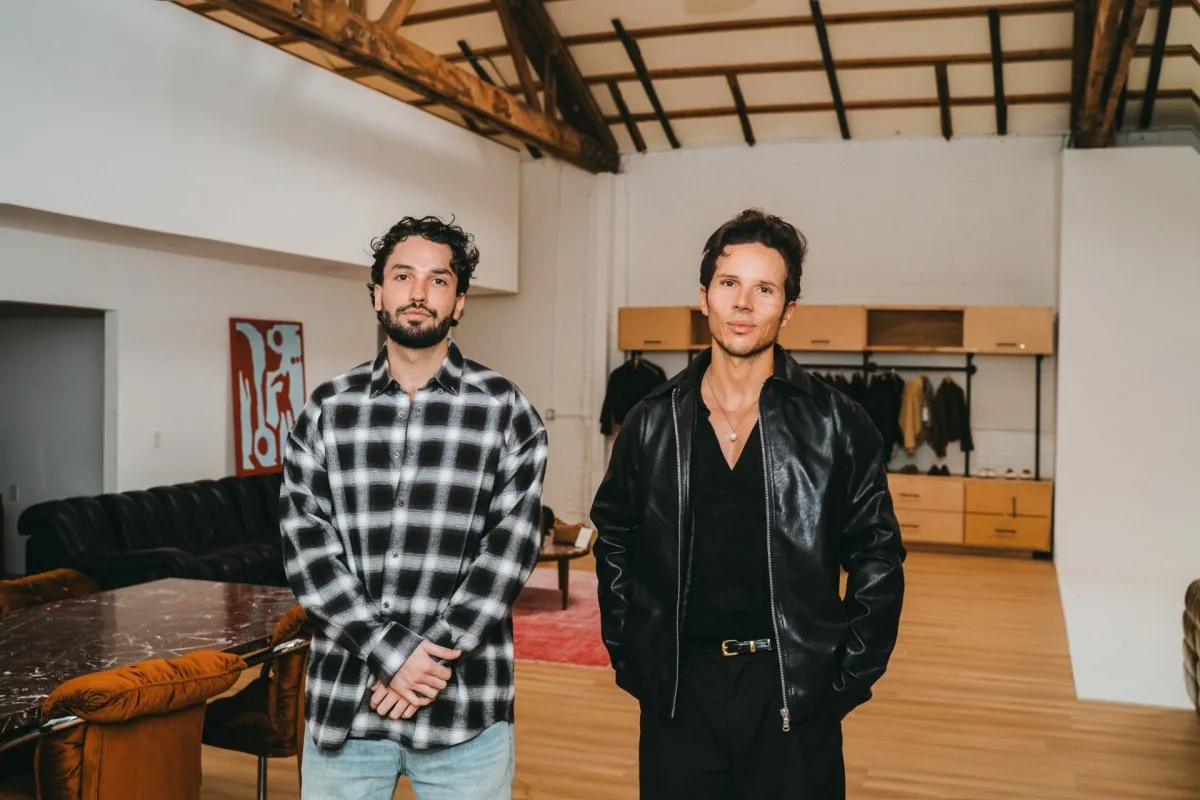
These changes also gave Ramdani an idea, leading him to team up with Luis Angulo to launch the startup, which is now an AI-powered fashion brand that connects luxury manufacturers directly with consumers.
He compared his company’s approach to the retailer Quince, which is known for selling high-quality, low-priced items.
5News aggregated this summary from the outlet’s public feed. The full article, with all the context, is on techcrunch.com — the content belongs to TechCrunch.