The AI boom has echoes of Enron — but that might be okay, a tech guru says
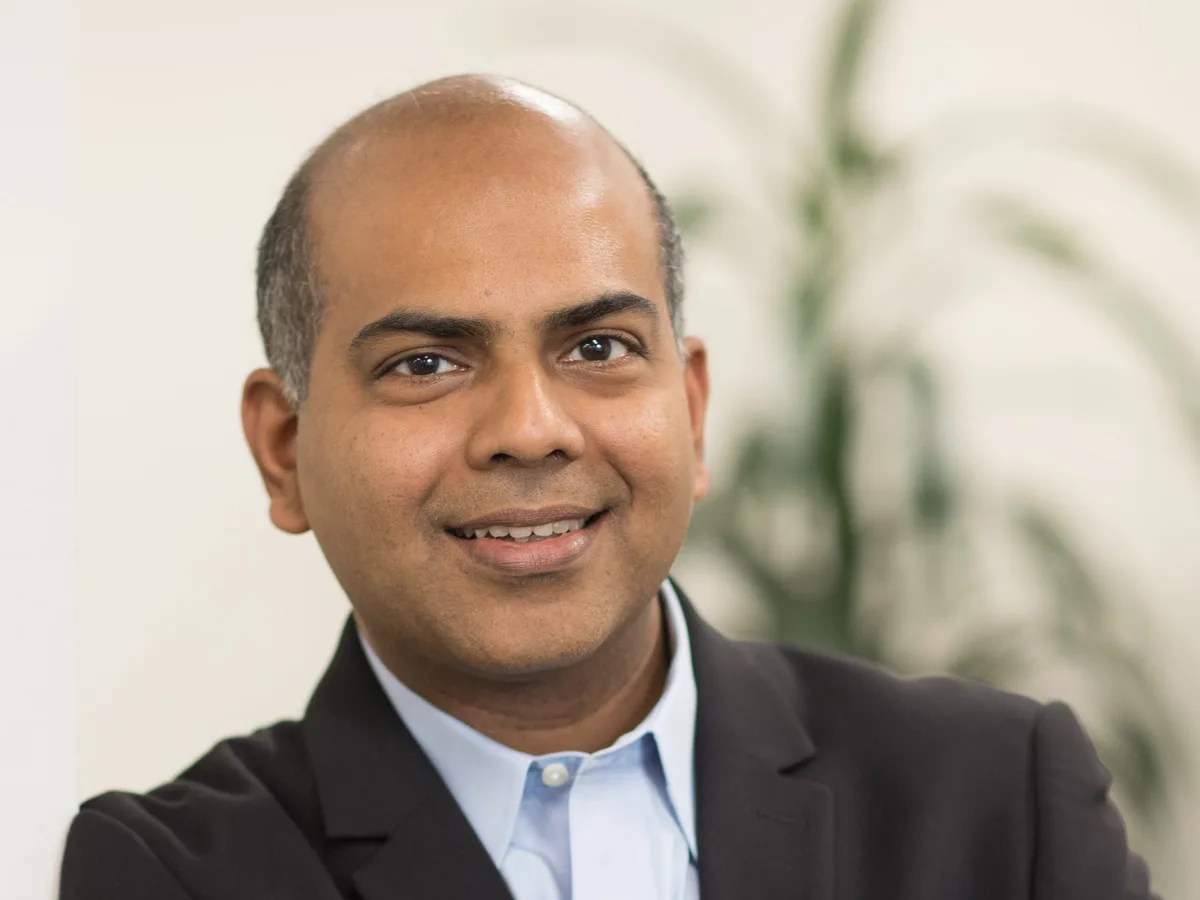
Ram Bala is an AI and analytics guru.
Ram Bala Tech giants are using the same kind of financial strategies as Enron, academic Ram Bala says.
The AI and analytics guru pointed to their handling of debt, demand forecasts, and circular deals.
Bala said the AI boom is "not like bubbles of the past" and he expects long-term demand to impress.
Today's tech titans are using similar financial tactics to Enron, but that doesn't mean they're careening toward disaster, one AI guru says.
Enron, an energy supplier and trading powerhouse, collapsed into bankruptcy in 2001 after it was revealed to be a fraud.
But it was also a story of three things, Ram Bala, an associate professor of AI and analytics at Santa Clara University's Leavey School of Business, told Business Insider in an email this week.
The corporate giant shifted debt off its balance sheet using special vehicles , employed mark-to-market accounting to book future sales projections as immediate revenue, and used circular transactions to make customer demand appear more independent than it was in reality, Bala said.
"The AI buildout is replicating versions of all three, entirely legally, and that is exactly why it deserves attention," said the coauthor of "The AI-Centered Enterprise," and the cofounder and chief product and AI officer of an AI startup named Samvid.
Hidden risks Bala said that private credit is playing the same role now that Enron's special purpose entities did, as "the place where risk goes to become less visible." He described how private equity firms including KKR are helping to finance the AI buildout.
But he emphasized that "Nvidia gets paid upfront, the borrowers and their lenders carry the default risk, and because private credit is ultimately funded by ordinary savers through instruments like pension funds, the tail risk lands on households ." Fragile forecasts As for demand projections, Bala said the current buildout is being "financed against demand curves that are marked to model, not to market." Bala recalled Anthopic CEO Dario Amodei saying his company has invested less in compute than its rivals, as a small error in demand projections could be the difference between success and bankruptcy.
"When the smartest guys in this room are that candid about forecast fragility, leveraged borrowers underwriting to the optimistic case should give everyone pause," Bala said.
Going in circles Bala said that circular-financing deals such as Nvidia investing in OpenAI , then OpenAI using the cash to buy Nvidia's microchips, could be viewed as vendor financing, which is common in industries where equipment is expensive.
An example from a consumer's perspective might be leasing a car using financing from the car's manufacturer.
5News aggregated this summary from the outlet’s public feed. The full article, with all the context, is on www.businessinsider.com — the content belongs to Business Insider.