Amazon's big, new delivery push targets Walmart's biggest advantage, Bank of America says
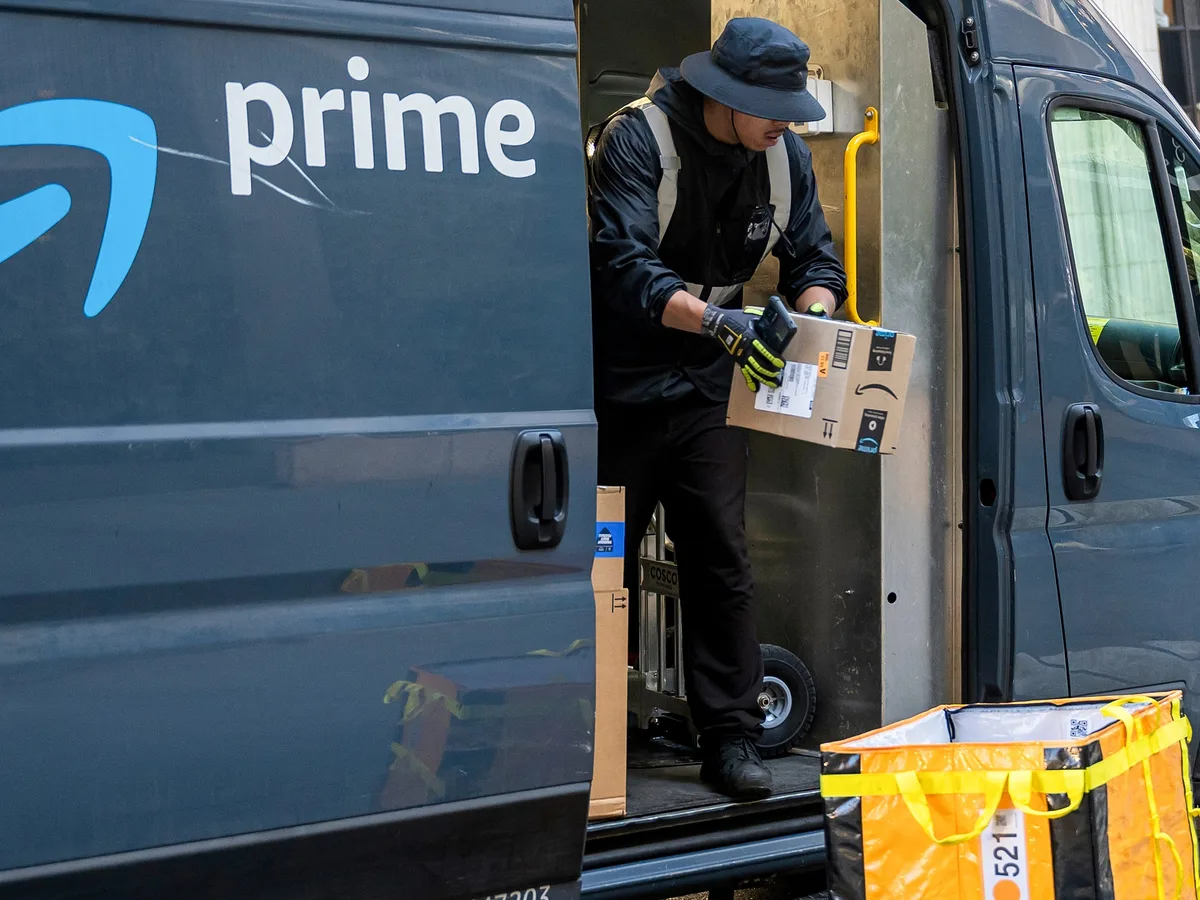
A worker unloads boxes from an Amazon delivery van in San Francisco, California Bloomberg/Getty Images Amazon's 1,000-hub plan aims to close Walmart's proximity advantage.
Bank of America analysts say Amazon's same-day delivery service is "very important strategically." Faster delivery and automation could extend Amazon's retail-margin gains, the bank said.
Amazon 's plan for more than 1,000 same-day fulfillment centers is fundamentally an attempt to close Walmart's long-held proximity advantage, Bank of America analysts wrote in a research note.
Business Insider reported this week that Amazon is considering an internal project called Mercury, which would expand its same-day fulfillment network from roughly 85 facilities today to more than 1,000 by 2031.
The goal is to place inventory within 10 miles of about 80% of Prime members in the US, according to internal planning documents reviewed by Business Insider.
BofA analyst Justin Post said Project Mercury's strategy is less about expanding selection than making a smaller set of high-demand products more immediately accessible.
Amazon's ability to compete with same-day delivery is "very important strategically," he wrote.
"We see Project Mercury as another piece of Amazon's broader effort to build a denser, faster, and increasingly automated countrywide fulfillment network," Post wrote in the note.
The bank called the project's estimated $6.8 billion investment "manageable" for Amazon.
Internal projections reviewed by Business Insider forecast that Mercury would turn cash-flow positive by 2030 and generate $7.1 billion in economic value over 10 years.
Walmart has a major head start.
Its roughly 5,000 stores put fast delivery within 10 miles of 90% of the US population.
The retailer has increasingly used those stores as local fulfillment centers, helping it deliver 70% of e-commerce orders the same day.
Amazon's same-day sites carry a narrower assortment — roughly 90,000 fast-moving products such as paper towels, cough medicine, and fresh food — rather than the broad selection of a conventional fulfillment center.
5News aggregated this summary from the outlet’s public feed. The full article, with all the context, is on www.businessinsider.com — the content belongs to Business Insider.