New NASA Images Reveal Crater Left Behind by SpaceX Rocket Impact on the Moon
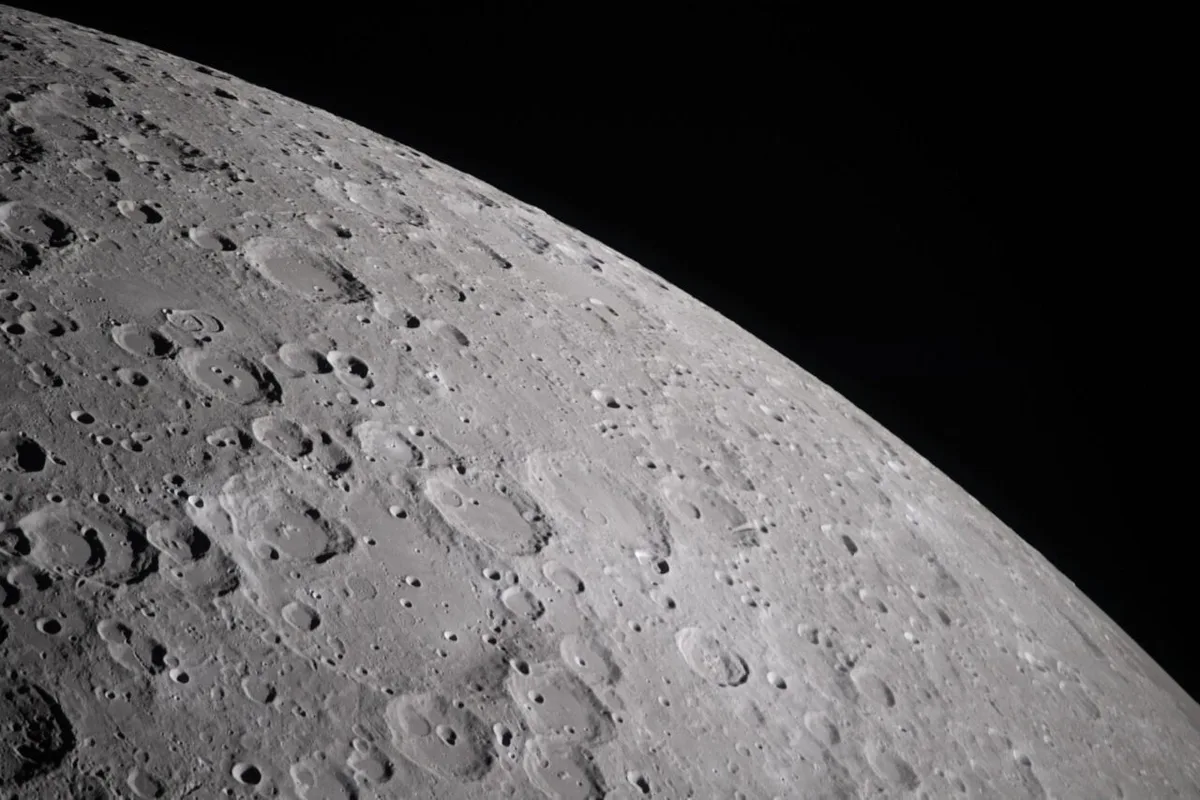
We just got our first look at the impact crater left by a wayward SpaceX Falcon 9 rocket that struck the Moon earlier this month.
The Falcon 9 rocket crashed into the lunar surface after being stranded in a highly elliptical orbit, and NASA’s Lunar Reconnaissance Orbiter (LRO) captured a series of images of a new crater that formed from the impact.
The crater appears to be 60 feet wide (18 meters) and less than 10 feet deep (3 meters), according to NASA .
On January 15, 2025, a Falcon 9 rocket launched from NASA’s Kennedy Space Center carrying a pair of commercial lunar landers. The rocket’s upper stage failed to reenter Earth’s atmosphere after separating from its payloads, and ended up stuck in a highly elliptical orbit for months.
On August 5, the rocket slammed into the Moon near Einstein Crater at 5,400 miles per hour (8,690 kilometers per hour). Astronomers were hoping to catch a glimpse of the impact in real time, but they were sadly disappointed.
Instead, a NASA spacecraft that’s been circling the Moon for over seven years captured the clearest view of the aftermath on August 11 and 12.
The rocket was roughly 39 feet (12 meters) long, 13 feet (4 meters) wide, and weighed about 8,800 pounds (4,000 kilograms). Astronomers first calculated the rocket’s trajectory using publicly available data, after which NASA used its Center for Near Earth Object Studies to refine the trajectory and identify the location of the impact.
NASA passed on that information to the Korea Pathfinder Lunar Orbiter (Danuri) team, which imaged the crater on August 6 . The Danuri mission team later sent coordinates to NASA’s LRO team to help refine their follow-up imaging sequence.
To capture the new images, NASA engineers tilted the spacecraft so its cameras would point toward the crater each time LRO passed above the Moon at a distance of around 60 miles (96 kilometers). Using a variety of viewing angles, scientists could see the crater under several lighting conditions to show its unique features.
LRO used its Narrow-Angle Camera to capture the crater in detail, revealing dark and bright rays emanating from the crash site. The brighter rays and splotch above the crater is fresher material that was excavated from deeper below the surface.
LRO circles the Moon from pole to pole every two hours as Earth’s natural satellite rotates underneath it. The spacecraft must wait until a specific spot turns into view to capture a photograph, which took six days in this case. If LRO’s camera was even 10 seconds off, the targeted area would have drifted off-center by 10 miles (16 kilometers).
The new images help scientists learn more about lunar impact events and the hazards of space debris, which could pose a threat to future human habitats on the Moon.
5News aggregated this summary from the outlet’s public feed. The full article, with all the context, is on gizmodo.com — the content belongs to Gizmodo.