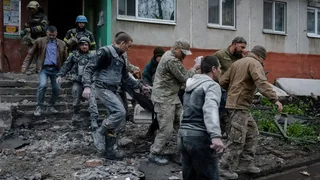
They've survived 2 major earthquakes in Colombia: "A sense of powerlessness"

Jahir Rodríguez knew what was happening when he saw thick, dark clouds forming near his home in western Colombia on Monday morning. Parts of his dear Pereira were crumbling.
The urban planner and former professor also knows what happens next after a powerful earthquake devastates whole communities. He sprang into action after a deadly 1999 quake in Armenia, about 30 miles away from his current home, that killed around 1,200 people. He did so again three days ago when a 7.4-magnitude earthquake struck the same region, killing at least 265 people and trapping hundreds under debris across several states.
"You feel a sense of powerlessness," Rodríguez said as he recalled seeing glass shattering and water seeping through the cracked and fallen walls of shaken buildings.
Rodríguez, who is 68 and retired, learned how to respond to earthquakes after the disaster in Colombia's coffee region at the turn of the century. He gained valuable insights from a delegation of Japanese responders who had faced a deadly quake in Osaka in 1995.
"It is a mistake to think that you will be here for days or months," Rodríguez said they told him. "You will be here for years."
Rodríguez, who also assisted after a major earthquake in Talca, Chile, in 2010, is referring to the encampments forming in parks across the city, a common sight after people lose their homes to natural disasters.
In Colombia, the new government, which took over just days before the quake, is helping set up the encampments, Rodríguez said. But that tactic may be shortsighted, he said, since people will remain displaced for years and need permanent living quarters now. He also says the primary concern right now is more dire.
"The first is to count people, the second is to organize them where they will be placed, and the third is the reconstruction plans," he said.
Getting people to leave their uninhabitable homes is hard, Rodríguez said. He spent the day after Monday's earthquake visiting with a friend and fellow urban planner whose apartment building toppled onto others. When he arrived, Rodríguez said, his friend would not move from the site out of fear that vandals would enter the building — something that was more prevalent after the 1999 quake.
"People are here in front of the sidewalk, watching their house," Rodríguez said with immense sadness.
He's seeing people making meals on the side of the road, and says it's hardest to think about what will come next for them.
"Days and days and days, nights and nights and nights, months and months and months in a shelter waiting to be helped," he said.
Everardo Murillo created a blueprint for long-term recovery efforts following the 1999 earthquake. Colombia's then-president, Andrés Pastrana, tasked him with creating the fund and organization to allocate money for people who lost their homes and businesses.
Since then, he's been consulting for other governments at the behest of organizations such as the World Bank, and he recently visited Venezuela after back-to-back earthquakes devastated parts of the country.
5News aggregated this summary from the outlet’s public feed. The full article, with all the context, is on www.cbsnews.com — the content belongs to CBS News.