Tens of thousands flee as Iran-backed Houthis draw Yemen into wider war
CAIRO (AP) — As Houthi rebels closed in, Eshraq Abdel Gelil and her husband fled their home, walking through the mountains before catching a ride to a nearby city. Four months pregnant, she feared another miscarriage.
They are among an estimated 125,000 people who have fled as the Iran-backed rebels have advanced down the Red Sea coast to a key maritime chokepoint. The offensive, linked to the wider Iran war, has threatened Saudi oil exports, pushed up global fuel prices and rattled markets.
READ MORE: Fighting in Yemen intensifies, and Houthis launch more attacks on Saudi Arabia
The cost has been far greater for Yemenis caught in the crossfire. Many have fled their homes with only what they could carry. The Arab world's poorest country was pushed to the brink of famine in an earlier phase of the civil war, which killed an estimated 150,000 people.
A Saudi-led blockade, along with the Houthis' repressive rule and detention of U.N. and aid workers, has made life miserable in the now-expanding territory under rebel control. Yemen's Saudi-backed government, weak and fragmented, has struggled to push them back.
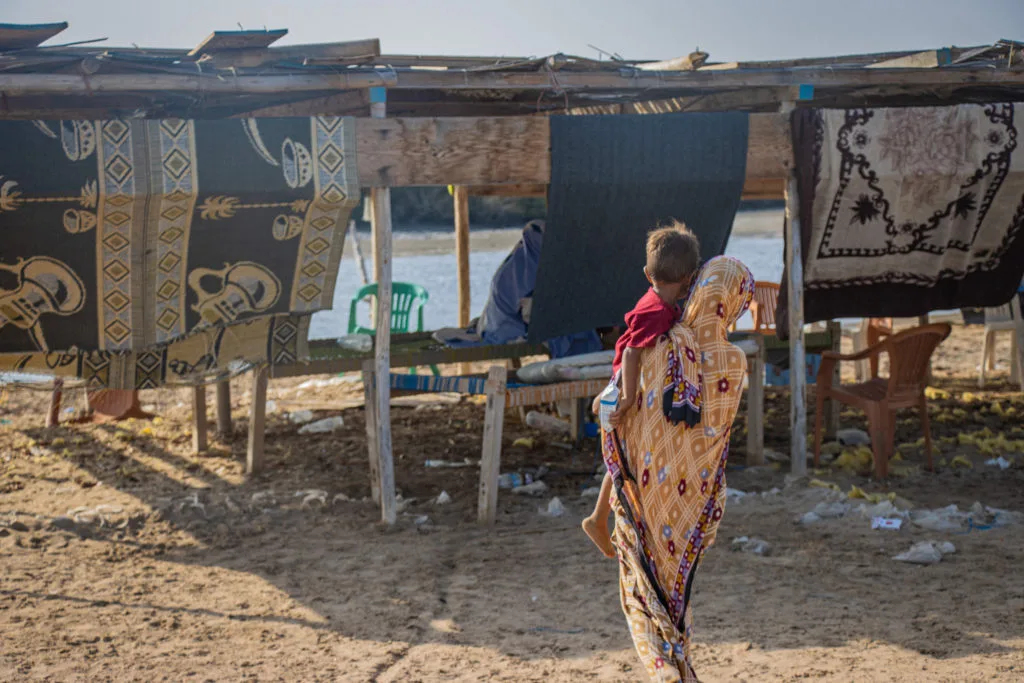
Abdel Gelil is now sheltering with family in the southwestern city of Taiz, while others are sleeping in the streets or erecting makeshift tents out of plastic.
Her husband, Mohamed Thabet, said the latest fighting was "extremely fierce" and more intense than a battle in 2017 that had also forced him to flee. "There was shelling and shrapnel near the house," he said.
They walked for 5 kilometers (3 miles) before taking a vehicle for around 60 kilometers (37 miles) on mountain roads.
When they arrived in Taiz, a doctor told them that the baby had moved lower in the womb. Abdel Gelil miscarried at the same point in a previous pregnancy.
Now they are packed into a home with extended family. They can only afford to eat twice a day, and they worry that Abdel Gelil is not getting enough nutrients for her and the baby.
Thabet also worries about his sister, who hasn't been able to afford her diabetes medication for over a month. She and her two daughters, 8 and 13, have a blood condition that makes them susceptible to anemia, he said.
The civil war dates back to 2014, when the Houthis seized much of northern Yemen, including the capital, Sanaa. Saudi Arabia intervened the following year in support of Yemen's internationally recognized government. A 2022 ceasefire largely halted the fighting.
Hostilities erupted again in July, when the Houthis renewed attacks on Saudi Arabia in what the rebels said was an attempt to lift the blockade. The attacks on Saudi Arabia's oil industry came as the U.S. was having some success in reopening the Strait of Hormuz.
The fighting in Yemen has killed eight civilians and wounded another 32, according to the U.N. humanitarian office, which says at least 125,000 people have fled their homes. The U.N. children's agency, known as UNICEF, says the displaced include more than 57,000 children.
5News aggregated this summary from the outlet’s public feed. The full article, with all the context, is on www.pbs.org — the content belongs to PBS NewsHour.