The Fauci hearing was painful to watch. But we need answers on Covid-19’s origin| David Relman
Despite the recent hearings in Congress, we seem to be even further from the goal of understanding Covid-19’s origin’s than we have ever been
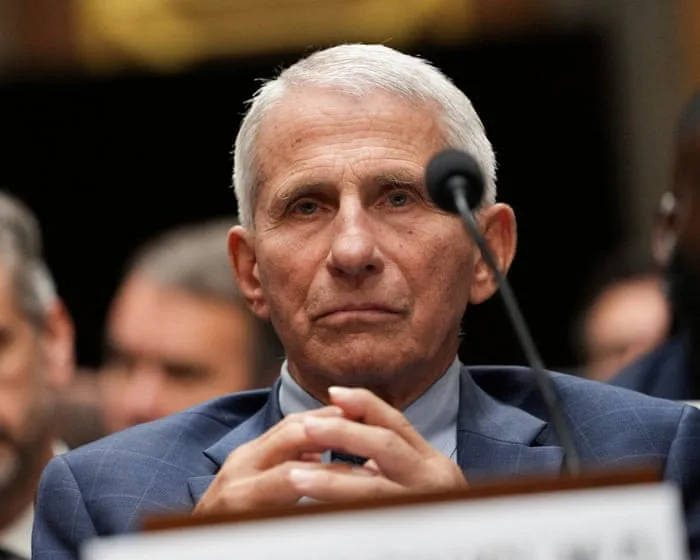
A s a microbiologist and infectious disease clinician, it has been tough to watch the recent devolution of public discourse on Covid-19 origins. It has been especially difficult for me to read the comments of Anthony Fauci about the origins debate in his now-public diary . And it has been painful to watch the televised spectacle hosted by the US senator Rand Paul on 29 July involving a hostile interrogation of Fauci.
Despite many early pleas, including my own , for a dispassionate, objective assessment of what we know, don’t know and need to know about Covid-19 origins, we seem to be even further from this goal now than we have ever been – plagued by politicization, polarization and illogical thinking.
Much is at stake: trust in science, scientists and government, not to mention our ability to thwart and respond to the next pandemic. How did this happen and how do we dig ourselves out?
By the eve of Covid-19, after 20 years of debate, we had agreed to disagree about whether humans were capable of starting a new pandemic. Most public health scientists believed that nature was the only important “bioterrorist” , based simply on prior probabilities.
Other scientists, who focused on the growing power of biotechnology and studied human behavior, believed that humans had become more than fully capable . When Covid suddenly blew up in late December 2019 in Wuhan, China, and was quickly attributed to a coronavirus with recent ancestors in bats, two possibilities leaped to the fore: a natural “spillover” at one of the unregulated wildlife markets in the city (as with the original 2002 Sars outbreak), and a lab accident in Wuhan, where there happened to be the world’s largest collection of bat-associated coronaviruses.
Six years later, despite much mudslinging, each of these possibilities remains viable, supported by circumstantial, but not dispositive, evidence. The virus has not been found in nature, nor in a lab.
At the heart of the dispute, two statements are true but not necessarily related. First, we see in scientific publications that risky work with bat coronaviruses was undertaken in Wuhan, some with US National Institutes of Health (NIH) support.
Its goal was prediction of disease emergence. Some of this work resembled a form of Russian roulette, in which pieces of novel bat viruses were shuffled to make chimeric viruses and then test their properties (under inadequate biosafety conditions).
Yet, this published work does not reveal a plausible Covid precursor virus. Thus, Rand Paul is correct in that risky work was funded by NIH in Wuhan. Anthony Fauci is correct in that the published work, on the face of it, did not cause Covid.
5News aggregated this summary from the outlet’s public feed. The full article, with all the context, is on www.theguardian.com — the content belongs to The Guardian US.