Friday, August 28, 2026 SourcesAbout🌓
🇺🇸 US ▾
BREAKING
Dominion still has pending lawsuits against election deniers such as Rudy Giuliani and Sidney Powell Russia is 'going backwards' in equipment and deploying post WWII-era tanks, according to Western officials Podcast: One country musician is calling for other artists to oppose assault rifles Bidets save you money and reduce waste — we tested the best options out there 50+ products to make your life easier and our planet cleaner Mother's Day is around the corner. Here are 50+ thoughtful gifts she'll love A head-to-toe guide of how men should dress this spring, and where they should shop 42 of the most useful travel products you can buy on Amazon The 7 best high-yield savings accounts of April 2023 Taxes are due tomorrow. Here's how to file for an extension Dominion still has pending lawsuits against election deniers such as Rudy Giuliani and Sidney Powell Russia is 'going backwards' in equipment and deploying post WWII-era tanks, according to Western officials Podcast: One country musician is calling for other artists to oppose assault rifles Bidets save you money and reduce waste — we tested the best options out there 50+ products to make your life easier and our planet cleaner Mother's Day is around the corner. Here are 50+ thoughtful gifts she'll love A head-to-toe guide of how men should dress this spring, and where they should shop 42 of the most useful travel products you can buy on Amazon The 7 best high-yield savings accounts of April 2023 Taxes are due tomorrow. Here's how to file for an extension
Science

The night we nearly saw a 'blood moon' (and why I love near-misses in astronomy)
Space.com ·
The night we nearly saw a 'blood moon' (and why I love near-misses in astronomy)

Stargazers have trigger words — total, bright, peak, maximum, best.

But observing the sky is often more interesting when something seems neither one thing nor the other.

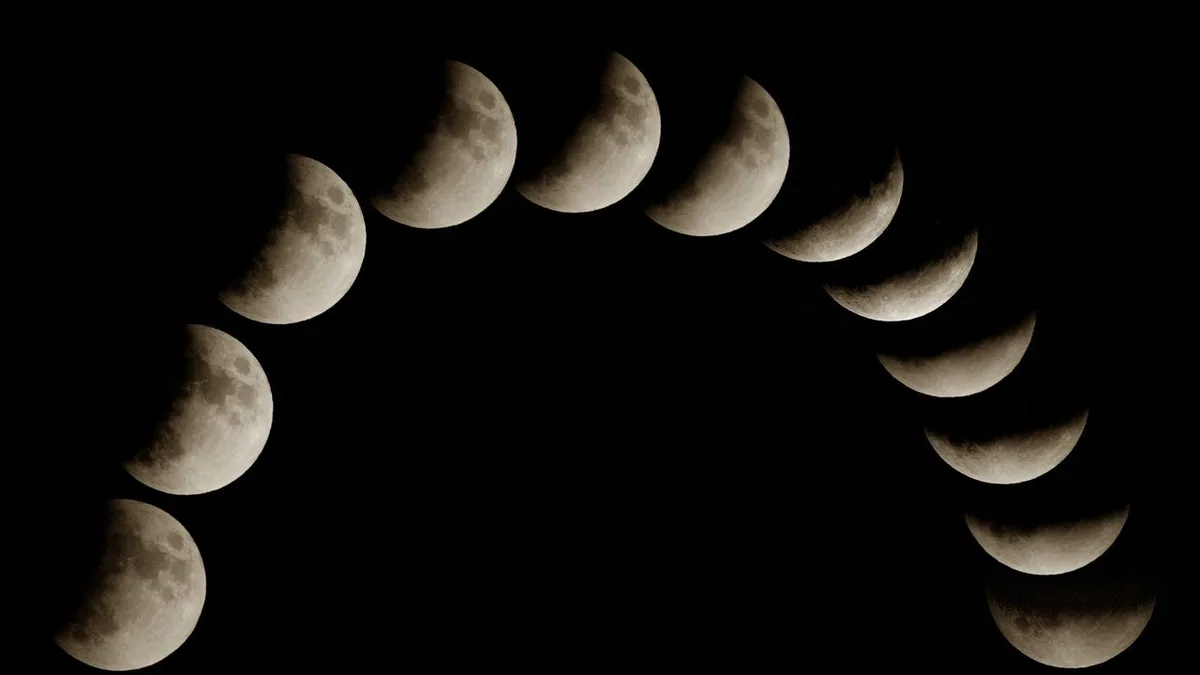
A case in point was the almost-total partial lunar eclipse we just witnessed.

From where I watched, early on Aug.

28, Earth's shadow reached its maximum across the lunar surface, covering 96.2% of it, as the moon began to sink in the west.

A thin part of the lunar surface remained outside the darkest part of Earth's shadow, and the surface never did quite go red.

At maximum eclipse, the moon looked like a sliver — totally unlike a crescent moon, and something very odd to behold — and came within a fingernail of becoming a totally eclipsed " blood moon ." Astronomy and stargazing are full of this sort of near-miss.

A comet that nearly becomes bright enough to tell your neighbors about, but ultimately becomes nothing more than a smudge in binoculars that few can even find, let alone be impressed by.

A meteor shower that's hyped as the strongest for years that doesn't live up to expectations.

Or the worst kind — a cloud deck that clears a few minutes after a total solar eclipse comes to an end.

We pretend these moments are failures because they do not match the headline version of the sky.

But it's often the "almost" part that keeps the imagination alive.

Beyond the headline act A total lunar eclipse happens only when the entire moon passes into Earth's dark umbral shadow.

On Aug.

Read the full article on Space.com ›

5News aggregated this summary from the outlet’s public feed. The full article, with all the context, is on www.space.com — the content belongs to Space.com.
More from Space.com

See all ›

More in Science

See all ›