El Niño Has Become a Doom Loop
In the middle of the Pacific Ocean, along the equator, scientists have drawn a box.
It’s a big box, two-thirds the size of China, yet hardly anyone lives inside it.
This rectangular swath of open ocean is monitored by satellites and a network of moored buoys that measure minute changes in the temperature of the water, with an eye toward anomalies.
Every few years or so, driven by changing winds and currents, the water temperature in this part of the ocean starts to rise; even a half degree Celsius above normal over months warrants a designation that an El Niño phase has begun.
That’s enough warming to unleash floods and fires, drought and famine, around the world.
The box is called Niño 3.4.
Right now, it’s hot in the box.
“Like a baby pool,” Kristina Tietjen, who spent most of August scuba diving in the middle of this mass of abnormally warm water, told me.
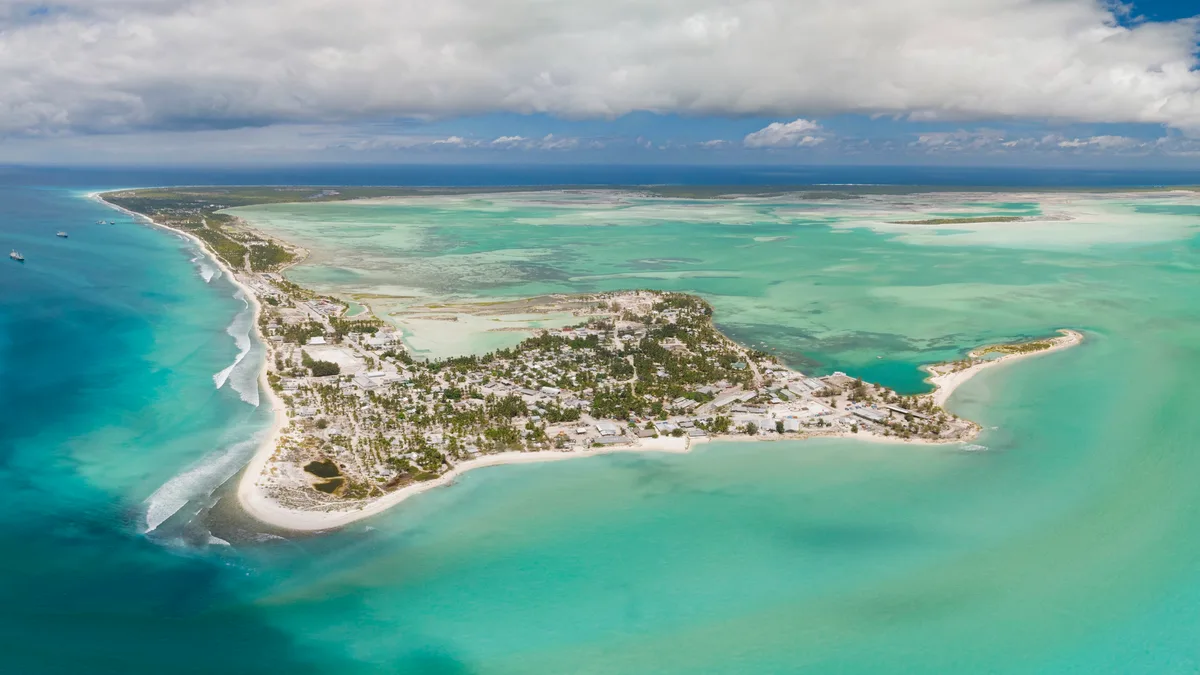
Tietjen has been coming to the world’s largest atoll, Kiritimati, for more than a decade to study its coral reefs.
She usually dives in a medium-weight wetsuit; this trip, her team needed only rash guards.
It is still early in this El Niño cycle—which is likely to be the strongest ever recorded—but the waters around Kiritimati have already been 3 to 4 degrees Celsius above normal.
Tietjen’s time on Kiritimati (pronounced like Christmas ) has allowed her to watch, in brutal detail, what these repeated warm-water cycles, playing out in a steadily warming ocean, mean for the great tropical coral reefs here, which were once near pristine.
During her first El Niño, in 2015–16, 90 percent of Kiritimati’s coral reef died.
Years of slow, partial recovery followed.
5News aggregated this summary from the outlet’s public feed. The full article, with all the context, is on www.theatlantic.com — the content belongs to The Atlantic.