How AI is playing a growing role in wildfire response
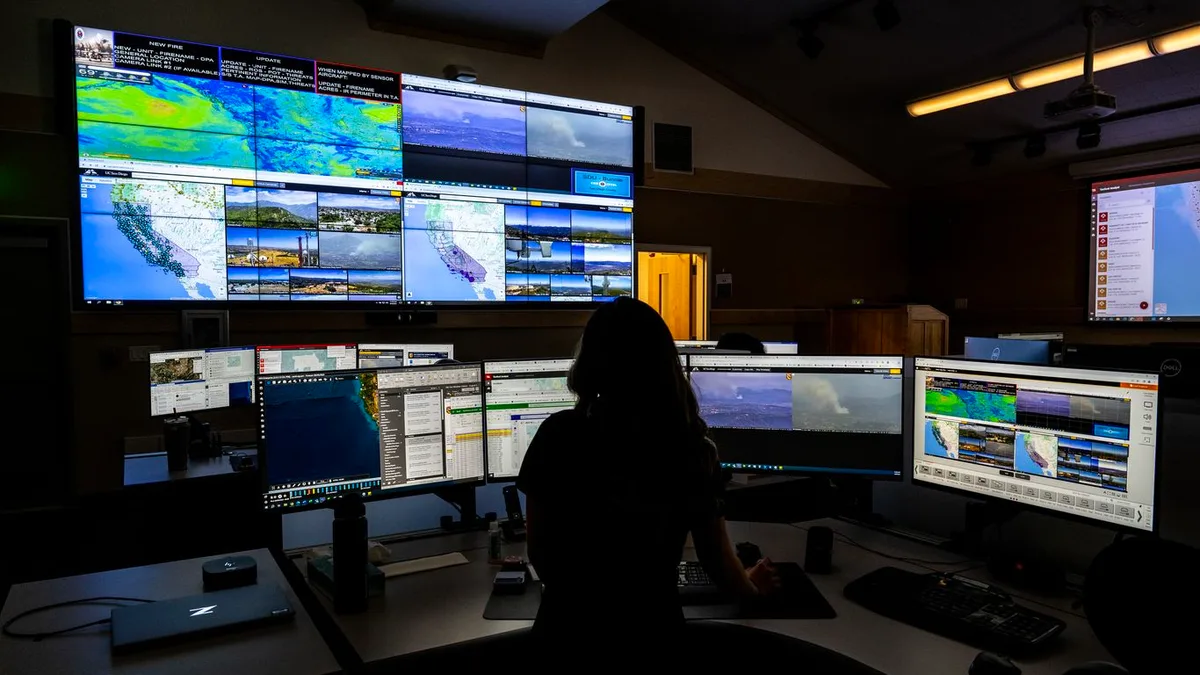
AI is already helping detect and monitor wildfires.
Now, researchers are exploring how it could help fire officials decide where to deploy crews across multiple fires.
Why it matters: Studies show climate change is contributing to longer, more intense wildfire seasons , forcing officials to make high-stakes decisions about how to prioritize limited resources.
AI could help them process information to make those decisions faster.
State of play: Jason Fallon, the U.S.
Wildland Fire Service's division chief for wildland fire intelligence, told Axios that AI is ingrained in many areas of wildfire management nationally, including monitoring, detection, information dissemination and data transfer.
AI-powered cameras, satellite systems and weather-prediction tools are helping agencies in Western states detect wildfires and deploy crews sooner.
For satellite data triage, AI can "help us quickly work through a workflow to separate noise from reality," Fallon said.
Zoom in: Léonard Boussioux, an information systems professor at the University of Washington Foster School of Business, is part of a team researching how machine learning and optimization could assist fire officials in deciding where to send crews when multiple wildfires are burning.
The approach predicts how multiple fires could evolve under different levels of suppression, then uses a mathematical model to recommend how crews could be deployed, according to a research paper that has yet to be peer reviewed.
By the numbers: Last year, 77,850 wildfires were recorded across the U.S. — "noticeably higher than the five- and 10-year averages," according to the National Interagency Coordination Center.
This year's wildfire season is surpassing the 10-year average for the number of fires and acres burned, according to the National Interagency Fire Center.
What they're saying: "What's hard to do is to predict which fire is going to blow up," Boussioux told Axios.
"Which fire should we prioritize right now, knowing that we don't necessarily have [the] resources?" Boussioux's team is trying to anticipate how multiple fires could evolve simultaneously.
5News aggregated this summary from the outlet’s public feed. The full article, with all the context, is on www.axios.com — the content belongs to Axios.