Once Upon a Time in Harlem Is One of the Great Documentaries of the Year
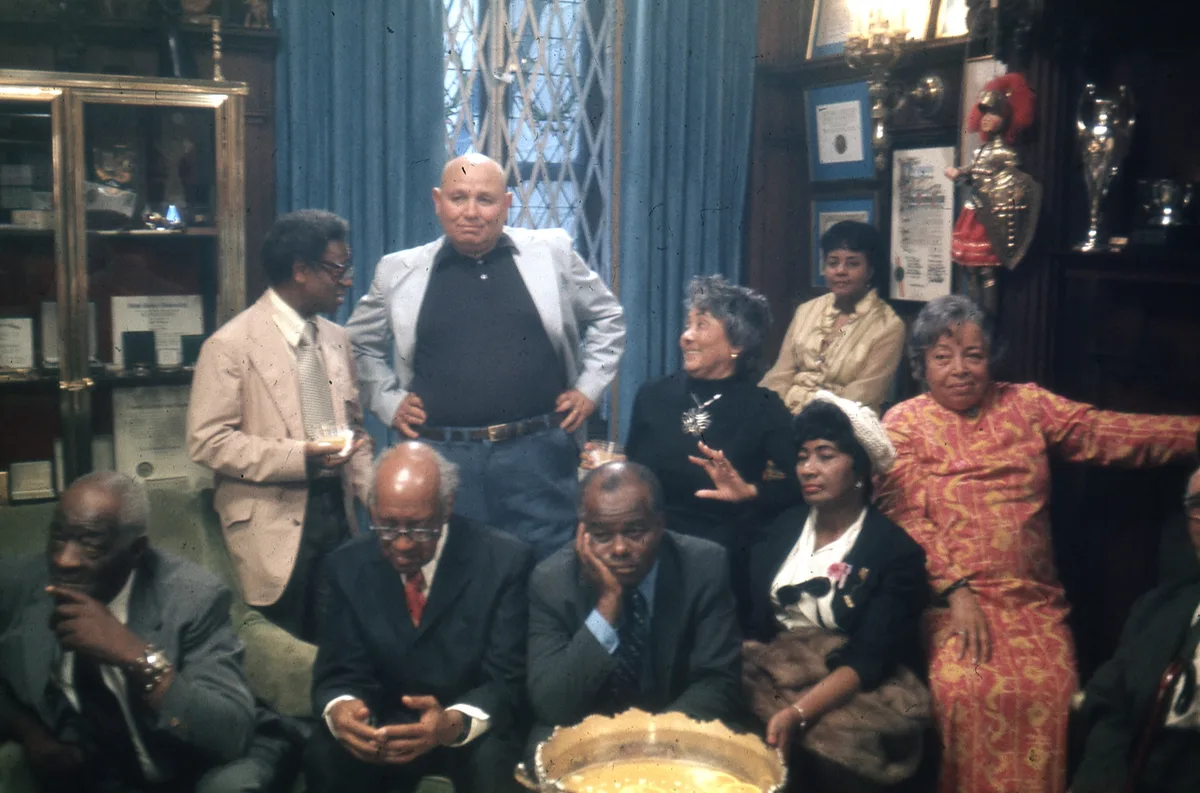
Once Upon a Time in Harlem —Courtesy of Neon In 1972, filmmaker William Greaves arranged what we now know was one of the great parties of the 20th century: He commandeered the Harlem apartment of Duke Ellington and arranged for a special group of old friends and colleagues, many of whom had not seen one another in 50 years, to reconnect.
The invitees were key figures of the Harlem Renaissance , including muralist Aaron Douglas, poet and novelist Arna Bontemps, society editor Gerri Major, jazz pianist and composer Eubie Blake, and many more.
Greaves’ aim was to film the event—he appointed his son, David, as one of the cinematographers—and turn it into a documentary that would serve not just as a record of how these people lived and what they accomplished, but as a way of thinking about how we honor those who are a repository for our past.
For a few hours in 1972 Harlem, it was circa 1925 again.
This group of people laughing, arguing, and reminiscing about a great era of American history—and also about members of their cohort who were long gone—recaptured lightning in a bottle.
And yet the resulting film, Once Upon a Time in Harlem, is one we almost didn’t see.
Greaves, who’d made a name for himself with experimental documentaries like Symbiopsychotaxiplasm: Take One (1968), as well as establishing the pioneering public television program Black Journal, considered his Harlem Renaissance film to be one of the most important projects of his life.
But although he worked on it off and on for years, he wasn’t able to complete it before his death, in 2014.
At last, the film he envisioned has been brought to life by David Greaves and his daughter—William’s granddaughter—producer Liani Greaves.
Once Upon a Time in Harlem is one of the great documentaries of its era, and certainly of this year.
It’s history that breathes.
Gerri Major —Courtesy of Neon Ellington's elegantly appointed flat fills up quickly; for the viewer, it’s like dropping into a party right in the middle, as clusters of beautifully dressed people greet one another, embracing, laughing, talking. (Ellington himself was ill and unable to attend.) The guests make themselves at home: Photographer James Van Der Zee, who took extraordinary portraits of the major “show people” of the 1920s, as well as everyday citizens of Harlem, steps up to Ellington’s piano and runs through a few graceful, rippling phrases.
We learn that he was trained as a classical musician before turning to photography, just one reminder of the ways people in the arts often need to find a means to support themselves—and sometimes those means can leave us with a lasting record of an era, as we can see from Van Der Zee’s gorgeous, expressive portraits, which flash on the screen like a blessing.
5News aggregated this summary from the outlet’s public feed. The full article, with all the context, is on time.com — the content belongs to TIME.