25 years later, 9/11 still shapes the way we fly. Here's how air travel changed after the attacks.
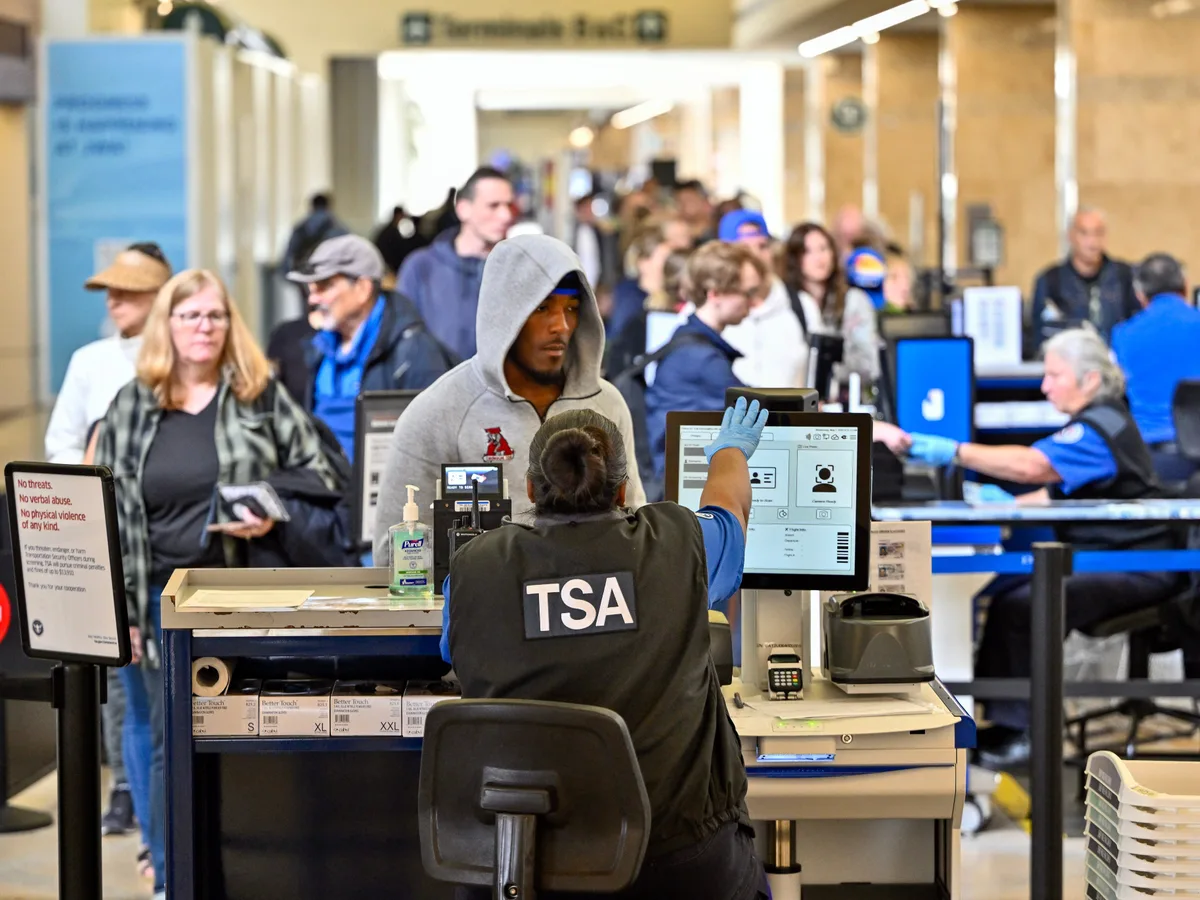
A TSA security checkpoint at John Wayne Airport in Santa Ana, California.
Jeff Gritchen/MediaNews Group/Orange County Register via Getty Images Aviation security was completely overhauled after the terrorist attacks of September 11, 2001.
The TSA, which federalized airport security, was established in November 2001.
After 9/11, only ticketed flyers were allowed past security, and cockpit doors were bulletproofed.
Flying has completely changed since Al Qaeda hijackers carried out the terrorist attacks of September 11, 2001, 25 years ago.
The newly created Transportation Security Administration replaced the private screening checkpoints that flyers were used to and introduced a new normal at airports — one where water bottles are emptied, bodies are scanned, and goodbyes are said before reaching the gate.
The planes were similarly hardened with bulletproof doors and the strictest protocols for cockpit access; pilots and flight attendants also received additional training to handle terrorists.
Arik Arad, who advised the President's Commission on Aviation Security and Terrorism following the 1988 bombing of Pan Am Flight 103 and served as head of security at Israel's Ben Gurion Airport , said that these changes were part of a post-9/11 paradigm shift favoring a layered approach to security.
"The principle is simple — if one layer fails, another should detect or stop the threat," Arad, who now operates an aviation cybersecurity company , told Business Insider.
"Intelligence, passenger assessment, screening, baggage security, airport access control, aircraft protection, trained personnel, and law enforcement all became parts of an interconnected security system.
That change in philosophy was, in my view, more important than any individual technology introduced after the attacks." Here are the biggest ways flying has changed since 9/11.
After the September 11 attacks, airport security was federalized through the establishment of the Transportation Security Administration.
CHICAGO - SEPTEMBER 10: A security worker with the Transportation Security Administration (TSA) screens a travelers belongings September 10, 2002 in Terminal 1 at O'Hare International Airport in Chicago, Illinois.
Over 500 new federally trained security workers took over the screening work today at security checkpoints in the airport's largest terminal, replacing workers from Argenbright Security.
5News aggregated this summary from the outlet’s public feed. The full article, with all the context, is on www.businessinsider.com — the content belongs to Business Insider.