Cornell’s Fraternity Party Suspension Draws Calls for Broader Reform
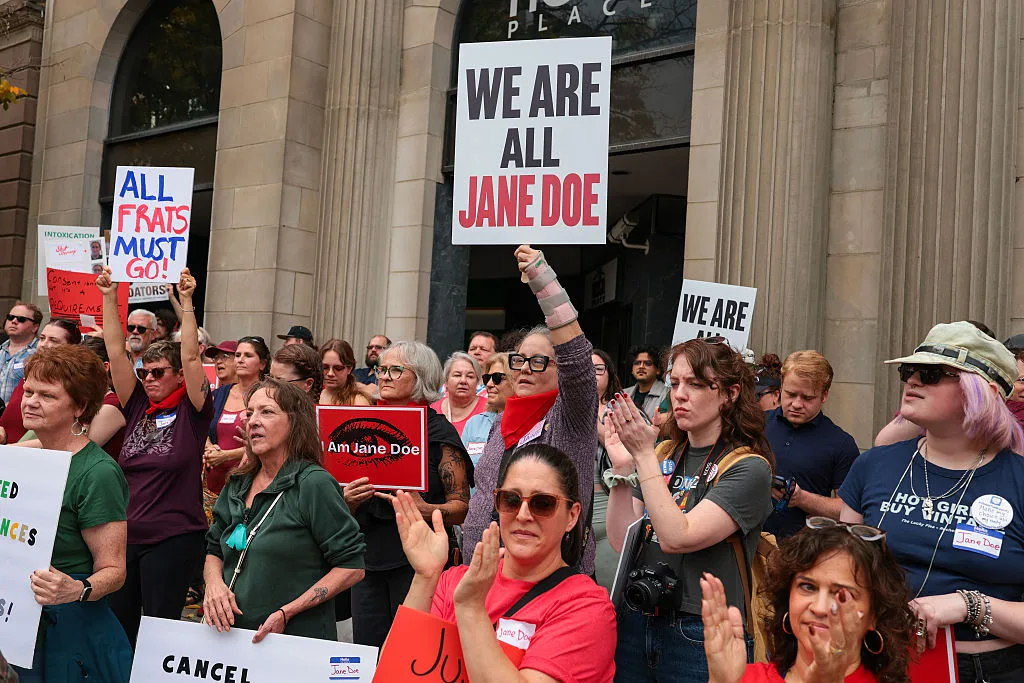
Protesters listen to speakers at a rally in support of a former Cornell University student known as Jane Doe at the Ithaca Commons on Oct.
13, 2026. —Anna Moneymaker—Getty Images After weeks of pressure on Cornell’s administration over its handling of an alleged gang rape by fraternity members, students and professors are expressing doubt that the university's leadership is doing enough to address the issue of sexual assault on campus.
They expressed frustration with three measures that were announced Tuesday as a means to “strengthen campus safety”—one of which involved banning fraternity houses from hosting parties or social events for the rest of the academic year.
Other measures included adding staff to Cornell’s Office of Civil Rights, working with New York State Police to utilize trauma-informed criminal investigators, and improving education regarding the bystander effect.
“These conversations, and campus protests, have underscored my deep conviction that we must do better: that the time for meaningful and lasting change at Cornell, and at campuses across the country, is now,” Cornell President Michael Kotlikoff said in the announcement.
Read More: After the Cornell Case, Should Colleges Ban Fraternities? Jack Huber, a member of Students for a Democratic Cornell (SDC), says that this is a step forward—however, it is “not nearly enough to tackle this issue on an institutional level.” Students are also calling on the university to revoke the degrees of the accused fraternity members; establish independent hearings and minimum sanctions for sexual assault; and commission an external review of the school’s handling of the case.
Cornell acknowledges in its Tuesday statement that the school has “fallen short” and points to the independent review that was launched by the university’s Board of Trustees.
It is being led by former U.S.
Deputy Attorney General Sally Yates.
Huber says that the campus community believes Cornell is ultimately deflecting responsibility.
“The vast majority of campus is absolutely not satisfied by this response, and many of which are enraged that the administration would so blatantly redirect blame away from themselves to get Cornell out of the news,” Huber says.
Cornell is accused of being negligent in its response to the incident when it was initially reported in 2024.
Jane Doe’s lawsuit against the seven men she accuses of rape also accuses Cornell of violating New York law .
The school said on Sept.
5News aggregated this summary from the outlet’s public feed. The full article, with all the context, is on time.com — the content belongs to TIME.