Trump’s dumb border wall
The US has the one of the most advanced “smart” surveillance apparatuses in the world. So why does this administration insist on building environmentally destructive, physical walls?
The US has the one of the most advanced “smart” surveillance apparatuses in the world. So why does this administration insist on building environmentally destructive, physical walls?
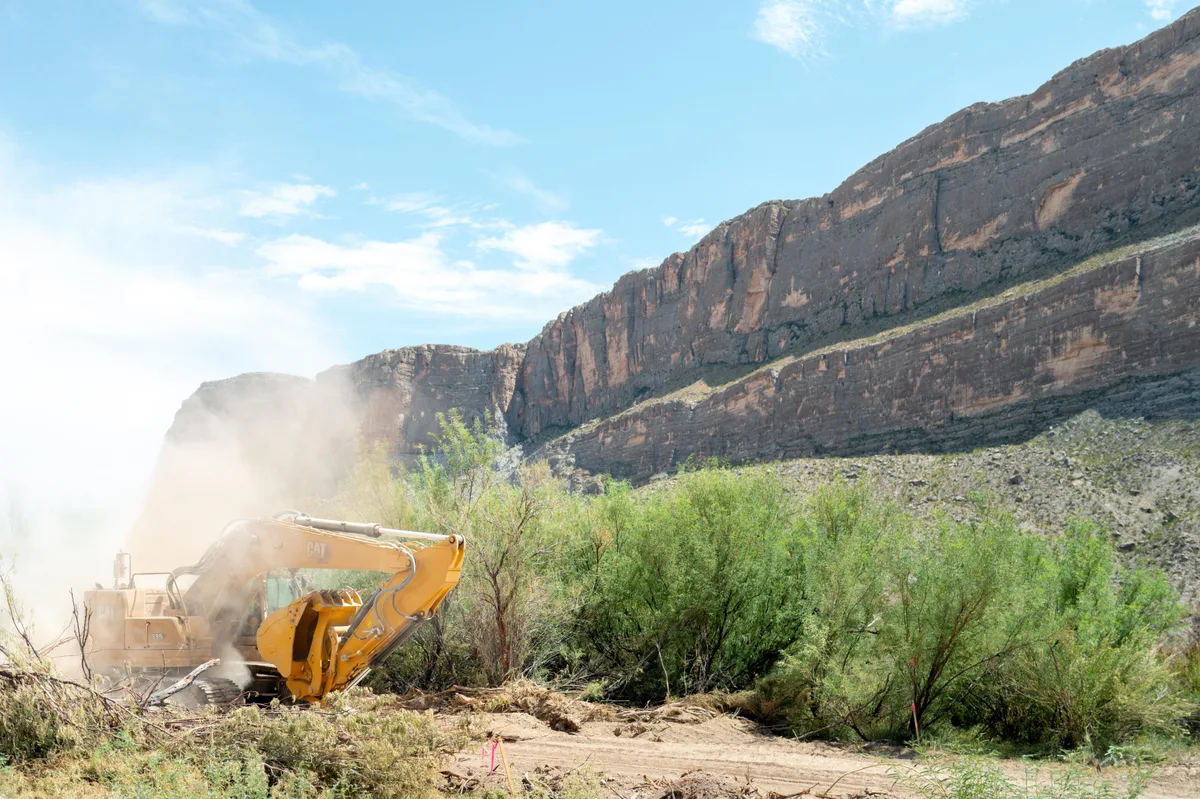
About 22 miles south of the former mining town of Patagonia, Arizona, down a winding, unpaved mountain road that passes cows grazing on open range, stands a cottonwood tree believed to be at least 200 years old. The “grandmother” tree, as some locals call it, is imperiled and already showing signs of stress, almost as if it knows its fate. The leaves are yellowing prematurely, falling to the ground at the height of summer. On July 27th, a construction crew felled three neighboring trees to build an extension of President Donald Trump’s wall along the US-Mexico border.
An activist climbed up the last tree standing two days later and ever since, someone has sat on a platform hoisted onto the tree’s branches. They say they’ll sit there as long as it takes, because as long as someone is in the tree, it can’t be cut down.
The protest is about more than one cottonwood. “This tree represents a literal line in the sand against border militarization in general,” said Russ McSpadden, the Southwest conservation advocate for the Center for Biological Diversity.
In recent weeks, the Department of Homeland Security has revived its effort to wall off the border, dispatching construction crews to remote parts of Texas, Arizona, and the Tohono O’odham Nation’s reservation lands to finish Trump’s wall — and has waived environmental laws to get it built, causing backlash from the tiny desert town of Ajo to the even tinier ghost town of Terlingua.
This latest construction push is happening despite record-low encounters along the southwestern border. In fact, encounters at the southwest border dropped almost immediately after Trump took office — not because of any new infrastructure, but because he effectively shut down asylum. Despite the steep decline in migrant crossings, the One Big Beautiful Bill Act, which passed along party lines in 2025, gave Trump an additional $46.5 billion to finish building the wall.
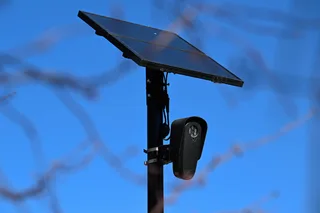
The border wall is more than just a wall; it’s a vast surveillance network of interconnected drones, towers, and cameras. Even in areas where there’s no visible barrier separating the United States and Mexico, CBP relies on this “ virtual wall ” to track migrants. This vast surveillance apparatus is far more effective than a wall, and it’s already largely in place.
In the ghost town of Lochiel, Arizona, activists from surrounding communities have set up an encampment on private property near the cottonwood tree to support the protest. They take turns cooking meals and use a pulley system to transport food and water to the person sitting in the tree. They know they’re being watched. Trucks from Vision Quest Solutions, a private security firm that advertises itself as veteran- and Native American-owned, roll up and down the fresh dirt road just south of the tree.
5News aggregated this summary from the outlet’s public feed. The full article, with all the context, is on www.theverge.com — the content belongs to The Verge.