Iran’s economy faces another blockade: Red tape and gridlock are clogging up land routes that bypass the U.S. Navy’s Hormuz stranglehold
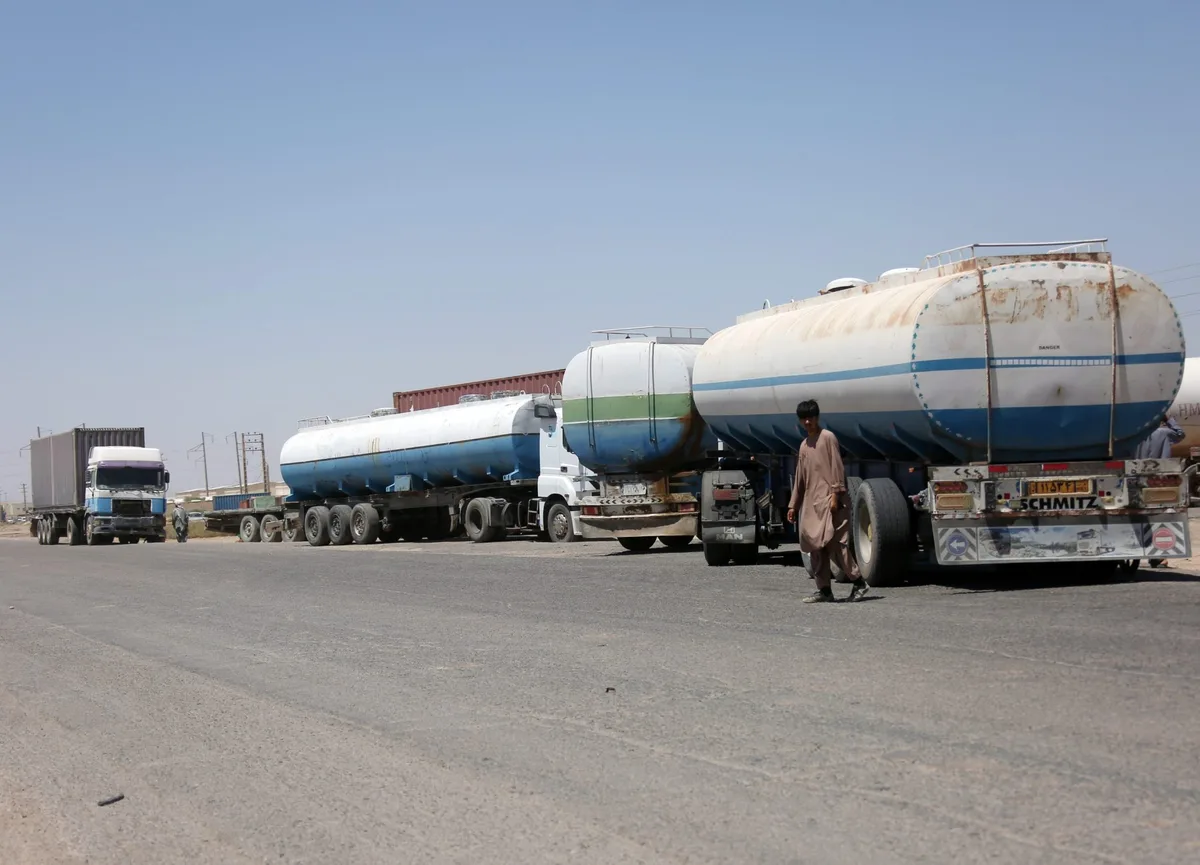
The U.S. naval blockade on Iran is already crushing its economy, and efforts to divert shipments over land are not providing much relief.
Before the war, more than 80% of Iran’s trade tonnage transited by sea via southern ports, but that’s been closed off.
U.S.
Central Command said Sunday, it has redirected 109 commercial vessels to ensure compliance with the blockade.
As a result, convoys of trucks have flooded land routes along Iran’s borders with Turkey, Pakistan, Afghanistan, Iraq, and Turkmenistan.
Iran’s trade with Turkey, for example, jumped 19% to $3.2 billion during the first half of the year.
But bureaucratic hurdles, such as long customs checks, and infrastructure that wasn’t designed to handle so much volume have produced massive traffic jams.
At one crossing with Turkey, 3,700 trucks were stranded on the Iranian side.
Lines of trucks stretch for miles, and drivers sometimes wait more than three weeks to finally bring their cargoes across a border.
During that time, perishable foods go bad, and delays for other essentials add to costs, with inflation now at 90%.
A Turkish truck driver hauling used cars into Iran told the Financial Times that wait times at the border on the return trip can reach 24 days.
And an Iranian trucker said he spent 23 days waiting at a crossing along the Afghanistan border in mid-June.
At the border with Turkmenistan, lack of warehouses and proper registration processes have limited the ability to transport more goods by rail, according to the Wall Street Journal .
While bilateral trade with Iran’s neighbors is up, overall trade is still down.
5News aggregated this summary from the outlet’s public feed. The full article, with all the context, is on fortune.com — the content belongs to Fortune.