These Infections Are Linked to 12% of New Cancer Cases
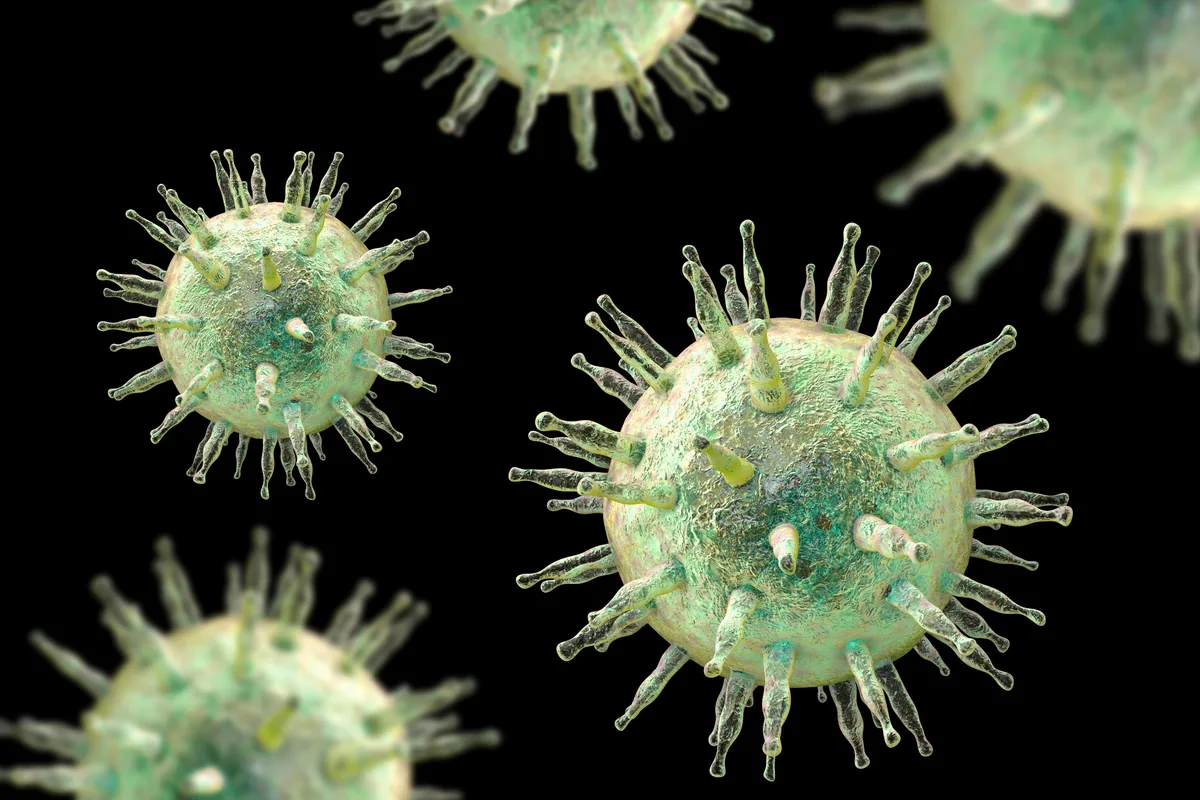
A computer illustration of Epstein-Barr virus (EBV) —Kateryna Kon/Science Photo Library—Getty Images Cancer can seem random.
It’s often the result of many factors, including genetic mutations that build up over a lifetime of exposure to sun , pollution , and other sources of DNA damage, combined with a person’s genetic predisposition .
DNA damage accumulated over time can weaken the body’s ability to suppress out-of-control cell growth, which is how tumors form.
But infections are another significant cause of cancer.
Uncovering the links between certain infections and cancers raises the hope that by preventing infection, one could prevent certain malignancies.
A recent report from the World Health Organization’s International Agency for Research on Cancer (IARC) published in the Lancet Oncology found that 12% of new cancer cases in 2024—the most recent year for which data were available—were caused by 12 infections.
Which infections are associated with cancer? Certain human papillomaviruses, or HPV, are behind the majority of cervical cancers and a number of head and neck cancers as well, says Harriet Rumgay, an epidemiologist at IARC who is an author of the new report.
About 4% of new cancer diagnoses in 2024 could be attributed to HPV infection.
Doctors and researchers have known for decades that hepatitis B and hepatitis C infections also drive many cases of liver cancer , linked to 2% and less than 1% of new diagnoses respectively, according to the report.
There is also strong evidence linking Helicobacter pylori , a bacterium that infects the stomach and small intestine, with gastric cancers.
This infection was calculated to be behind about 4% of new diagnoses.
And Epstein-Barr Virus (EBV), which causes mononucleosis and affects more than 90% of the world’s population , was involved in around 1% of new diagnoses, including lymphomas, nasopharyngeal cancers, and gastric cancers.
Seven other infections, including HIV, were also flagged as carcinogens in the study.
Most people who have these infections will not develop cancer.
5News aggregated this summary from the outlet’s public feed. The full article, with all the context, is on time.com — the content belongs to TIME.