The Trump Administration Wanted Her Expertise, Just Not Her
Editor’s Note: Read Julia Curlee’s full essay here .
Subscribe here: Apple Podcasts | Spotify | YouTube | Overcast | Pocket Casts When Julia Curlee was a kid growing up in Hawaii, she dreamed of becoming an intelligence officer.
In 2007, when she took her oath standing on the marble CIA seal, she achieved that goal.
But she had another childhood dream too: She’d always had “an unshakable belief that I should have been born a woman.” In 2013, Julia Curlee became the first CIA officer to transition openly and keep serving the agency.
She felt more effective at her job living as the person she always believed she was— and years ago wrote about her experience under a pseudonym in The Atlantic.
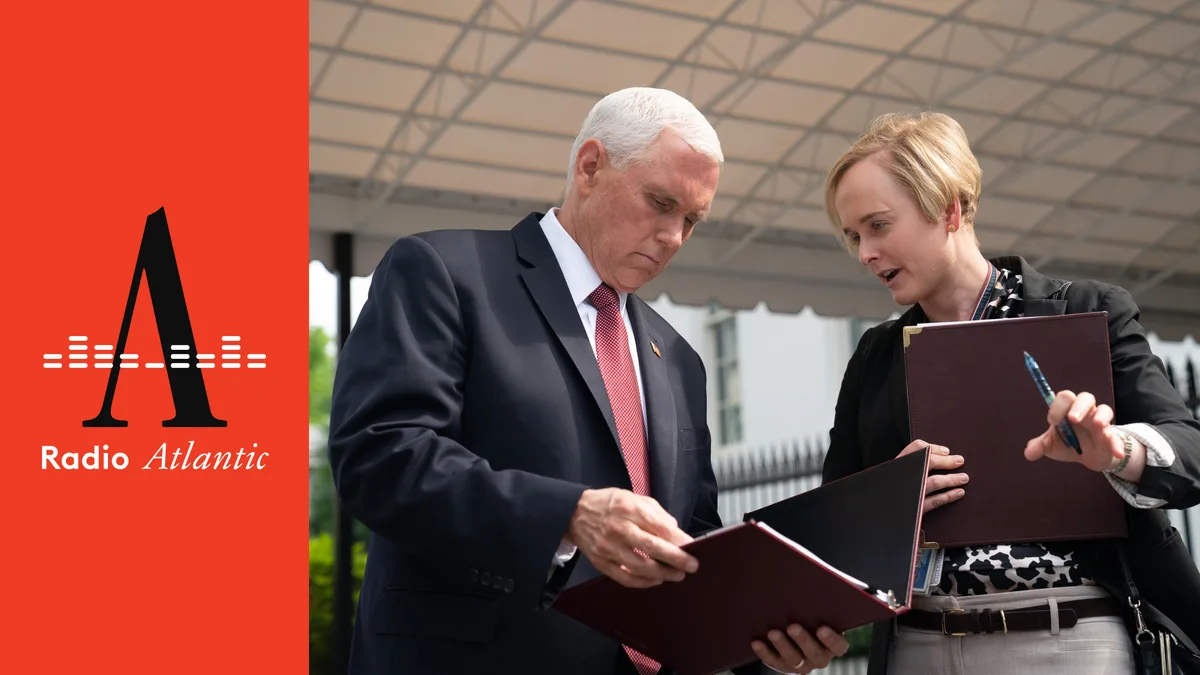
Her performance proved her effectiveness: She became the daily intelligence briefer for Vice President Pence during the first Trump administration and a director on the National Security Council in both the Biden administration and the second Trump term.
Less than 70 days after the president returned to office in 2025, Julia was fired from the White House without explanation.
She returned to the CIA and, over time, began to feel a lack of support at the agency in an administration that was openly hostile to transgender people.
Julia left her dream job with the federal government earlier this year.
This week, she is telling her full story for the first time—in an Atlantic essay she wrote and in a conversation with Radio Atlantic .
The following is a transcript of the episode: Julia Curlee: After everything I had been through with my service to the former vice president, my briefing for this president in the first term, and my war zones, my 20 years, all of it, “Be discreet” meant We need you.
We need your service.
But we don’t want anyone to know you are here .
Adam Harris: As a high-level CIA officer, Julia Curlee had the ear of one of the most powerful politicians in America: the vice president of the United States.
5News aggregated this summary from the outlet’s public feed. The full article, with all the context, is on www.theatlantic.com — the content belongs to The Atlantic.