The Midwest braces for more heavy flooding, as Indiana seeks federal aid
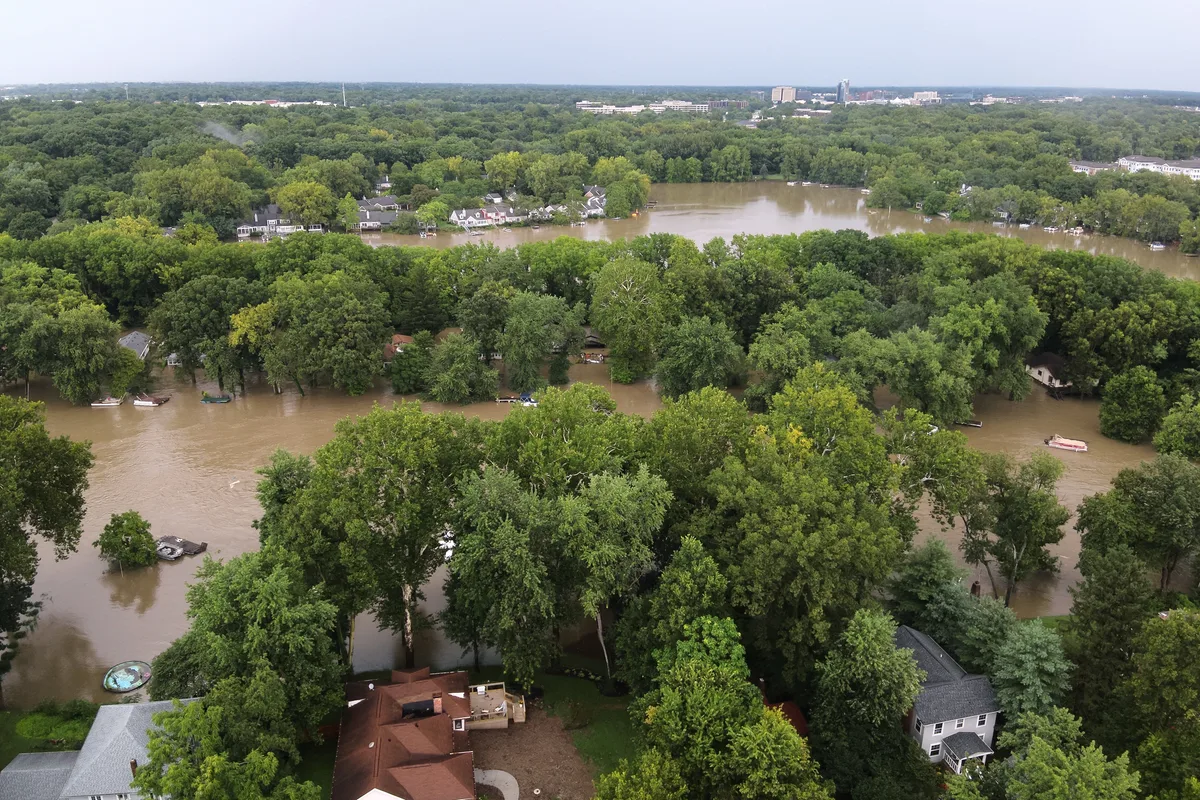
This aerial photo provided by the Indianapolis Fire Department shows flooding in northern Indianapolis, Ind., Saturday, Aug. 15, 2026. Indianapolis Fire Department via AP/Indianapolis Fire Department hide caption
A relentless stretch of thunderstorms has brought devastating flooding across the Midwest, with additional bouts of heavy rainfall expected through at least Sunday, the National Weather Service said.
The NWS is predicting widespread storms this weekend through the Ohio Valley, Midwest and central Appalachians, bringing additional precipitation to already saturated areas that had just started to see floodwater recede. At least three people have died and more than 150,000 were without power as of Saturday afternoon.
Indiana and Ohio have been among the hardest-hit states, with rainfall totaling more than 11 inches in some areas over the past week. The White River in Anderson, Ind., rose to a record 24.9 feet, surpassing a flood mark that has stood since 1913.
Flash flood and flood warnings were in effect across central Illinois and central Indiana, the NWS said Saturday, and flood watches were in effect from Iowa and Missouri eastward to central West Virginia.
"I will do everything in my power to protect Hoosier lives and livelihoods as we respond to this historic severe weather," said Indiana Gov. Mike Braun, who has requested a presidential emergency declaration through FEMA for federal funding and resources. "I have mobilized state and local resources, declared a Statewide Disaster Emergency and deployed the Indiana National Guard."
In addition to the deluge of rain, parts of Indiana have also endured periodic tornadoes and a derecho over the past several days.
Cyndee Gillmore, who owns and operates the Cornerstone Campground and Retreat Center in New Castle, Ind., said 5 feet of water swept across the property flooding the kitchen, banquet hall, youth center and all the center's mobile campers.
"I'm standing in my house right now and it smells to high heaven, but it's just stuff," Gillmore said. "Everybody is pitching in and the community is supporting one another and it's beautiful to see. We're going to keep our focus on God."
Still, she said, she worries about how the area will recover. Neither she nor most of her neighbors have flood insurance, and property insurance does not cover flooding.
"My heart breaks, Gillmore said. "Nobody has the money to fix all of this. I don't know how people will make it."
For Gillmore and thousands of other homeowners caught in this week's flooding, the financial damage could be devastating, especially without insurance.
The vast majority of flood insurance is managed by the federal government through FEMA. The agency maps out which homeowners are at risk and requires them to carry flood insurance if they have a federally backed mortgage.
But for decades, an NPR investigation found , those maps have failed to take rainfall and flash flooding into account, relying instead on risk data from coastal storm surges and large river flooding, even as climate change is supercharging rainfall intensity.
5News aggregated this summary from the outlet’s public feed. The full article, with all the context, is on www.npr.org — the content belongs to NPR.