Earth’s forests took 100,000 years to recover from the last climate shock — this one is moving 10 times faster
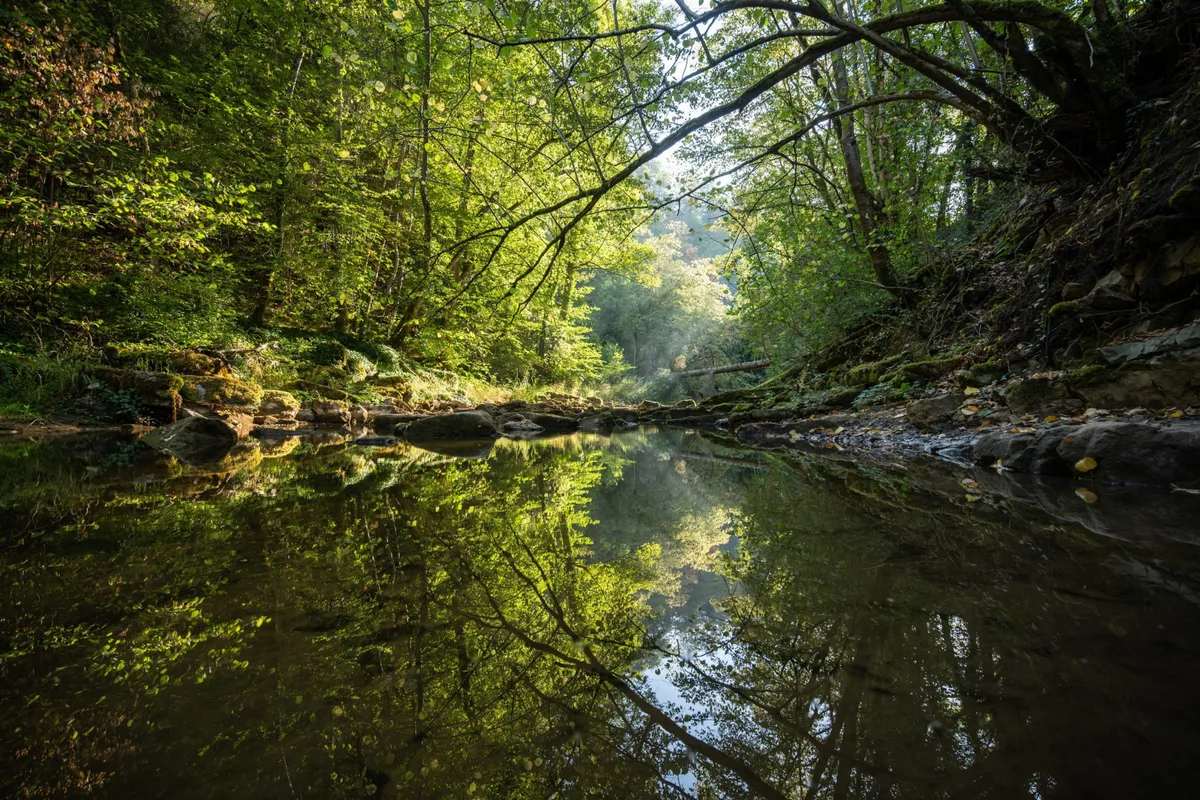
Fifty-six million years ago, Earth’s forests reached a tipping point .
They had grown dense, lush canopies at the start of one of Earth’s most intense episodes of greenhouse warming.
But those canopies began to thin.
As global temperatures rose by as much as 11 degrees Fahrenheit (6 degrees Celsius), heat and drought put stress on the forests, killing large numbers of trees.
Forest canopies opened, exposing the ground to more sunlight and altering the movement of water through the landscape.
In southern Wyoming, ferns briefly flourished where relatives of elms, walnuts, dawn redwood and avocado trees once thrived.
Then palms and other warmth-loving plants spread northward.
In a new study in the journal Science, my colleagues and I show how those Wyoming forests lost 60% of their canopy during this period, known as the Paleocene-Eocene Thermal Maximum, or PETM, and how it took them well over 100,000 years to recover.
Two authors of the new study, Marieke Dechesne, left, and Ellen Currano, standing at center, collect fossils from a sand channel in rocks in Wyoming dated to the Paleocene-Eocene Thermal Maximum.
Regan Dunn The PETM was Earth’s closest natural analog to the warming the world is experiencing today, although humans are releasing carbon dioxide roughly 10 times faster than the planet’s natural processes did then.
Understanding what happened to the forests may help humanity recognize similar thresholds before the planet crosses them again.
Reading the forest from fossil leaves As paleobotanists , my colleagues and I use plant fossils to identify which species once lived in a place.
We wanted to answer a harder question: What did the forest itself look like and how did it change? The structure of a forest – and importantly its canopy – controls the amount of light that reaches the forest floor, the temperature, water habitat and amount of carbon the forest can store, making it one of the clearest indicators of ecosystem function.
But how do you measure the density of a forest that disappeared 56 million years ago? Ecologists measure canopy density using what’s known as leaf area index .
5News aggregated this summary from the outlet’s public feed. The full article, with all the context, is on fortune.com — the content belongs to Fortune.