He needed a caregiver as his body shut down. AI found him the one.
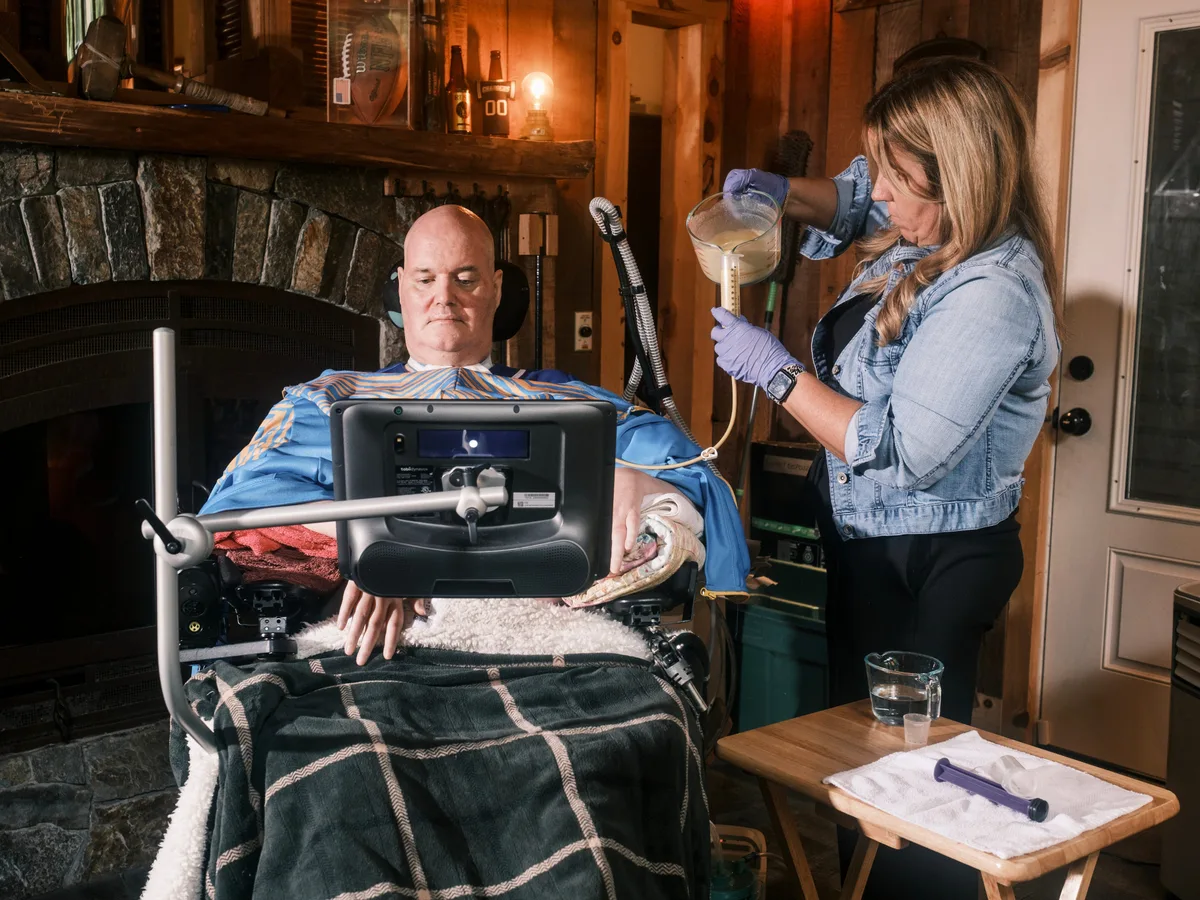
Merrill Hale has relied on technology for his caregiving.
Jordan Gale for BI Christina Evers, 42, watches on, holding the back of Merrill Hale's motorized wheelchair, as he controls his screen with his eyes.
It's the only way Hale, 57, has found to effectively communicate with Evers, his caregiver .
Hale was diagnosed with ALS a decade ago and has slowly lost the ability to speak, eat, and move.
"Tech is essential to my survival," Hale says, read aloud by a computerized voice.
"He's the brightest guy in the world," his mom, Judy, says as she watches him in their Oregon home.
Hale uses advanced eye gaze technology to communicate.
Jordan Gale for BI Evers and Hale have formed an incredibly tight bond, Judy says.
That's by design.
They were matched, in part, by AI.
The two were connected through Home Instead, a home healthcare services company that operates in 1,200 locations across six countries.
Home Instead was acquired in 2021 by Honor Technology, which has integrated AI algorithms and machine learning tools to match eldercare workers with clients.
Are you paying for your own or your loved one's long-term care? Do you have thoughts to share about long-term care in the US? To share your story with a reporter, please fill out this quick form .
Honor's tech has allowed for "smart matching," using algorithms to analyze caregiver availability, personality traits, skill sets, and prior client familiarity.
5News aggregated this summary from the outlet’s public feed. The full article, with all the context, is on www.businessinsider.com — the content belongs to Business Insider.