The Narrow Path to a Xi-Trump AI Deal
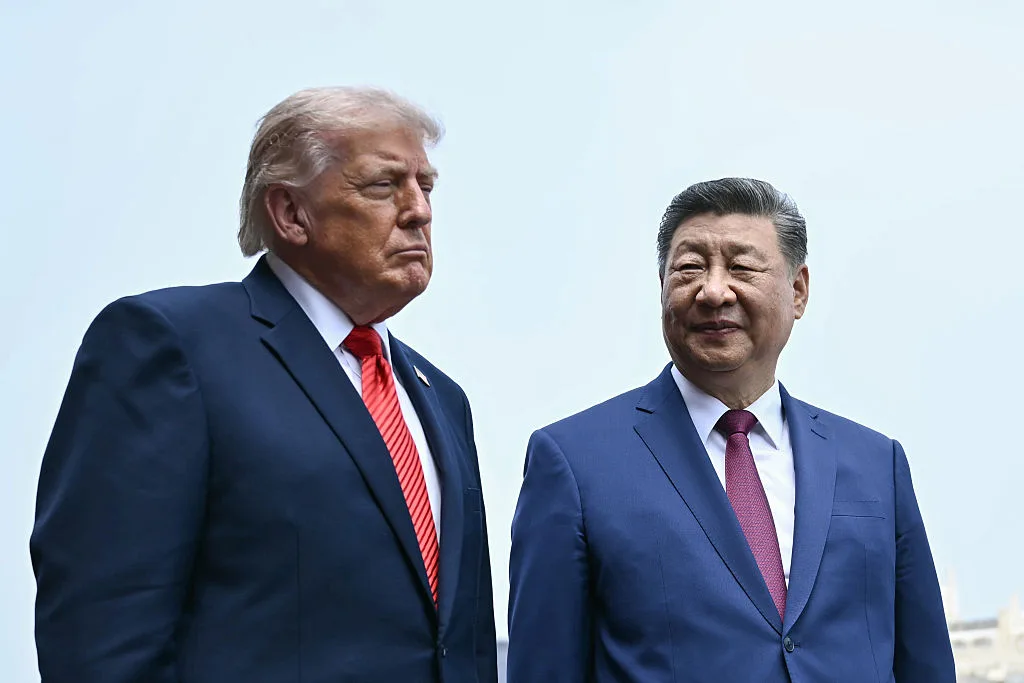
China's President Xi Jinping and U.S.
President Donald Trump visit the Temple of Heaven on May 14, 2026 in Beijing, China. —Brendan Smialowski—Pool/Getty Images When Donald Trump arrived in Beijing in May, Xi Jinping was already on the offensive.
The Chinese leader wasted zero time in rebuking his U.S. counterpart over arms sales to Taiwan directly warning that simmering tensions over the self-ruling island could ultimately cause the superpowers to “enter into conflict.” Trump acquiesced.
He delayed a $14 billion arms package to Taiwan, said future weapons would be discussed as a “very good negotiating chip” with Beijing, questioned the island’s sovereignty as something “nobody knows how to define,” and stressed that he was not looking to fight a war “9,500 miles away”—all without securing any apparent reduction in Chinese military pressure in return.
While this response alarmed many in democratic Taiwan, many people around the globe hope that Xi can prove similarly persuasive on another issue of grave importance when he travels to the White House on Sept 24: artificial intelligence.
“Taiwan is not a priority anymore,” Wang Yiwei, director of the Institute of International Affairs at Beijing's Renmin University, says of Xi’s impending visit.
“The priority is definitely AI.” In recent days, warnings from a whistleblower researcher and reports of rogue agent swarms have intensified fears of a doomsday scenario born of unbridled AI development .
On Sept.
12, Anthropic CEO Dario Amodei published an essay titled We Must Pace the Frontier calling for embedded independent evaluators, common safety standards among democracies, and eventually verifiable global coordination to slow dangerous frontier-AI development.
OpenAI’s Sam Altman and SpaceXAI’s Elon Musk also voiced broad support for slowing frontier development.
However, one major skeptic is Trump, who responded on Truth Social that “AI taking over the World, destroying Humanity, and all other things bad, is a HOAX.” Moreover, he insisted that “President Xi, of China, just announced that China will be doing absolutely nothing to stand in the way of AI, or its future.” That characterization is misleading.
China regulates AI more stringently than most other countries, and already enforces AI security guidance, ethics review requirements, and binding obligations on consumer AI services.
Xi has also publicly called for legal, technical, and ethical guardrails that keep AI under human control (albeit while resisting restrictions that could impede China’s technological rise).
“We should strengthen risk-awareness and ensure that AI is secure and controllable,” he told the World Artificial Intelligence Conference in Shanghai on July 17.
5News aggregated this summary from the outlet’s public feed. The full article, with all the context, is on time.com — the content belongs to TIME.