WHAT WE’RE WATCHING: The End of Oak Street: The Spielberg-style sci-fi proving old-school blockbusters still work
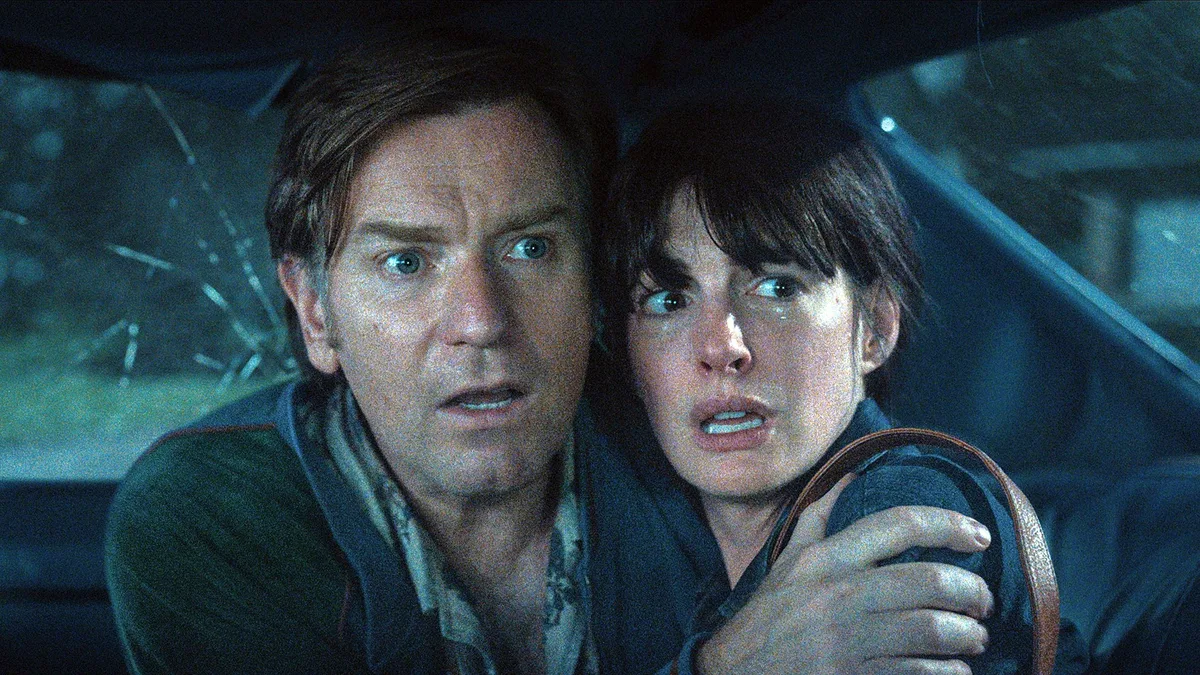
For fans of Spielberg’s sci-fi and survival blockbusters, The End of Oak Street serves up throwback-style fun and thrills, making it the movie equivalent of a theme park ride.
In a strange coincidence, within the same week, two new movies have released about a suburban family, complete with dog in tow, trying to survive mysterious cosmic events. But while one – Netflix’s The Last House – has become a competitive sport to bash online, the other, Warner Bros.’ The End of Oak Street, is the most throwback-style fun audiences can have at the cinema right now.
The End of Oak Street is the kind of film you want to watch in a packed movie house, going along with the communal gasps, wails and cheers.
It’s the movie equivalent of a theme park ride: not a rollercoaster, but one of those on-rails animatronic experiences with dizzying direction turns, jump scares out of the quiet, shakes and splashes, and the emotional equivalent of a waterfall plunge.
The closest blockbuster comparison you can make is to the first Jurassic Park, and, to a lesser extent, the likes of Poltergeist, Jaws and Arachnophobia. The End of Oak Street is produced by JJ Abrams, who definitely comes from the Spielberg school of event movie-making, with Super 8 and the Cloverfield franchise on his filmography, alongside Star Wars and Star Trek.
The End of Oak Street is all-in when it comes to conveying a sense of yesteryear. Set in the early 1980s, the film centres on the Platts, who, to casual observers, appear to be the perfect family. Behind closed doors though, this nuclear unit is on the brink of breaking apart.
Wife and mother Denise (Anne Hathaway) feels stifled by domesticity, and clashes on the personality and priority front with optimist husband Greg (Ewan McGregor), as financial struggles wear them down. Meanwhile, their kids are well aware of the drama, with high school senior Audrey (Maisy Stella) lacking funds to go to her dream college and younger brother Brian (Christian Convery) acting out in response to the possibility of his parents’ divorce.
All these problems are forgotten, though, when the Platts wake up one morning, and discover their whole neighbourhood has been transported through space and time, dumping them in a prehistoric landscape where humans are easy prey.
Surrounded by blockbusters with two-and-a-half to three-hour runtimes, The End of Oak Street stands out as an example of supremely efficient filmmaking. Not even 100 minutes, the movie is pared to the bone, refusing to over-explain its central concept, and adopting a show-not-tell approach to its world instead.
Without a single word, information can be gleaned from a photo wall, or the decorations in a teenager’s room. In addition, writer-director David Robert Mitchell often doubles up the impact of key moments with idiosyncratic framing that lets audiences experience multiple actors’ emotions in focus at the same time, instead of cutting back and forth between their faces.
There’s a lot of that, actually. Mitchell, who made the cult horror hit It Follows , understands the power of long, unbroken takes, and carefully set up shots that monsters can silently step or slither into.
5News aggregated this summary from the outlet’s public feed. The full article, with all the context, is on www.dailymaverick.co.za — the content belongs to Daily Maverick.