JUSTICE SEUTLOALI | What does March and March’s connection with AfriForum really mean?
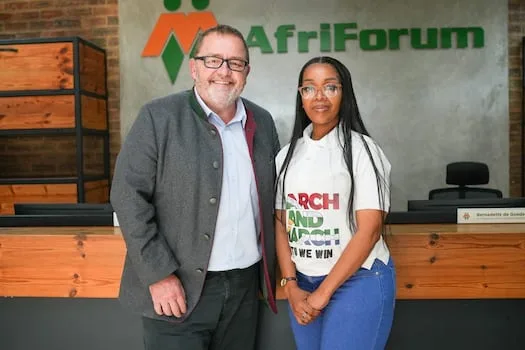
There are moments in politics when an apparently ordinary political engagement becomes much larger than the meeting itself because the organisations involved, the people sitting around the table and the political traditions they represent can reveal something about the direction in which a movement is travelling.
Jacinta Ngobese-Zuma , the leader of March and March, has placed herself at the centre of precisely such a controversy by seeking guidance from AfriForum.
South Africans should not be expected to accept this as nothing more than an innocent exchange of organisational ideas.
Ngobese-Zuma has every democratic right to engage with AfriForum, just as AfriForum has every right to engage with her.
However, the real question is not whether the meeting is permissible, it is whether it is politically appropriate for a black political movement claiming to represent ordinary South Africans to look towards an organisation associated with Afrikaner interests and a political tradition that has often occupied a very different position from those demanding radical transformation.
Politics cannot be reduced to borrowing successful techniques from another organisation in the same way a business might study a competitor because political organisations are shaped by history, ideology, constituency and material interests. The strategies they employ are often connected to the political objectives they seek to advance.
When a movement seeks guidance from another political organisation, therefore, the public has every right to ask not only what organisational lessons are being exchanged but also what political assumptions may accompany those lessons, and whether those assumptions are compatible with the movement’s stated commitment to representing ordinary South Africans.
The most obvious question is one Ngobese-Zuma should answer directly: why AfriForum?
South Africa is not a country without a tradition of political organisation from which contemporary movements can learn.
This country has produced extraordinary traditions of community mobilisation, trade union organisation, legal activism, student resistance and grassroots political campaigning, much of which developed under a government that banned political organisations, imprisoned activists, censored information, violently suppressed protests and used the machinery of the state to enforce racial domination.
Black South Africans built organisations under circumstances in which political participation could cost people their freedom, their livelihoods and sometimes their lives.
5News aggregated this summary from the outlet’s public feed. The full article, with all the context, is on www.sowetanlive.co.za — the content belongs to Sowetan.