Mumbai links slum rehabilitation to climate-resilience plans
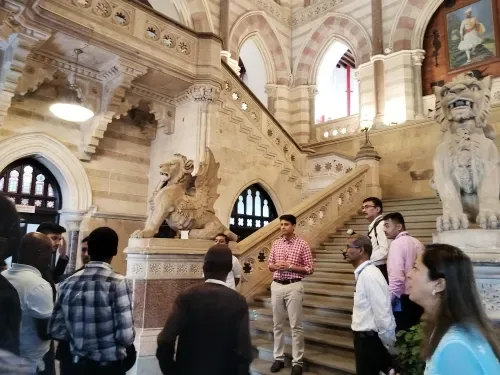
Inside the Brihanmumbai Municipal Corporation in Mumbai, India. As Mumbai navigates the delicate balance between urban growth and socio-economic equity, BMC's multifaceted approach might just be the key to transforming its slums into sustainable, resilient communities.
The Brihanmumbai Municipal Corporation (BMC), the governing civic body responsible for Mumbai, is working around the clock to confront one of the most pressing issues facing Mumbai today: its extensive slum populations. Known globally for its towering skyscrapers and bustling financial sector, Mumbai is also home to some of the largest and most densely populated informal settlements, with an estimated 6.5 million residents - 57% of the city's total population - said to be living in inadequate conditions.
Despite being among the best-funded municipal corporations in India, the challenges of eradicating slums remain formidable. The city's rapid urbanisation and complex socio-economic dynamics mean that the BMC's annual budget, which exceeds that of some smaller Indian states, is stretched thin in the face of increasing demand for housing and public services.
This week, in a presentation to members of the BRICS media delegation visiting its offices, BMC officials revealed the innovative strategies being rolled out to address these ongoing challenges. Central to their efforts is the Mumbai Climate Action Plan (MCAP) , launched in 2022, which envisions a climate-resilient and net-zero city by 2050 through a comprehensive set of adaptation and mitigation measures.
Brihanmumbai Municipal Corporation (BMC) says it is working on various strategies to mitigate the effects of climate change as Mumbai continues to navigate the delicate balance between urban growth and socio-economic equity.
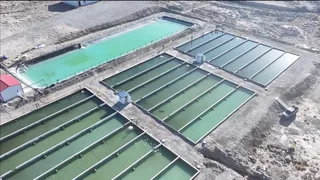
Among the programmes and projects earmarked for the regions is the development of a desalination plant at the Manori-Gorai coastal belt, which will increase the city's gross water supply to 4 740 megalitres per day. Then there is the construction of a 21-kilometre water conveyance tunnel linking Yevai and Kasheli in Thane to Mulund, aimed at enhancing water supply to the eastern suburbs. Furthermore, the corporation is embarking on the relocation of four major water lines for a 2,200-home slum rehabilitation project. These projects are part of a broader strategy to meet the increasing water demand and improve the overall water supply system in Mumbai.
"The Mumbai Climate Action Plan 2022 is a 30-year roadmap aiming for a net-zero and climate-resilient Mumbai by 2050 through mitigation and adaptation strategies across six key sectors. We also have a process to rehabilitate slum areas in Mumbai's seven islands," a BMC official said.
This ambitious initiative not only strives to reduce slum populations but also prepares the city to confront natural disasters like floods, extreme heat, and air pollution.
The development plan includes a spatial vulnerability assessment to pinpoint high-risk communities and tailor targeted responses.
5News aggregated this summary from the outlet’s public feed. The full article, with all the context, is on iol.co.za — the content belongs to IOL.