India’s cities: Where luxury meets hardship
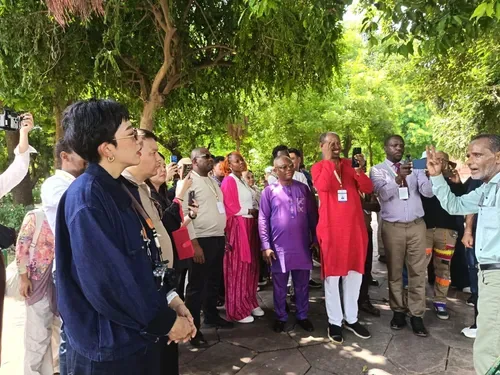
Tour guide Amit Datta narrating the story of the Taj Mahal, which brings to the fore, the allure of the Taj Mahal, drawing over seven million visitors annually, is unmistakable.
The streets of India are a dynamic tapestry of chaos and cohesion, where luxury lives side by side alongside strife and struggle. Amid the bustling energy of Johannesburg, I found myself winding through the frenetic masses of New Delhi and Mumbai , experiencing firsthand the enchanting contrasts between my own city and these two major Indian cities.
Those of us from South Africa know how scary it is to drive in the Joburg CBD, where taxis compete with private vehicles and city-owned buses. Being driven on a bus in these two cities is something out of this world. However, i n both locales (New Delhi and Mumbai), the competition among modes of transport is fierce.
From the moment I stepped onto the roads, I was struck by the steady stream of scooters, some laden with entire families, navigating through traffic like seasoned veterans. Tuk-tuks whizzed by, creatively manoeuvring around honking cars, scooters, e-hailing services, and heavy trucks, all while pedestrians plotted their next move in this elaborate dance. What amazed me most was the serenity maintained by drivers and pedestrians alike, sharing the roads with smiles instead of honks or hostility, an extraordinary feat in this urban symphony.
Infrastructure projects and transport dynamics of India's two mega cities, New Delhi and India mirror the country's fast-paced city life.
My journey began on a bus from New Delhi to the Taj Mahal - a UNESCO World Heritage Site and one of the Seven Wonders of the World. Situated in Agra, approximately 202 kilometres from Delhi, the journey itself was a thrill. Mid-morning on a Wednesday transformed the road into a lively display of vehicles vying for space, yet it was exhilarating to be part of the city's pulse: an endless stream of life on wheels.
The Taj Mahal’s allure pulls in over seven million visitors each year. Constructed in the 17th century by Mughal Emperor Shah Jahan as a tribute to his beloved wife, Mumtaz Mahal, the monument stands as a timeless testament to love and artistry. Its architectural brilliance is a harmonious blend of Indian, Persian, and Islamic styles — an oasis that transcends the complexities of time.
As I journeyed between the two metropolises, the scene changed from historical landmarks to ambitious urban landscapes. India appears as a grand construction site, with circumstances dictated by a mix of traditional slums and imposing skyscrapers. Every corner reveals new projects in various stages of completion; progress captures the spirit of a nation determined to evolve.
5News aggregated this summary from the outlet’s public feed. The full article, with all the context, is on iol.co.za — the content belongs to IOL.