Sidssa 2026: Ramaphosa and Hill-Lewis harmonise on SA’s infrastructure goals
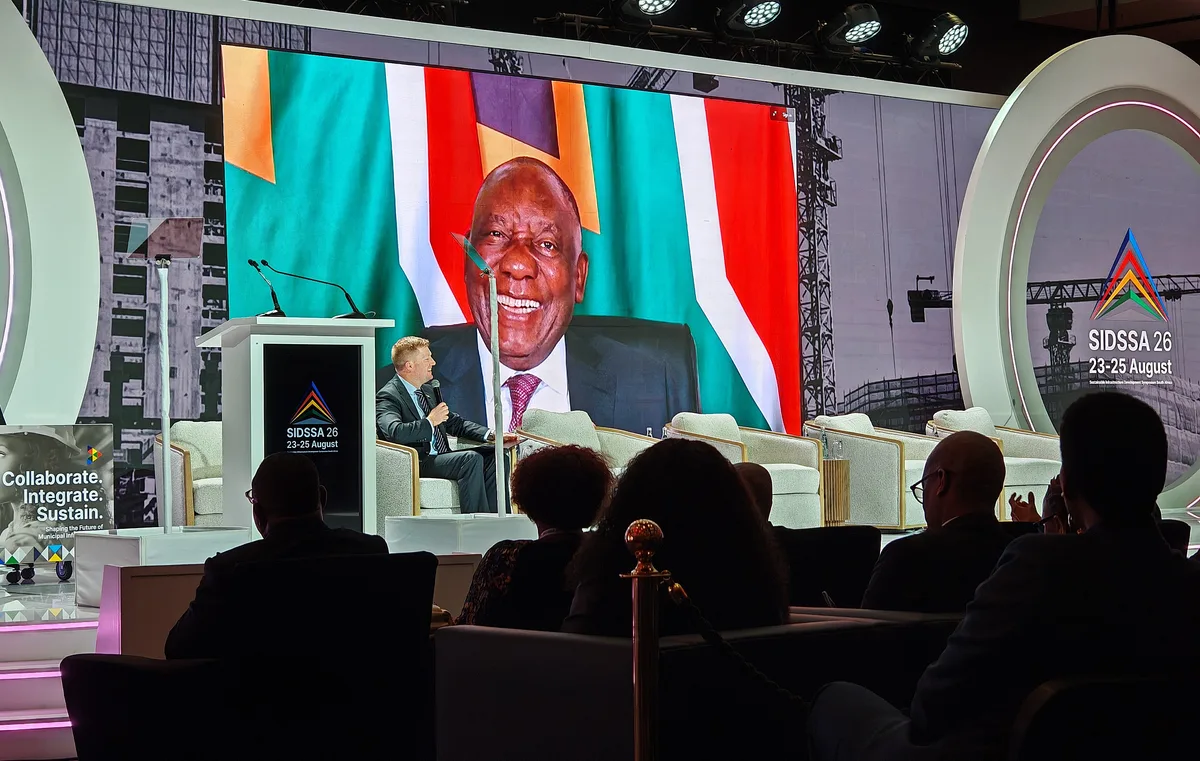
The leaders of the two major GNU parties set aside their differences to put up a united front to woo infrastructure investors and partners at the Sustainable Infrastructure Development Symposium South Africa.
There was an uneasy tension in the conference hall on the final day of the Sustainable Infrastructure Development Symposium South Africa (Sidssa) 2026. The opening plenary (please do not try to apply any logic to the order of events – it opens when the President speaks) looked like a bit of a DA showcase, with even former leader John Steenhuisen in attendance, seated in the row behind current leader Geordin Hill-Lewis and the minister of public works and infrastructure, Dean Macpherson.
A last-minute schedule change forced by Ramaphosa’s parliamentary appearance may have contributed to the tensions, but once the President’s “pretty face” – his words – was on the big screens (via Microsoft Teams), all was well, and he was at his charming best.
The stage was set about an hour before Citizen Number One’s disembodied head smiled, and Hill-Lewis took the podium for his welcome address, oozing the homeground confidence we hope the Springboks will bring to Cape Town Stadium on Saturday.
“I think the basic job description of a metro mayor today is managing the pressure of rapid urbanisation,” said the Cape Town mayor to an audience that included Joburg Mayor Dada Morero.
“We’ve just reported more than R12.3-billion in capital expenditure this last financial year and, let me tell you that R12.3-billion is an all-time South African record for infrastructure investments by a city government in any one year,” he continued, modestly.
“But let me be very frank … even at those record levels of investment, we are only just keeping pace with the rapid growth of our city. That should give us some pause for thought and some perspective nationally.”
Again, this address was more sage, stately knowledge-sharing than what the words alone conveyed. And in a rare moment of almost vulnerability, the mayor shared his nerdiest perspective on infrastructure.
To systematically counter those growth pressures, Hill-Lewis governs with a standard investment benchmark and an inflation-linked growth rule that he believes can apply to all major metros:
“I think that every major metro should be investing between R10- and R15-billion every single year in order to keep up with the pressure. And once you’ve achieved the minimum required level of investment, that budget should grow every year by at least the combination of inflation [percentage] and population growth [percentage] in your city.”
To his mind, infrastructure is far more than a passive municipal expense ledger; it is a diagnostic signal of a city’s economic vitality. “When cities work, people work.
5News aggregated this summary from the outlet’s public feed. The full article, with all the context, is on www.dailymaverick.co.za — the content belongs to Daily Maverick.