Honour the Women of 1956 by Funding Women’s Safety and Care
Seventy years after more than 20 000 women marched to the Union Buildings for our freedom and dignity, we mark Women’s Month under the theme “Empowered Women, Empower the Nation” . This theme reflects a truth we see every day: when women are empowered, they sustain households, strengthen communities and deliver the essential services on which our country depends. Women make up nearly 90% of nurses and 95% of ECD practitioners , supporting families while providing care. Women are also often the ones who take sick relatives to clinics , care for children and older people and hold our communities together during crises.
However, women make these contributions while navigating South Africa’s harshest socioeconomic conditions. Poverty remains more pronounced among women and unemployment is highest among young Black African women . Although gender-based violence and femicide (GBVF) were classified as a national disaster in November 2025, the 2026 Budget provided no new dedicated funding .
Health facilities are critical sites for identifying violence, treating its physical and psychological harms and connecting survivors to protection and justice. Therefore, classifying GBVF as a national disaster without matching healthcare investment fails women. If we are serious about empowerment, public finance must advance women’s health, safety and freedom through a well-resourced, resilient system that in turn empowers our nation.
A robust public health system holds transformative potential to fulfil the constitutional right of access to healthcare for all. At its best, our health system can be a lifeline for survivors: recognising violence early , treating physical and psychological harm with dignity, and connecting even the poorest or most isolated women to forensic care and a path of safety. This is especially important in poor and rural communities, where public healthcare is often the only realistic option . Higher poverty and limited transport leave marginalised women with fewer alternatives when they need urgent treatment or support after violence.
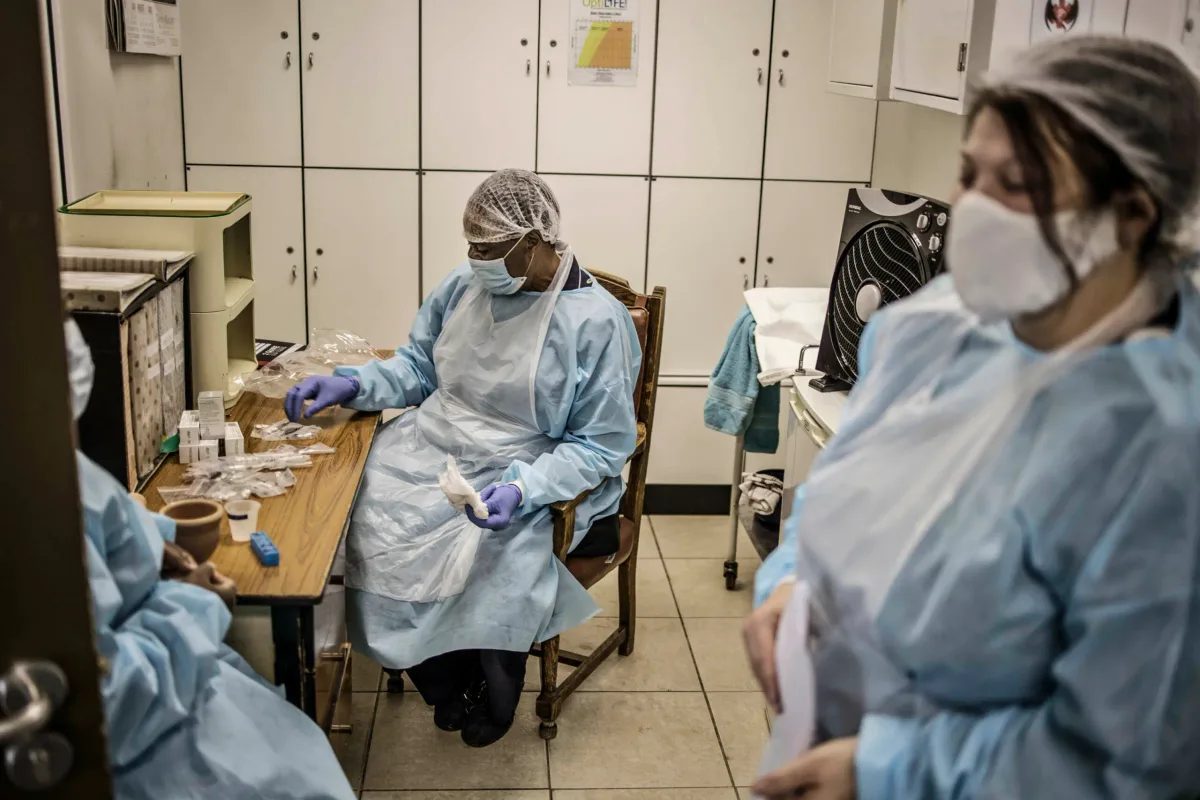
Public healthcare is also central to women’s empowerment because we do not only rely on the system for care; we are the workers who keep it running. Women make up nearly 90% of South Africa’s professional nurses and up to 96% of the community health workforce , placing our demographic on the frontlines of identifying violence, caring for survivors and delivering the broader GBVF response. Therefore, investing in health both strengthens women’s livelihoods and working conditions while enabling us to provide survivors with dignified, timely care.
This burden extends into homes and communities, where women perform much of the unpaid care intensified by GBVF , from supporting survivors to caring for affected children and even filling gaps left by inadequate public services. When the health system fails, the gender, racial, class and spatial inequalities that wrap our society determine who receives timely care and protection and who is left to carry the consequences alone without support.
South Africa is not short of strong policy commitments.
5News aggregated this summary from the outlet’s public feed. The full article, with all the context, is on mg.co.za — the content belongs to Mail & Guardian.