Watch – Inside Cape Town’s data hub deal
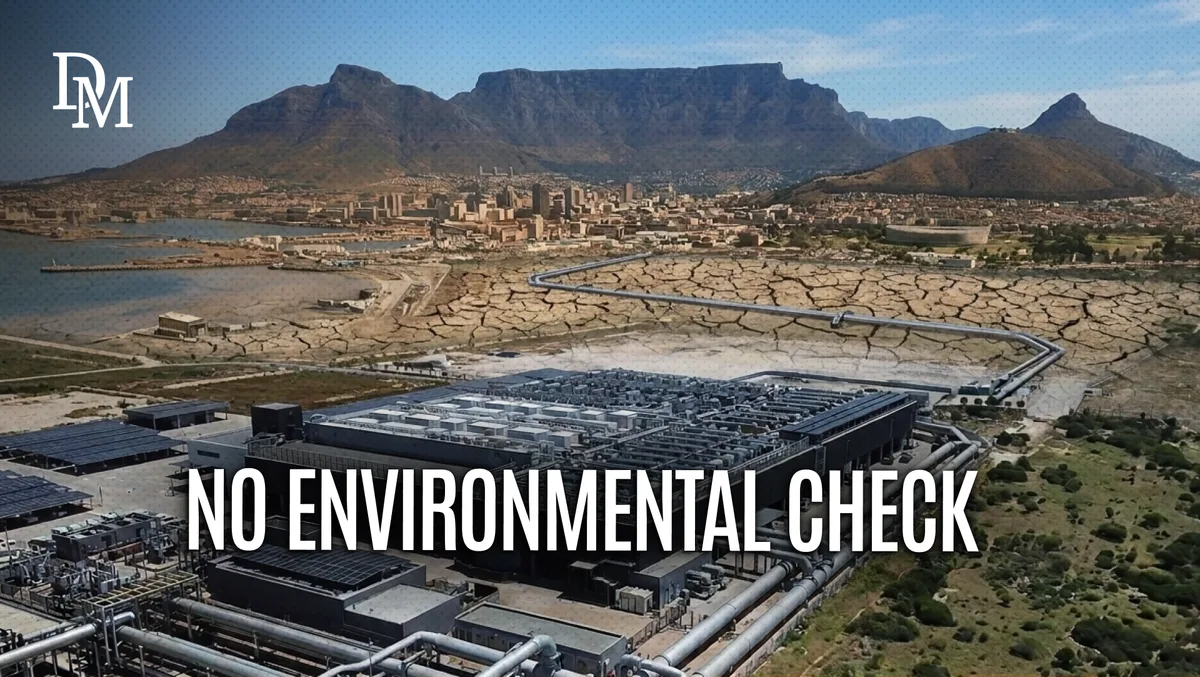
A golf course became a R3-billion logistics hub. Now it’s set to house two of Cape Town’s biggest data centres. Daily Maverick’s Lindsey Schutters reports on a R100 land swap, a data centre reclassified as a “warehouse”, and the environmental assessment that’s been pushed down the road.
Reporting by: Lindsey Schutters Filmed by: Joel Seboa Edited by: Joel Seboa Produced by: Emilie Gambade Creative input by: Malibongwe Tyilo Sub-edited by: Kim Maxwell
Support journalism that protects democracy. Become a Maverick Insider .
Right now, there’s an OpenAI data centre being built near Sydney in Australia. Last week the developers decided to abandon their liquid cooling ambitions, for air cooling. It’s going to cost more on the electricity bill of an already colossal 612 megawatt AI node, but it’s a small price to pay to dodge the near universal backlash from communities all around the world who have finally decided to take a stand.
Every industrial revolution is bad for the environment in some way, but they do bring benefits. Today, the factories of the Fourth Industrial Revolution aren’t pumping smoke into the sky they are pumping unthinkable amounts of data into the cloud.
In 1956, the King David Golf Club (the one that used to be near the airport) was built to give Cape Town’s growing Tygerberg community a place to swing their clubs. But golf courses are incredibly thirsty.
At the height of Cape Town’s Day Zero fears, a golf course could slurp up to three million litres of water a day. That’s enough to support 60,000 Capetonians under severe water restrictions.
So when the club’s membership collapsed in the mid-2010s, developers stepped in. The fairways were leased for 99 years and transformed into a R3-billion logistics gateway called King Air Industria.
And now, the global digital infrastructure firm Equinix is moving in, setting up two massive hyperscale data centres. We do not know what cooling technology they will use, but industry insiders are talking about closed loop, air cooled systems.
But while these tech behemoths might not guzzle as much water as the luscious fairways used to ... they are exceptionally hungry for power.
On July 14th, Cape Town's Municipal Planning Tribunal – yes, the one my colleague Kevin Bloom is exposing – approved the land-use rights for Equinix by a 4-to-1 majority, overriding objections from community and legal groups … and even one of their own.
But the real tea isn't just the approval. It’s the commercial deal between the City of Cape Town, the developers, and Equinix.
It’s an elegantly executed, multilayered transaction that ties land-use rezoning directly to the municipal grid. It’s also the closest look that I have ever had at the underlying wheeling and dealing that get these projects over the line.
The physical core of the electricity deal is a land-swap agreement between the City of Cape Town and the developer, authorised by Geordin Hill-Lewis via a Mayoral Committee (Mayco) Round-Robin process on 25 May 2026.
5News aggregated this summary from the outlet’s public feed. The full article, with all the context, is on www.dailymaverick.co.za — the content belongs to Daily Maverick.