GROUNDUP: Foundation Phase textbook delays threaten SA’s literacy push
South Africa’s Foundation Phase textbook rollout remains frozen over procurement concerns, leaving schools facing the prospect of relying on a 15-year-old catalogue despite the country’s urgent literacy crisis. The delay could widen existing inequalities and undermine efforts to introduce research-based materials, particularly in schools already struggling with shortages.
South African public schools may have to rely on a 15-year-old Foundation Phase textbook catalogue next year, as the rollout of new materials remains frozen.
The new catalogue for grades 1 to 3 includes maths, home language, first additional language and life skills. The textbooks and other learning materials are expected to be based on the latest research to improve literacy, in line with the National Literacy Strategy and Plan 2024–2030 . More than 80% of Grade 4 learners were found to be unable to read for meaning in any language in the 2021 Progress in International Reading Literacy Study.
But Basic Education Minister Siviwe Gwarube has suspended the new catalogue over concerns about the procurement process. The government is set to spend about R1.6-billion on procuring new Foundation Phase textbooks and support materials from the catalogue, which has been developed by various publishers.
Dr Amy Sarah Padayachee, an education lecturer at Cape Peninsula University of Technology, has warned that the suspension could set back South Africa’s push to eradicate illiteracy.
“A learner entering Grade 1 in 2027 will complete Grade 3 in 2029. In other words, the learners affected by decisions about materials for 2027 are the very cohort that should be demonstrating improved foundational outcomes as South Africa approaches 2030,” Padayachee said.
“Every delay matters when the country has so little time to accelerate improvements in literacy and numeracy,” she said.
The Early Grade Reading Studies by the Department of Basic Education found that structured lesson plans, when combined with graded readers, phonics materials, and teacher coaching, led to improved literacy outcomes.
The research also tested reading interventions in African languages, providing evidence for strengthening home-language literacy instruction.
Padayachee said updated materials offered an opportunity to incorporate these research insights, strengthen home-language teaching, and improve the sequencing and practice of foundational skills.
The new catalogue has also integrated coding and robotics concepts such as pattern recognition and basic problem-solving, alongside mathematics in the early grades.
Schools would usually start ordering new books in September for the new year, and anticipated using the new catalogue from 2027; now uncertainty is mounting over whether the new books will be ready in time.
In fact, schools and provincial education departments have been told to use the dated catalogue to top up learning materials. Gwarube told the Cape Town Press Club this week that the new catalogue had not been cancelled.
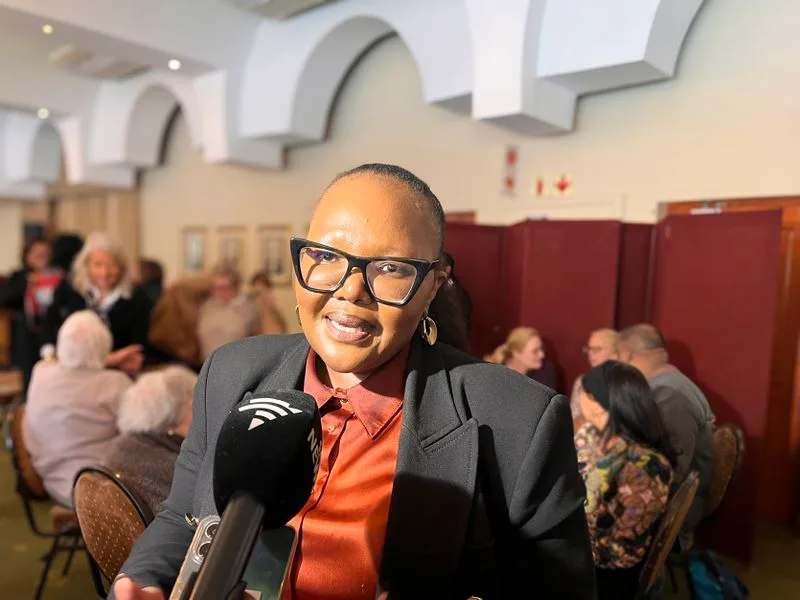
Gwarube defended her decision to extend the suspension while she awaits legal advice.
5News aggregated this summary from the outlet’s public feed. The full article, with all the context, is on www.dailymaverick.co.za — the content belongs to Daily Maverick.