The pillar we forgot to build: A National Development Plan must include the father
The National Development Plan is a 489-page drawing of a house with a load-bearing pillar missing – and somebody has been holding up the roof for generations.
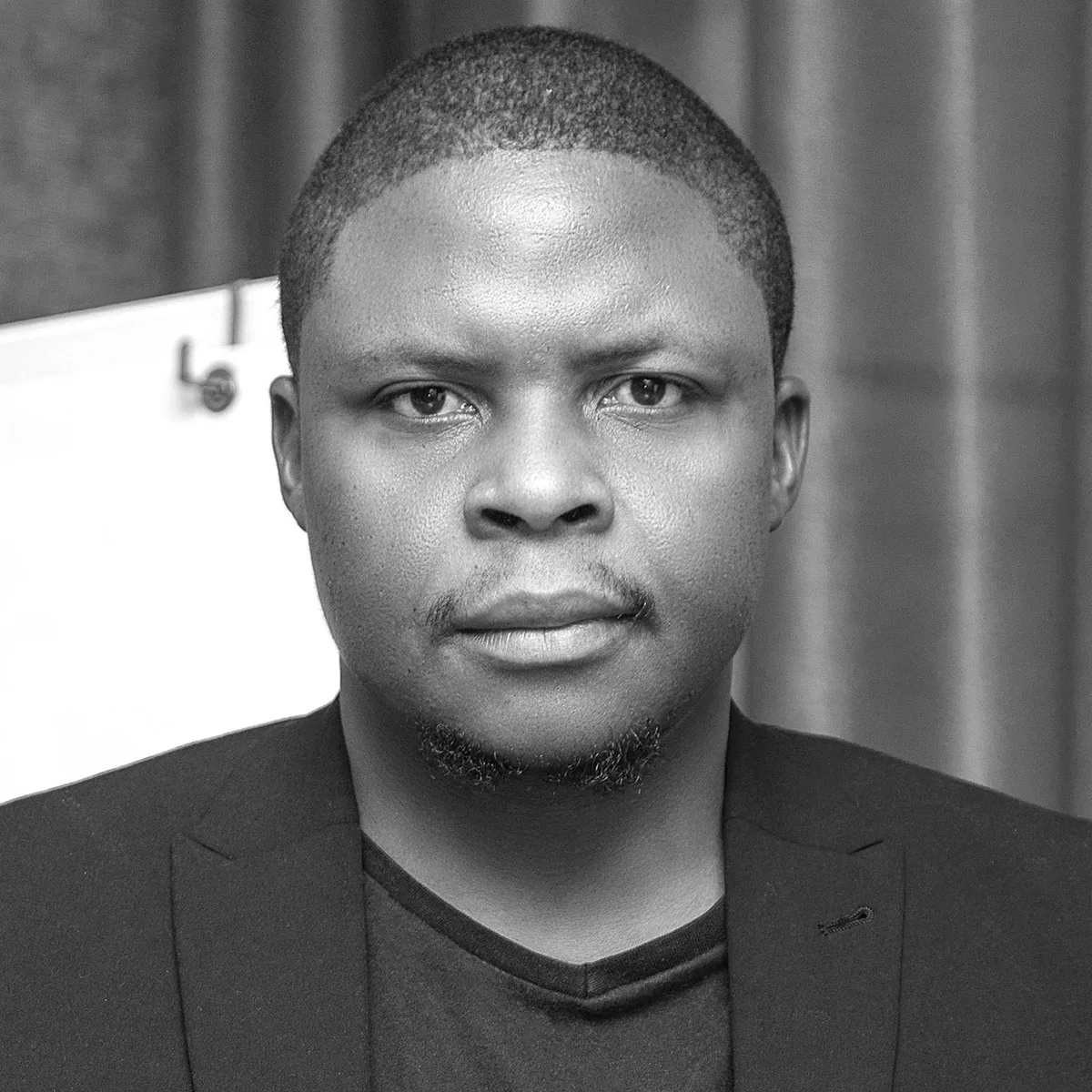
Themba Dlamini is a husband, father of four, pastor and chartered accountant who loves South Africa – warts and all. He is the author of Village Boy: A Memoir of Fatherlessness, and writes to wrestle with hard truths, stir hope and help build a country in which his children can thrive.
The dung has to be fresh or it will not hold. I learnt that at seven, squatting beside an old woman in kwaNkabini with a bucket between us, working cow dung and river clay into a paste with my hands while she checked it with hers. We were plastering the wall of our hut. It kept the scorpions out, she said, and the floor warm in winter, and it made a wall look cared for. Above us, driven into the floor at the centre of the room, stood the pole every rondavel is built around, black with years of smoke. I never once looked at it. You do not think about the thing that is holding up the roof. You think about the walls, because the walls are what you can reach – and what shows.
Decades later I read the National Development Plan , all 489 pages of it. It has chapters on the economy, infrastructure, health, education, safety, the capable state, social cohesion. Somewhere in that architecture, a child appears. Chapter 9 promises her two years of quality early childhood development before school: it costs the centres, counts the practitioners, sketches the curriculum. At noon the centre closes, and a grandmother is waiting at the gate. In 489 pages, the plan never asks the question standing next to her: where is this child's father?
I read the plan the way my training taught me to read anything that asks for money: start with the outcomes, then trace backwards to the mechanism meant to produce them. The outcomes are all present – a child ready to learn, a young man who never picks up a knife, a society that trusts itself. The mechanisms are departments, programmes, budget votes. And standing between the two, unnamed on every page, is the largest single fact about South African childhood. Stats SA’s General Household Survey for 2025 , released in May, found that fewer than a third of children (31.4%) live with both parents, 45.9% with their mothers only, 4.2% with their fathers only, and nearly one in five (18.5%) with neither. Put plainly: about 64% of South African children – two in three – do not live with their biological fathers. If two in three of our children went to school hungry, no development plan would dare stay silent about food. Two in three are growing up without their fathers at home, and the plan for their future does not consider it worth a chapter, a target, or a sentence of diagnosis.
The pole I never looked at has a name: insika. It is not decorative. Build the walls, thatch the roof, plaster the floor, hang the door – if the nsika is missing, the whole thing sags, cracks, and eventually comes down on the people inside. Insika yomuzi, the pillar of the homestead, is what isiZulu calls the person who carries the family. The NDP is a drawing of a house with the nsika left off.
5News aggregated this summary from the outlet’s public feed. The full article, with all the context, is on www.dailymaverick.co.za — the content belongs to Daily Maverick.