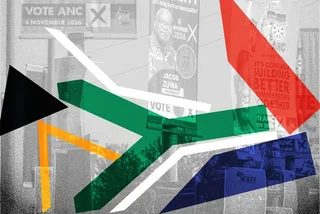
LOCAL ELECTIONS 2026 OP-ED: Voters’ impossible question — how to factor in parties’ coalition choices?

With more municipal coalitions expected in 2026, voters must take into account that parties’ post-election partner choices — not just manifestos — will shape local governance and service delivery.
This is the third instalment of a series on coalitions and 2026 local government elections. Read Part 1 and Part 2 .
The meaning of the vote in South Africa in 2026 includes the acceptance that the winning party or parties will have to form coalition agreements with other parties to secure a majority in order to govern. Voting for a party also means voting for that party’s coalition-partner choices.
This is the reality South Africans face in the local government elections of November 2026. A significant increase in the number of coalition governments is the most likely outcome, whichever party gets the largest share of the vote in any particular municipality. Few will gain enough votes to govern on their own.
Deals, compromises and consensus-seeking are the rules of the coalition game. One can’t be sure which party will link up with whom, or whether post-election coalition arrangements will align with parties’ election promises.
Coalition politics in South Africa are immature. There is little culture of policy-based, programmatic cooperation based on systematic negotiation and compromise between parties. Legislation to give order and legal standing to such deals has not come to fruition in time for LGE2026. Parties are more likely to use coalitions to undermine the opposition by enticing smaller parties into coalitions.
A vote in LGE2026 is a long way from a simple decision to vote for the party with which the voter identifies, or the party the voter believes has the best policy proposals or governance programme. And the voter’s individual choices across the two (in metros) or three (local municipalities beyond the metros) election ballots will not necessarily restrain or even guide the chosen party in its coalition formation.
Pre-election, most parties baulk at specifying their preferred or likely coalition partners. The DA’s “Moonshot Pact” in the 2024 general elections, or the same party’s 2026 promise to choose the “least evil” partner, are exceptions to the rule. (Note that the “Moonshot Pact” fell apart in the light of sobering election results.)
In practice, political parties take calculated risks to achieve a joint total of “50 plus one” council seats. All South Africa’s parties have shown, in the coalitions formed thus far, that they will align with any other party, if need be, and will not shy away from coalition-crossing when they want to.
A notable exception is the ANC, which refused to align with the uMkhonto Wesizwe party (MK party) or with the Economic Freedom Fighters nationally.
5News aggregated this summary from the outlet’s public feed. The full article, with all the context, is on www.dailymaverick.co.za — the content belongs to Daily Maverick.