REFLECTION: More than metal: How a marathon medal can carry memory, identity and unexpected connections
Now that marathon runners increasingly have the option to opt out of receiving a finisher’s medal, it raises the question of what makes a medal worth keeping.
Most runners who have been taking part in half-marathons, marathons, ultramarathons and trail races over the years have a collection of medals somewhere. They may hang proudly on a rack for a while, but as races accumulate, many eventually find their way into a drawer, a box or the back of a cupboard .
Not because the races didn’t matter. There are simply only so many medals that you can have on display. Yet open that drawer or box years later and there will probably be one or two that immediately bring back a particular race in remarkable detail.
Mass-participation sport events gave the medal a different meaning. At most of today’s marathons, ultramarathons and trail races you don’t have to win to receive one.
The finisher’s medal is tangible proof of everything it took to get there: the increasingly long distances during months of training, the cold early mornings, the setbacks and injuries, and then race day itself with all its demands. It marks a simple fact: you completed what you set out to do. Its monetary value may be negligible, but its symbolic value can be considerable.
Consumer researcher Russell Belk’s (1988) influential work on what he called the “extended self” describes how possessions can become bound up with our sense of identity.
Research on autobiographical memory has also shown how objects can evoke memories associated with particular people, places and periods of our lives. An otherwise ordinary possession can become a link to something much larger than the object itself. Rather than keeping the object, we are reserving access to the meaning attached to it.
Increasingly at running events, the finisher’s medal, once an unquestioned part of race day, is becoming a choice. Runners can opt out of receiving one, reducing waste, or redirecting some of the associated cost towards environmental or charitable initiatives. From 2026, London Marathon Events requires participants at its events to actively opt in if they want a finisher’s medal.
This raises a deceptively simple question: if the medal is optional, what makes us choose to have one?
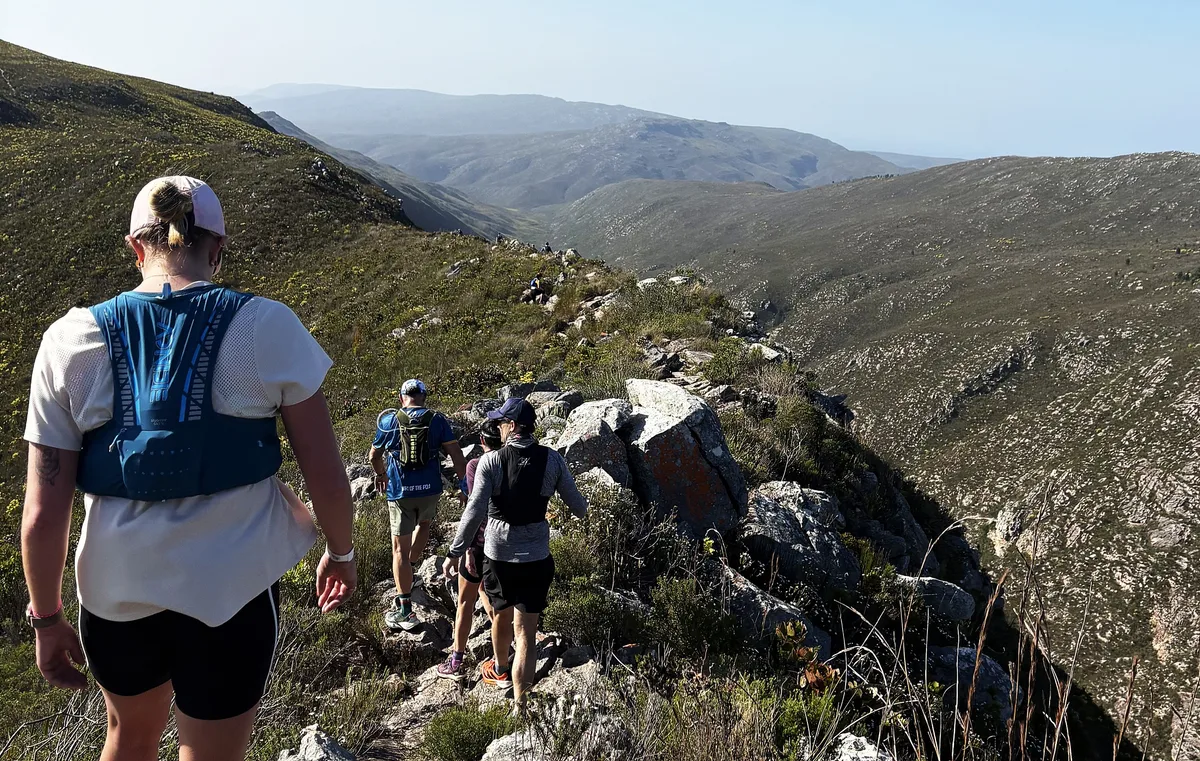
The Whale of Trail is a trail running event on the Whale Trail route in the De Hoop Nature Reserve on the southern Cape coast. This year’s race held on 15 August in 2026 offered an unusual answer. The medal waiting for finishers was a ceramic plate with a whale tail, individually hand-painted by pupils from Ouplaas EK Primary School in De Hoop, which primarily serves children from the surrounding farming community.
Under the guidance of their art teacher, the children painted their own interpretations of the theme in blue and white, with the young artist’s name on the back. Before the medal became part of a runner’s story, it had already been part of somebody else’s. At the finish line was an object that carried something of the race day, but also the name and imagination of a child I would probably never meet.
Objectively, this medal is probably worth no more than any other.
5News aggregated this summary from the outlet’s public feed. The full article, with all the context, is on www.dailymaverick.co.za — the content belongs to Daily Maverick.