HONEY MONEY: Beekeeping is creating a buzz around economic transformation efforts
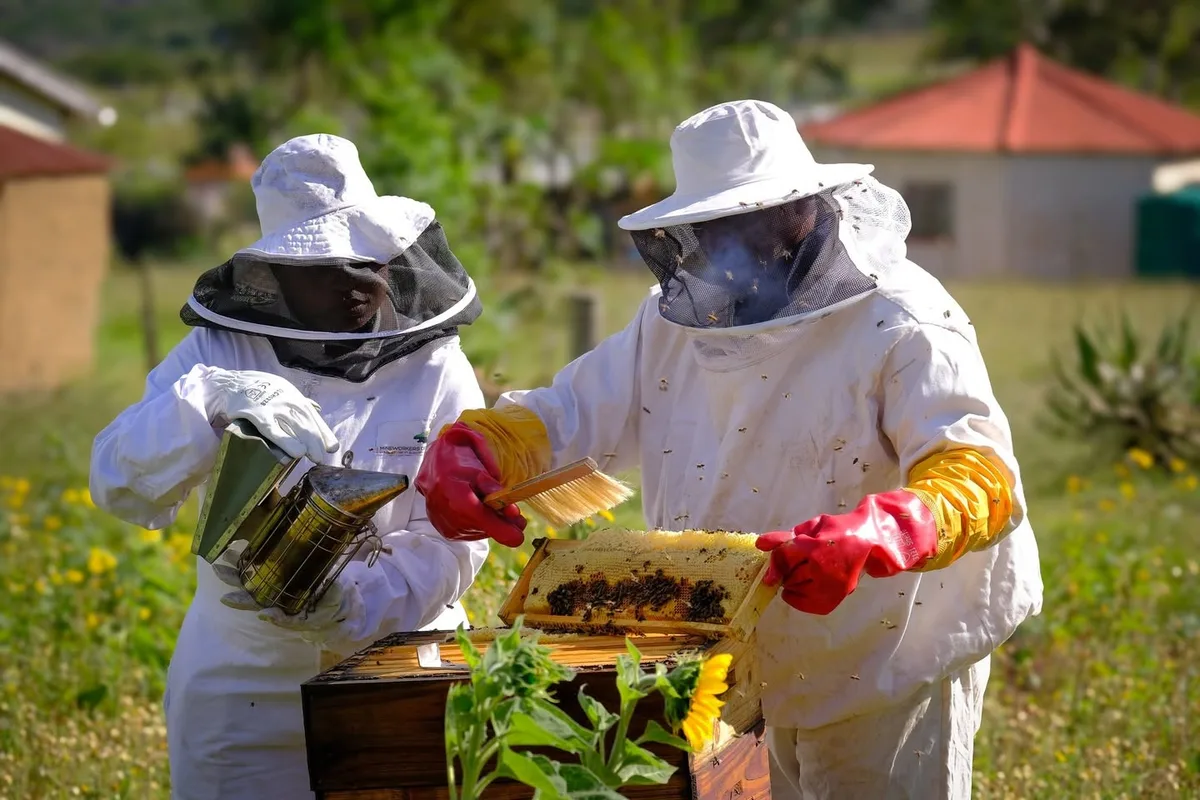
Fort Hare graduate highlights earning potential of rural women in the Eastern Cape.
Research into the economic potential of beekeeping in the Eastern Cape has shown that it significantly improves household income, which makes it valuable as a strategy for rural development.
Dr Owetu Zamisa (27), who conducted this research, just became the youngest PhD graduate at the University of Fort Hare’s 2026 autumn graduation. She was awarded a PhD in agricultural economics for her four-year research project into the link between beekeeping and rural economic transformation in the Eastern Cape, focusing on improving education, market access and cooperative structures.
“Beekeeping is a sector with great potential, especially in areas where opportunities are limited, but it is often overlooked,” she explained.
During her PhD studies, she also published a paper investigating rural women’s potential interest in wild honey hunting, the factors that influence their decision to participate and the associated implications for income, dietary diversity and food insecurity.
The communities she studied harvested wild honey, which was popular among, and trusted by, the local people. Her research showed that the potential income from local raw honey sales significantly contributes towards household food security. The study concluded that there is an emerging increase in rural women’s interest in wild honey hunting, even though, traditionally, wild honey hunting was done by men.
“This therefore suggests a clear signal for the need to promote sustainable wild honey harvesting among rural women. This could be through targeting the reduction of technical risk factors that surround wild honey hunting, including sustainable harvesting techniques and promoting commercial sustainable beekeeping using frame hives, training and value addition, as well as improving access to institutional frameworks (access to extension services),” Zamisa wrote.
She first came to the university 10 years ago and completed both her undergraduate degree and her postgraduate work up to PhD level within 10 years. She currently lectures at the Faculty of Science and Agriculture.
Zamisa, who hails from Peddie in the Eastern Cape, said her first contact with the University of Fort Hare was when she travelled there to take part in mathematics and science competitions on campus. She also recounted that she still mourns the death of her brother, who succumbed to cancer when he was just eight years old while she was studying. She said part of her motivation was to improve the lives of her siblings.
For her research, Zamisa worked with 300 small-scale beekeepers across the rural Eastern Cape. Her findings show that education, being part of a co-operative, access to market information and farm inputs are key drivers of successful value addition and commercialisation.
“There is money in beekeeping,” she said, especially with formal market access.
Zamisa said her fieldwork took her to remote areas of the Eastern Cape, as beekeepers are scattered around the province.
5News aggregated this summary from the outlet’s public feed. The full article, with all the context, is on www.dailymaverick.co.za — the content belongs to Daily Maverick.