Ramaphosa objects to Madonsela’s appointment as chief evidence leader
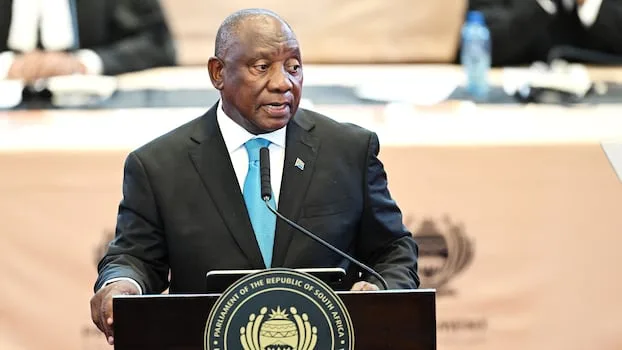
President Cyril Ramaphosa has raised concerns over the appointment of advocate Thandazani Madonsela SC as chief evidence leader for the impeachment inquiry, arguing his previous involvement with the president and the ANC creates a potential conflict of interest.
In a letter to National Assembly speaker Thoko Didiza, secretary of parliament Xolile George and impeachment committee chairperson Makashule Gana, Ramaphosa submitted that Madonsela did not meet the requirement that the chief evidence leader have no real or perceived conflict of interest.
Ramaphosa said his first concern related to his decision to remove Madonsela as his appointee to the Judicial Service Commission (JSC) shortly after the 2022 interviews for the appointment of chief justice. The president said this created a reasonable apprehension that Madonsela could harbour a grievance towards him and act on it.
His second concern relates to Madonsela’s previous legal work for the ANC. Ramaphosa referred to comments made by ANC secretary-general Fikile Mbalula on August 7, when Mbalula explained why ANC representatives on the impeachment committee had abstained from voting on Madonsela’s recommendation.
According to Mbalula, the ANC representatives abstained because Madonsela had recently advised the party on matters relating to the current impeachment inquiry.
Ramaphosa said he was not aware of the nature or extent of the information disclosed to Madonsela, or of the legal advice he had provided to the ANC. However, he said he understood the ANC had written to Didiza raising concerns about Madonsela’s recommendation based on the legal advice he had previously provided to the party.
Ramaphosa also raised concerns that Madonsela could have prior insight into issues relevant to the inquiry that another evidence leader approaching the matter afresh would not possess
The president argued a legal practitioner would ordinarily not act in a matter substantially similar to one in which they had previously advised a former client, particularly where confidential or privileged information may have been disclosed.
He said the same principle applied to someone assuming a decision-making or quasi-adjudicative role in proceedings involving a matter on which they had previously acted for or advised a party that would be affected by the proceedings.
“On the information presently available”, Ramaphosa submitted, Madonsela’s appointment would violate these principles and therefore should not be confirmed.
Ramaphosa also raised concerns that Madonsela could have prior insight into issues relevant to the inquiry that another evidence leader approaching the matter afresh would not possess.
The president’s submissions were made in terms of rule 167 of the National Assembly rules and sections 41, 54 and 56 of the constitution.
Ramaphosa said he was making the representations in the spirit of co-operation between organs of state and with the aim of avoiding, if possible, the need for subsequent legal proceedings.
He concluded Madonsela should not be appointed as chief evidence leader of the impeachment inquiry.
5News aggregated this summary from the outlet’s public feed. The full article, with all the context, is on www.sowetanlive.co.za — the content belongs to Sowetan.