Management consulting as we know it is over
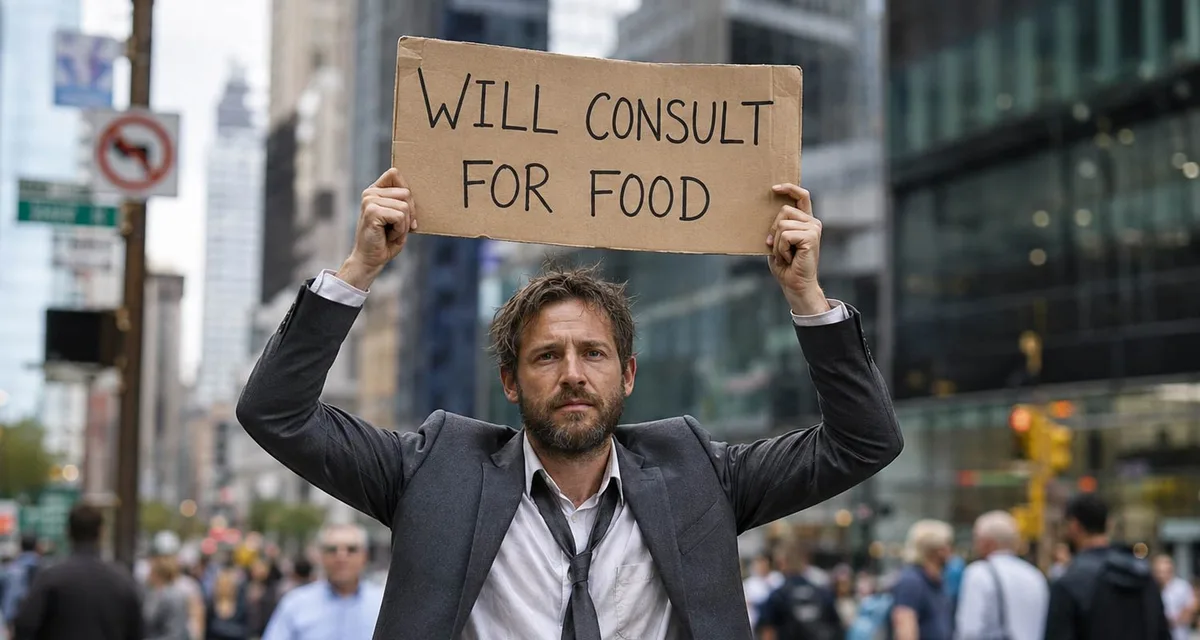
Management consulting, as we have known it for half a century, is finished. The great slide-making, hype-selling, invoice-by-the-kilogram machine is being dismantled by the very technology its own practitioners are busy overhyping, and it could not happen to a more deserving industry. I have earned the right to be blunt about this, having spent nearly 40 years on the receiving end of it.
In 2010, I ran the company that built one of South Africa’s first commercial WiMax networks. The technology was genuinely ahead of its time and in the field it outran the mobile networks of the day by a wide margin. It should have been an easy, honest story to tell. Instead, I watched a parade of consultants inflate its capabilities past anything the physics allowed, selling the peak speed and the maximum range as though both arrived at once. I knew how it would end. The gap between the brochure and the experience landed on real customers as disappointment. The technology did not fail them; the hype did.
That script has run for most of my career, and I can tell you who writes it.
Every executive has seen the Gartner Hype Cycle: the “peak of inflated expectations”, the “trough of disillusionment”, the long climb to a “plateau of productivity”. Beneath it sits an honest observation, usually credited to the futurist Roy Amara – we overestimate a technology in the short run and underestimate it in the long run. Amara was right.
But look at who is standing on the peak with the megaphone. It is almost always the big advisory firms, and the peak does not simply happen to a technology. Someone inflates it, with a forecast in the trillions and a date far enough away that nobody will check, then sells the readiness work the panic creates. When reality cannot match the number and the thing slides into the trough, the consultants have already re-badged onto the next wave.
When the venture investor Michael Mullany went back through 20 years of Gartner’s emerging-technology cycles, he found that most technologies never followed the curve at all; dozens appeared once and vanished. One of them was WiMax, the very technology I was building while the slideware promised the impossible. Gartner even keeps a category, “obsolete before plateau”, for the ones that die on the way up.
Read honestly, the curve does not forecast anything. It is a story supple enough to be right whatever happens: a boom confirms the peak, a crash confirms the trough, a quiet death was “obsolete before plateau”, a late recovery proves the plateau. An adviser who cannot be wrong is a fortune-teller on a retainer.
In 2022, McKinsey valued the metaverse at up to US$5-trillion by 2030 and called it “too big to ignore”. Citi went to $8-trillion to $13-trillion. Gartner predicted that by 2026 a quarter of us would spend at least an hour a day in the metaverse. It is 2026, and we do not. Meta – the company so sure of this future that it renamed itself after it – has since absorbed something north of $60-billion in losses at its Reality Labs division and quietly redirected the language, and the capital, to artificial intelligence .
I have seen that conviction up close.
5News aggregated this summary from the outlet’s public feed. The full article, with all the context, is on techcentral.co.za — the content belongs to TechCentral.