THOMAS BRENNAN | Why democracy must defend itself from information power
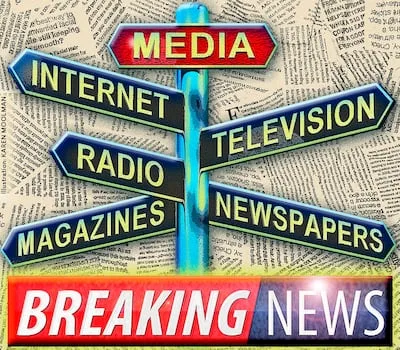
I have previously argued that the theory of separation of powers, written for an age when tyranny wore a crown, is insufficient when tyranny wears a suit.
Economic power , left unchecked, captures political power just as surely as dictators can capture parliament. Society and the environment will not flourish while billionaires and multinationals exert the political influence they currently do.
However, there is another form of corrupting influence that neither Montesquieu nor his successors have reckoned with: the power to determine what people know.
It may ultimately be more important than economic power, because economic power can influence what governments do, while informational power can influence what citizens believe.
Information is the raw material from which democratic judgment is made. Before citizens can vote, hold politicians accountable or participate meaningfully in public debate, they need to know what is happening.
Whoever has the ability to influence what information reaches millions of people therefore possesses informational power. This power has never been more concentrated or less accountable.
According to Emarketer, Meta and Google command 53.2% of global digital advertising revenue in 2026, at 26.8% and 26.4%, respectively.
Meta alone is forecast to earn $243bn (R3.9-trillion) in net worldwide ad revenue in 2026, overtaking Google for the first time in the history of digital advertising.
This is not a story of two large companies competing in a market. It is a story of an oligopoly that is steadily absorbing the commercial oxygen that once sustained a plural media ecosystem.
Consider the South African experience. The recent Competition Commission’s Media and Digital Platforms Market Inquiry found global platforms such as Google, Meta, Microsoft, TikTok and X dominate important gateways through which South Africans access information.
Digital platforms have not been meaningfully bound by the ethical codes that govern every registered newspaper, magazine and news website in the country, despite the fact that both now decide what most South Africans read, watch and believe
This is not merely a technological transformation. It is a redistribution of influence. These digital platforms shape how we vote, what we believe about crime, immigration, vaccines and the economy. It is delivered via algorithmic feeds designed to capture your attention and owned by companies headquartered on the other side of the world.
These platforms are not simply a neutral pipe through which information flows. It is increasingly the architecture through which public attention is allocated. And attention is power.
Informational power should not be limited to who writes the story, but should also include who decides where, how and by whom it is consumed. By that definition, Meta and Google are the two most powerful media institutions the world has ever had to contend with. Obviously they both go to great lengths to avoid the definition.
5News aggregated this summary from the outlet’s public feed. The full article, with all the context, is on www.sowetanlive.co.za — the content belongs to Sowetan.