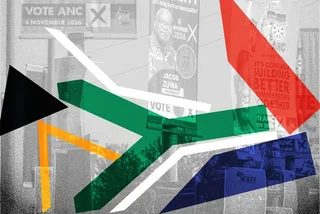
Baselines and biases: The trouble with opinion polls in race to the local elections
The issue is not the reliability or otherwise of polling data, it is pollsters’ interpretation of that data that policy preferences shine through, confirming alignment with some of the contestants.
Joel Netshitenzhe is the executive director of the Mapungubwe Institute and a member of the ANC National Executive Committee (NEC). He writes in his personal capacity.
The election period has arrived, and it is bumper season for opinion researchers.
While the utility of the polling industry cannot be underestimated, concerns have been expressed about its regulation in South Africa. Some have proposed legislation that governs such issues as transparency on breadth of coverage and representativity, margins of error, modelling of turnout, and any conflicts of interest in polling companies’ relationships with the contestants.
This is because opinion polls can act as both cause and effect of voter sentiment. The pollsters purport merely to reflect preferences of the electorate. But polls can also inspire or demoralise an election campaign; and their interpretations can be weaponised to sway public opinion.
Most parties consider it a fool’s errand to debate or challenge opinion surveys. However, the parties themselves do rely on their own polling, which helps to refine election strategies and messages. What analysts have not comprehensively done is to assess these opinion surveys post facto, to evaluate whether the pre-election guesses closely approximate the actual outcome.
Hopefully, debate on these issues will be taken up after the 2026 municipal elections; so we do not wait for the next round of elections before another debate on the rigour, quality and reliability of South Africa’s polling industry.
It is understandable that the data from recent Social Research Foundation (SRF) survey results has generated much debate. Among others, the following figures have been published from the survey, with 2024 figures added for reference:
ANC support at national level has “declined” to 34% (compared with 45% in 2021 and 40% in 2024) while the DA has improved to 27% (21% in 2021 and 22% in 2024) and the MK party to 15% (14% in 2024);
In Johannesburg, the ANC polls at 18% compared with 33% in the 2021 elections and 34% in 2024; while the DA is at 42% compared with 26% in 2021 and 24% in 2024; and
In eThekwini, the MK party polls at 33% (compared with 48% in the 2024 elections), while the IFP surges to 16% (from 5.5% in 2024), and the DA is polled at second place with 23%, compared with 26% in 2021 and 24% in 2024. The ANC dropped from 42% in the 2021 elections to 15% in 2024 and, in the SRF poll, recovered marginally to 18%.
The aim here is not to debate the reliability or otherwise of the SRF survey. This requires accomplished statisticians and psephologists.
It is, however, in SRF’s interpretation of the data that policy preferences shine through, confirming alignment with some of the contestants. Indeed, some of their leaders and staffers – and those of its service provider, Victory Research – have had close associations with the DA.
5News aggregated this summary from the outlet’s public feed. The full article, with all the context, is on www.dailymaverick.co.za — the content belongs to Daily Maverick.