BOOK EXCERPT: Cobalt Red: How the blood of the Congo powers our lives
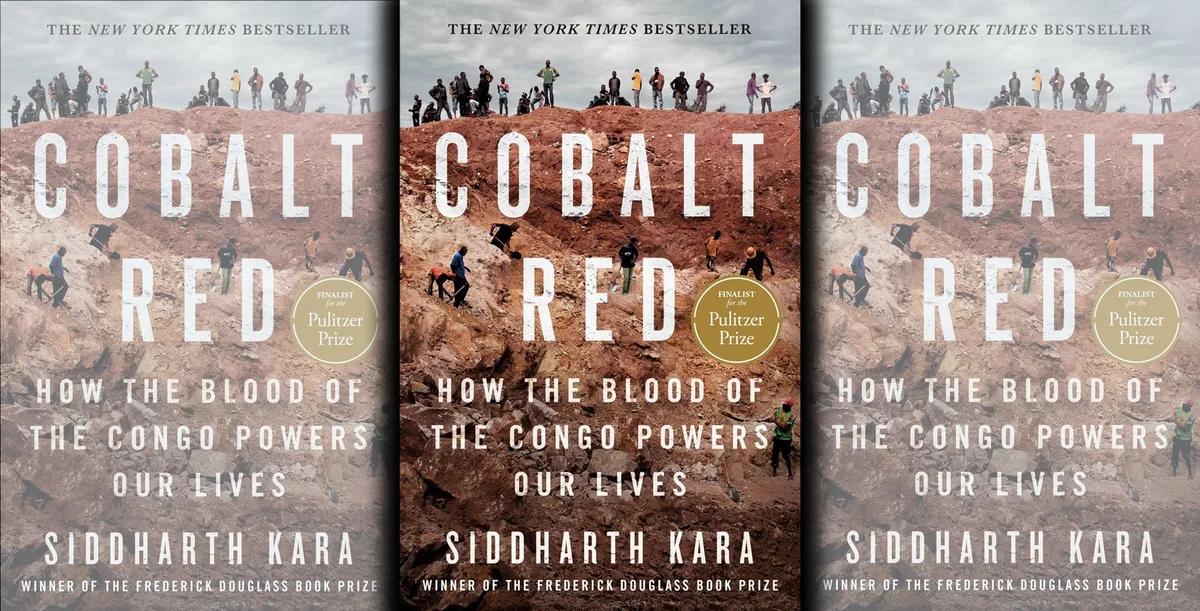
Activist and researcher Siddharth Kara has travelled deep into cobalt territory to document the testimonies of the people living, working and dying for cobalt in Congo.
An unflinching investigation reveals the human rights abuses behind the Democratic Republic of Congo’s cobalt mining operation – and the moral implications that affect us all. Siddharth Kara’s Cobalt Red is an exposé of the immense toll taken on the people and environment of Congo by cobalt mining, as told through the testimonies of the Congolese people themselves. Here is an excerpt.
There is a frenzy taking place in the Democratic Republic of Congo, a manic race to extract as much cobalt as quickly as possible. This rare, silvery metal is an essential component to almost every lithium-ion rechargeable battery made today. It is also used in a wide array of emerging low-carbon innovations that are critical to the achievement of climate sustainability goals. The Katanga region in the southeastern corner of the Congo holds more reserves of cobalt than the rest of the planet combined. The region is also brimming with other valuable metals, including copper, iron, zinc, tin, nickel, manganese, germanium, tantalum, tungsten, uranium, gold, silver and lithium. The deposits were always there, resting dormant for eons before foreign economies made the dirt valuable. Industrial innovations sparked demand for one metal after another, and somehow they all happened to be in Katanga. The remainder of the Congo is similarly bursting with natural resources. Foreign powers have penetrated every inch of this nation to extract its rich supplies of ivory, palm oil, diamonds, timber, rubber... and to make slaves of its people. Few nations are blessed with a more diverse abundance of resource riches than the Congo. No country in the world has been more severely exploited.
The scramble for cobalt is reminiscent of King Leopold II’s infamous plunder of the Congo’s ivory and rubber during his brutal reign as king sovereign of the Congo Free State from 1885 to 1908. Those familiar with Leopold’s regime may reasonably point out that there is little equivalency between the atrocities that took place during his time and the harms taking place today. To be sure, the loss of life during Leopold’s control of the Congo is estimated to be as high as thirteen million people, a sum equal to half the population of the colony at the time. Today, the loss of life caused either directly by mining accidents or indirectly by toxic exposure and environmental contamination in the mining provinces would likely be a few thousand per year. One must acknowledge, however, the following crucial fact – for centuries, enslaving Africans was the nature of colonialism. In the modern era, slavery has been universally rejected and basic human rights are deemed erga omnes and jus cogens in international law. The ongoing exploitation of the poorest people of the Congo by the rich and powerful invalidates the purported moral foundation of contemporary civilisation and drags humanity back to a time when the people of Africa were valued only by their replacement cost.
5News aggregated this summary from the outlet’s public feed. The full article, with all the context, is on www.dailymaverick.co.za — the content belongs to Daily Maverick.