South Africa and Zambia’s HIV shot dilemma: demand vs supply
How do you persuade people to want a new medicine when there isn’t enough of it to go around?
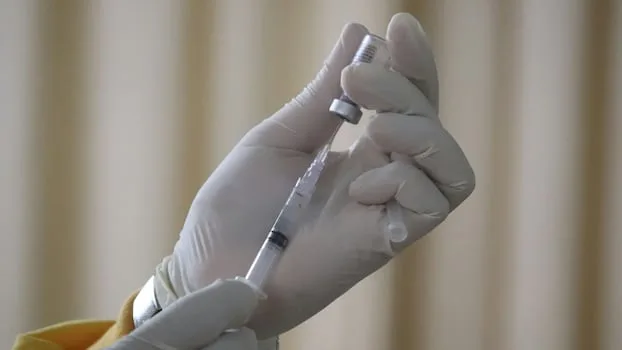
That’s the problem facing the first countries rolling out lenacapavir (LEN), a six-monthly HIV prevention injection.
South Africa started its roll-out at around one in 10 government clinics on 5 June .
LEN has sparked an excitement about HIV prevention that Mitchell Warren , executive director of the HIV advocacy organisation Avac, says he hasn’t seen in three decades.
Some experts say it’s easy to understand why. The injection offers close to complete protection against HIV and only needs to be taken twice a year.
But for now, supplies are limited, as the only doses available to South Africa are the branded product, made by LEN’s developer, Gilead Sciences, and paid and distributed through an arrangement with the Global Fund to Fight Aids, Tuberculosis and Malaria, until generics become available in 2027. Some African countries also get doses supported by the US government’s Aids fund, Pepfar.
And therein lies a catch: countries need to create enough demand for LEN to convince drug makers that there will be a market for cheaper generic versions. The bigger the market, the cheaper generic LEN will be.
But create too much demand now and people could arrive at clinics only to be told they’ve run out of stock.
Zambia, which began offering LEN in December with only 500 initial doses , has been trying to strike this balance for months. At the International Aids Conference in Rio de Janeiro in July , the country’s director of infectious diseases, Lloyd Mulenga, described during a panel discussion how clinics frequently run out of stock.
South Africa, which launched later than Zambia, but on a much larger scale , is now facing many of the same issues.
“Yesterday, I saw something I’ve never seen before,” Sister Samaria Mwale told Bhekisisa at Chilenje Level One Hospital in Lusaka, to which we travelled in June.
“A man called Aaron walked into the clinic with seven women from a nearby brothel.”
Aaron had learned about LEN through field workers and persuaded the women to come with him. He got the injection too.
“I took them because it’s for their protection,” he later told Bhekisisa. “By these women being safe, many of us are safe.”
5News aggregated this summary from the outlet’s public feed. The full article, with all the context, is on www.timeslive.co.za — the content belongs to TimesLIVE.