PHINDILE KUNENE | Why SADC’s reliance on nostalgia just won’t cut it
Ask any progressive politician and they will tell you that this is a bad time for international co-operation.
Citizens in many parts of the world scold their governments for focusing too much on external affairs at the expense of domestic issues.
From Germany to the US and from the UK to SA, movements promoting “my-country-first” politics are gaining support and see international co-operation as a distraction from pressing issues of crime, unemployment, and crumbling public services.
Here at home, March and March’s Jacinta Ngobese-Zuma speaks of a “fake pan-Africanism” and asks why SA should be expected to “carry the whole of Africa”.
Institutionally, this recoil from internationalism is evident in the budget crisis confronting the UN and the drying up of aid as countries focus more on domestic issues, including wars in their neighbourhoods.
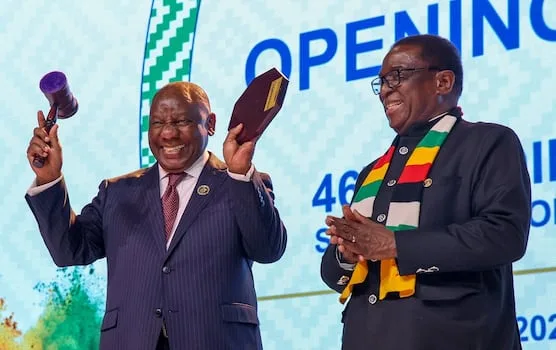
This is why the gathering of 16 countries, representing more than 400-million people, in Durban recently is so important. At the 46th Summit of the Southern African Development Community (Sadc), South Africa assumed leadership of the bloc for the next 12 months.
In eThekwini, ministers and heads of state delivered speech after speech highlighting the bloc’s achievements. Wreath-laying at the feet of OR Tambo’s statue on the Durban beachfront, Albert Luthuli’s Zimbabwean roots and the spirited resistance of African women against the municipal beer monopoly were all carefully woven into the summit’s programme.
In a packed UKZN Westville hall, President Cyril Ramaphosa summoned Pixley ka Izaka Seme’s dream of a continent freed from the shackles of colonial bondage and recalled how the bloc was formed to overthrow colonialism and apartheid and reduce economic dependence on white-ruled SA.
Ramaphosa said the region paid a hefty price for this moral solidarity: Pretoria’s campaign of sabotage and destabilisation targeted villages, bridges, schools, hospitals and power lines. The final defeat of apartheid in Namibia and SA was the regional bloc’s high watermark.
Inside the rooms of the iNkosi Albert Luthuli complex, there was a strong sense that Sadc has much to show for decades of regional co-operation.
Since the creation of a free trade area, trade among the bloc’s nations increased from 16% in 2008 to just more than 20% in 2025. Most of this trade is in manufactured goods, fuels, machinery, vehicles and agricultural produce. The AU report on the state of continental integration placed Sadc as an uncontested leader in intra-African trade and market integration.
On the energy front, power utilities from 12 countries, including Angola, Tanzania, Botswana, Lesotho and SA, are part of the Southern African Power Pool, an initiative designed to promote a reliable and sustainable energy supply across the region.
The bloc is also building institutions to confront what Ramaphosa called shared vulnerabilities.
5News aggregated this summary from the outlet’s public feed. The full article, with all the context, is on www.sowetanlive.co.za — the content belongs to Sowetan.