LEARNING CURVEBALL: Universities confront growing gaps between school and first-year demands
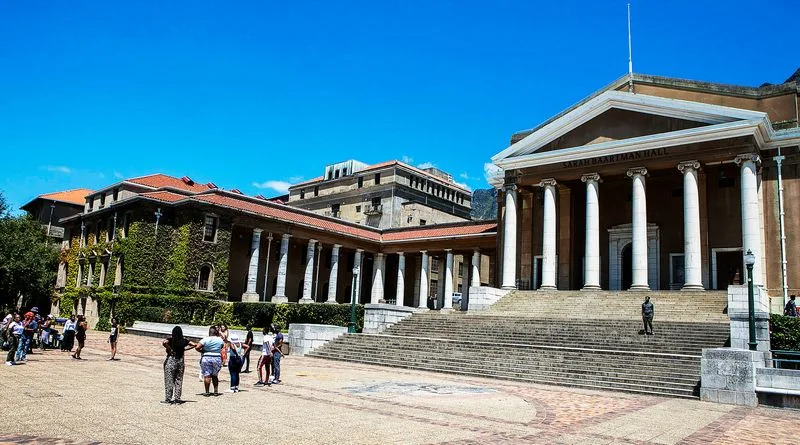
Passing matric remains every school learner’s proudest milestone. Yet across South African universities, academics warn that the leap from secondary school to tertiary study exposes gaps few students see coming, and that closing them is a shared responsibility, not a student failing.
Collecting a bachelor’s pass is viewed as a great achievement. For many students, stepping onto campus a few months later brings a sobering realisation that passing school and surviving university are not the same thing.
Daily Maverick spoke to academic experts across the country to describe the gaps they often see in first-year students’ abilities. Experts said that students struggled, not because they lacked ability, but because higher education asked something different of them.
At Stellenbosch University (SU), Professor Wikus van Niekerk, Dean of the Faculty of Engineering, said that gap was felt acutely in engineering.
“The workload and pace of work are a big step up from school to university in general, and engineering specifically,” Van Niekerk said. He added: “A very strong background in both mathematics and science remains foundational to success in engineering studies.”
The scale of the problem is measurable. SU says close to 20% of first-year engineering students drop out, despite a raft of support measures already being in place. Van Niekerk said it was “lower than most other engineering programmes in the country”, not evidence that Stellenbosch was failing its students, but a sign of how demanding the transition was even at an institution built to manage it.
At the University of Cape Town (UCT), Professor Michelle Kuttel sees the same fault line from a different department. Heading a Computer Science programme with first-year classes of more than 1,000 students, she spoke about where the trouble started.
“Typically, the biggest issue is skills in mathematics,” she said, noting that whether a school offered IT as a subject mattered far less than whether it taught mathematics properly. “We would like more schools to offer mathematics as opposed to Maths Literacy.”
University of Johannesburg (UJ) student Simamkele Qoyo told Daily Maverick that time management was difficult for him.
“When I received assignments, I would usually do them at the last minute... This was caused by the workload, and in those times procrastination would hit, and rather than working on it one would just leave it to AI, which is not good because that results in failure,” said Qoyo.
Not every academic Daily Maverick spoke to framed this as something lacking in students. Dr Shoba Rathilal, Acting Director of the Centre for Excellence in Learning and Teaching at the Durban University of Technology (DUT), pushed back on the idea altogether.
“I would be cautious about describing these as student deficits,” she said. “Students arrive with significant strengths, capabilities, aspirations and diverse forms of knowledge. However, they do not all arrive with the same educational opportunities or prior learning experiences.”
She added.
5News aggregated this summary from the outlet’s public feed. The full article, with all the context, is on www.dailymaverick.co.za — the content belongs to Daily Maverick.